Category: Addiction News

  • Hospitality Industry Makes Efforts To Address Mental Health Issues, Addiction

    Hospitality Industry Makes Efforts To Address Mental Health Issues, Addiction

    Leaders in the industry are working to create national resources for those dealing with addiction and mental health issues. 

    The culinary world was shaken last year when celebrity chef and television host Anthony Bourdain died by suicide. Bourdain, well-loved by fans and peers, had been open about his battles with depression and history of substance use disorder

    But for Patrick Mulvaney, owner of the exalted Mulvaney’s B&L in Sacramento, California, Bourdain’s death was a part of something larger, Civil Eats reports. In 2018 alone, at least 12 people in the Sacramento hospitality and restaurant community lost their lives to “mental health complications.” 

    “It was brutal,” Mulvaney told Civil Eats. “Just in between middle of December and middle of January, four people died in Sacramento, hospitality people. Three of them were either working or had worked for us before, and one was a long-time Sacramentan. So, this is about as ‘home’ as home can get.” 

    According to Civil Eats, the 10 million Americans who work in the hospitality and restaurant industry are more likely than others to struggle with mental illness and substance use disorder

    This is something that the industry is beginning to take into consideration. Wolete “Sunny” Atherley is the owner of two restaurants in the Sacramento area and tells Civil Eats she tends to hire young adults from the area. 

    “They feel like they can be themselves [here]” she said. “Over time, though, I realized a lot of my young employees were dealing with depression.”

    According to Mulvaney, working in an industry built on caring about the needs of others is part of the reason why some people disregard their own needs.  

    “We have an industry with a problem that we don’t always talk about,” says Mulvaney. “We’re in hospitality, so we want to know how your soup is, whether your drink is right, or if your steak is cooked right, and we don’t necessarily think about ourselves that much.”

    As a response to the numerous deaths in 2018, Mulvaney has partnered with Kaiser Permanente, VSP Global, WellSpace Health, the Steinberg Institute and the James Beard Foundation to build a pilot program called “I Got Your Back.” 

    The program is meant to break the stigma about mental health in the industry and works through peer-to-peer or near-peer counseling. Certain employees are trained to identify warning signs of mental distress and are made available as support. 

    Mulvaney has also been hosting mental health workshops and seminars for others in the industry. Next, he tells Civil Eats, he plans to create online resources for industry workers to reach out for help. 

    “If we can affect even one person, then we’re good at my restaurant,” Mulvaney said.

    “If we can affect the city by having more of us in the restaurant world adopting I Got Your Back—and we want to do this across spectrums, not just James Beard restaurants. We want all restaurants from fast food to high-end eateries to adopt it—that would be cool. And, if this works [we’ll have] California, [then hopefully] Illinois, Oregon, Nevada, and other states bringing the conversation out and expanding the coalition of the willing.”

    View the original article at thefix.com

  • DEA Needs Device To Distinguish Between Marijuana, Hemp

    DEA Needs Device To Distinguish Between Marijuana, Hemp

    One of the primary differences between hemp and marijuana is the amount of THC in each plant. 

    The Drug Enforcement Administration (DEA) recently sent out a public notice asking for leads on a device that can differentiate between marijuana and hemp, since hemp was made legal under the 2018 Farm Bill, while marijuana remains banned at the federal level. 

    Hemp and marijuana are both types of cannabis, different special of the same plant. Despite this similarity, the plants have very different effects. Marijuana has a much higher THC content and is used to get high and for medicinal purposes, while hemp has a lower THC content and is used for manufacturing everything from oils to fabrics to CBD products, according to CBD Origin

    The 2018 Farm Bill made it legal to grow and manufacture hemp, but because the plants look similar at first glance this has made enforcing marijuana laws difficult for DEA agents. That’s why the agency is looking for a device that can test plants in the field to determine whether they are marijuana or hemp. 

    “It must be portable and rugged enough to be used in non-laboratory environments or ambient conditions. All products shall be the most current and up-to-date model/revision(s) available at the time of delivery.

    Anticipated maximum quantities to be purchased will be based on evaluation results and agency need,” the agency wrote, according to Marijuana Moment

    The notice emphasized that federally the THC content level is what distinguishes marijuana from hemp. 

    “[A]ny Cannabis sativa L. plant material with a THC concentration above 0.3% is considered marijuana (AKA marihuana) and is still federally controlled,” the agency wrote. 

    Businesses who are interested in providing a device for testing cannabis plants can put in an application for consideration before March 15. 

    The DEA has been put in a tough position as cannabis laws around the country continue to evolve and the agency is still tasked with enforcing the federal prohibition. In addition to scrambling to differentiate between marijuana and hemp, the agency has also been working to give more approvals for marijuana grown for research purposes. 

    Marijuana Moment reported that the agency plans to increase the amount of marijuana that can be grown for research from 1,000 pounds to more than 5,000 pounds this year, but it has been slow to approve applications from growers. 

    “The DEA increased the production quota for marihuana based solely on increased usage projections for federally approved research projects,” the agency said in December. “The DEA continues to review applications for registration and registers the number of bulk manufacturers of a controlled substance that is necessary to produce an adequate and uninterrupted supply.

    View the original article at thefix.com

  • Are Social Pressures Making Women Drink More?

    Are Social Pressures Making Women Drink More?

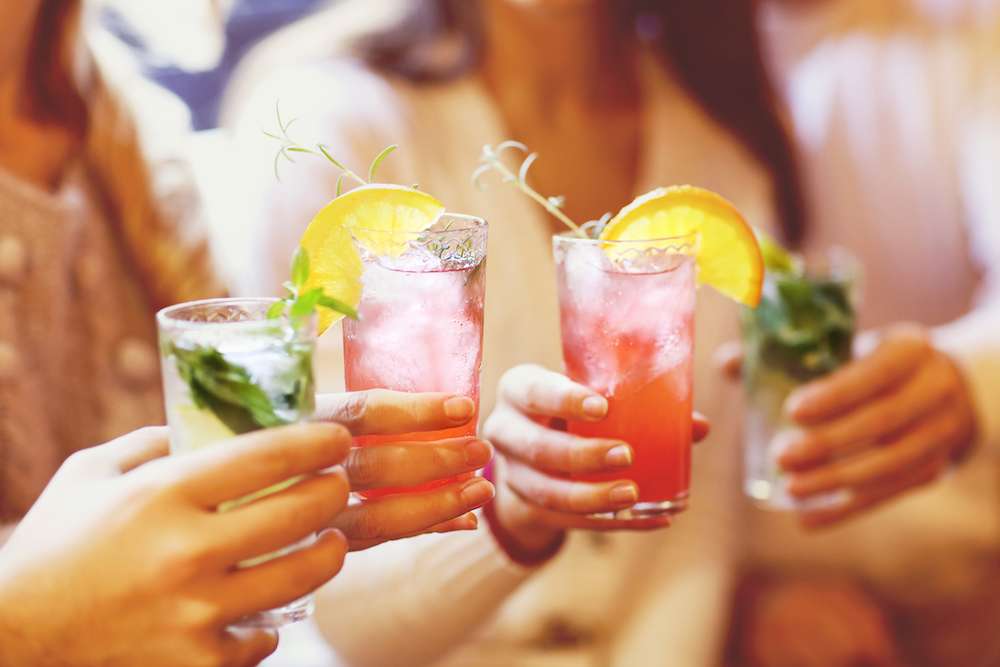
    A recent op-ed examined some of the reasons why women are drinking more alcohol than ever before.

    Drinking used to be thought of as a boys’ club, and men have traditionally used alcohol had higher rates than women. However, in recent decades women’s drinking has expanded dramatically, and social factors may be to blame. 

    According to the CDC, the percentage of American women who drink more than once a week has increased dramatically, from 45% in 2002 to 67%. 

    Writing for The Bold Italic, Ginny Hogan examined the social pressures that may be affecting the rate in which women are drinking. 

    “The reality is that women often drink for different reasons than men do, and it’s not a stretch to think that those reasons often stem from social pressures that women face but men don’t,” Hogan writes. 

    Many women feel pressured to relax, even as they deal with higher levels of anxiety than men. Rather than showing that stress to people in their lives, many women opt to drink to mask it. 

    “When we put social pressure on women to not ever appear stressed or anxious, I worry that we instead make alcohol a more appealing option,” Hogan writes. 

    In addition, alcohol has become a marker of many female social groups, whether it is symbolizing high-powered career women or moms who gather together and bond over wine. 

    “Society tends to admire women who can play hard and work hard — to be cheerful and warm even in the face of negative surroundings or working conditions,” Hogan writes. 

    In popular culture, successful women are often shown sipping a drink. 

    “Tumblers of brandy, whiskey sours and fishbowls of merlot are synonymous with female glass-ceiling-smashing in TV shows like The Good Fight, The Good Wife, Scandal, Killing Eve, The Killing; I honestly can’t think of a successful female protagonist on TV who isn’t a hard drinker,” said Catherine Gray, author of The Unexpected Joy of Being Sober.

    Finally, dating while sober can put even more pressure on women. 

    “I definitely feel like not drinking ups the stakes for going on a date with me — if getting a drink is the most casual meet-up, it’s like, ‘I’m sorry, you need to commit to coffee and a day date, and I’m now occupying your weekend,’” comedian Molly Brown told Hogan. 

    Ultimately, pushing back on some of these social pressures could be a way to help women reduce their drinking, if that’s something they desire, Hogan writes. 

    “I want women to feel OK being in bad moods, to speak up if someone is mistreating them, to be comfortable with boring their date and to turn down happy-hour invitations. If women are able to do this more often, I wonder if we could use alcohol as a way to enhance our lives instead of often suppressing them,” she wrote. 

    View the original article at thefix.com

  • New Mexico May Soon Legalize Recreational Marijuana

    New Mexico May Soon Legalize Recreational Marijuana

    The state’s house voted to legalize marijuana for recreational use, potentially joining the growing number of states that have done so.

    New Mexico could soon become the 11th state in the U.S. to legalize recreational marijuana. The state’s House of Representatives passed the measure on Thursday despite being voted against by every Republican representative as well as a few moderate Democrats.

    The bill’s sponsor, state Rep. Javier Martinez (D), believes his bill will get through the senate because he reached across the aisle and worked on it with three senate Republicans.

    If passed, the bill would establish a system of sales and taxation modeled after Washington and Colorado, where marijuana has been legal for several years. However, as a compromise with senate Republicans, the New Mexico bill proposes mostly state-run marijuana dispensaries, with private sales being allowed if no state-run dispensaries are nearby.

    The legislation could become active as soon as mid-2020, possibly generating $9 million in tax revenue, according to estimates from state budget analysts. This figure is expected to grow to as high as $90 million in 2023.

    New Mexico’s Governor, Democrat Michelle Lujan Grisham, is likely to support the bill—as she ran on a platform “to move towards legalizing recreational cannabis in a way that improves public safety, boosts state revenues and allows for New Mexico businesses to grow into this new market.”

    The state senate has only until March 16th to make a move on the bill, which is good news for legalization opponents.

    “This is no surprise as legalization bills have passed the New Mexico House before. The bill now heads to the Senate, where there already exists a legalization bill that still has to clear three committees before the session ends next Thursday. While the House has passed this bill, we are confident the Senate will see through the tactics of Big Tobacco and Big Pharma investors and put public health first,” said Luke Niforatos of the anti-marijauna organization Smart Approaches to Marijuana.

    Several other states are also considering bills to legalize marijuana, including New Jersey, New York, and Rhode Island. Support for legalization on the federal level is growing, arriving in a wave of Democrats vying for the 2020 presidency who support the end of nationwide marijuana prohibition.

    View the original article at thefix.com

  • Real Housewife Luann de Lesseps Takes Sobriety "Day by Day"

    Real Housewife Luann de Lesseps Takes Sobriety "Day by Day"

    The ‘Real Housewives of New York’ star says her co-stars support her on her sober journey.

    Countess Luann de Lesseps, who stars on the Real Housewives of New York, told Life & Style that she’s received immense support from her co-stars in her sober journey.

    “You know what, I take it day by day,” de Lesseps said. “I take my sobriety seriously, and day by day, and I just am learning to enjoy myself without drinking. So it’s eye-opening and it’s not easy. It’s always a struggle, but I feel a lot better.”

    The reality star may have realized she had a problem with alcohol when she was charged with several crimes following a Christmas Eve arrest, including battery of an officer, disorderly intoxication, resisting arrest with violence, and crimes against a person, and two corruption by threat charges for telling officers, “I am going to kill you all.”

    Her hefty list of charges could have landed her five years in prison, according to TMZ. She even rejected a plea deal offered by prosecutors, instead arguing that she was emotionally distraught because of the geographic location.

    “This was my first time in Palm Beach since my wedding, and being here brought up long-buried emotions,” she explained. “I want to offer my sincere apologies to anyone I might have offended with my behavior. I am committed to a transformative and hopeful 2018.”

    Following the incident, she committed herself to rehab and recovery.

    “After the events of last Saturday night in Palm Beach, I am truly embarrassed. I have decided to seek professional guidance and will be voluntarily checking into an alcohol treatment center,” she said. “I intend to turn this unfortunate incident into a positive life changing event. Once again, I sincerely apologize for my actions. I have the greatest respect for police officers and the job they do.”

    Now, de Lesseps is better and back in the spotlight in a cabaret show.

    “Nine months ago, I was in jail, and now I’m a cabaret star,” she said in the season 11 trailer. “Isn’t that crazy?”

    Given that the cast of the Real Housewives is provided alcohol to drive the drama, de Lesseps may find herself relying on her co-stars to stay clean… and her recovery may become a driving narrative of the show.

    View the original article at thefix.com

  • American Idol Contestant Celebrates Sobriety With Demi Lovato Song

    American Idol Contestant Celebrates Sobriety With Demi Lovato Song

    Contestant Logan Johnson shared his journey to sobriety with American Idol’s panel of celeb judges. 

    Eight months ago Logan Johnson, 20, was living in active addiction to opioids. Now he is bound for Hollywood after a heartfelt audition for American Idol, during which he sang Demi Lovato’s relapse ballad “Sober.”

    “Growing up, music was everything to me, but the path to get there wasn’t always an easy one,” Johnson said in a video for the singing contest. 

    When Johnson was growing up in Boise, Idaho, he saw his older brother struggle with addiction. 

    “It was pretty hard for me to live with,” Johnson said. “I thought I would learn from his example, but unfortunately I really got into painkillers.”

    Despite knowing the pain of loving someone with addiction, Johnson found himself following in his brother’s footsteps. 

    “I looked at what he was doing and I told myself that I was better than what he was. But the truth of the matter was I was doing the exact same things — lying to my loved ones, to everyone in my life. I really feel like I’ve put my family though a hell that I wouldn’t wish upon anyone,” Johnson said. 

    However, Johnson and his brother were both able to get help. 

    “I just got to a point where I had to change. It was really, really hard to finally come clean and say I’ve got my own issues too and I need help,” Johnson said. “I really look up to my brother and all the things that he’s had to face. We have been able to connect on another level and to really be there for each other.”

    Johnson’s mother, Nanette, said that American Idol could be the win that the family needs after many years of hardship. 

    “I don’t think most people, unless they’re living with addiction in their family, I don’t think they know how hard it is,” she said.  

    Standing before judges Lionel Richie, Luke Bryan and Katy Perry, Johnson was open about his addiction experience. 

    “I’m grateful today that I have 8 months of sobriety. I just know that I have a lot to share with my music,” he told them, before launching into “Sober.”

    When he finished, the judges praised Johnson’s voice before calling his family in to watch them unanimously vote “yes” to sending him to Hollywood. 

    “One day at a time,” Perry told Johnson. “Congratulations. You’ve worked really hard and you should be proud of your clarity that you’ve given yourself. You’ve earned this.” 

    Richie told him, “You now have three more people on your support team.”

    Watch Johnson’s full audition below:

    View the original article at thefix.com

  • E Safety: What to Look Out For to Stay Safe Online

    E Safety: What to Look Out For to Stay Safe Online

    E Safety: What to Look Out For to Stay Safe Online

    The internet dominates our daily lives. From children, to teenagers, to adults; we spend hours each day consuming content from the incredible resource that is the online world. However, with this huge source of information and potential for connection, comes a responsibility to be aware of the potential dangers of living our lives online. Last year, we published top 10 tips for teens on how to stay safe online, and it’s time to revisit our e-safety advice to try and ensure that no matter how old you are, you’re aware of the potential risks.

    Still very much an issue

    Just in the last few weeks the MOMO challenge came and went – an online ‘game’ encouraging children to harm themselves which actually turned out to be a hoax. If the hysterical reaction to a challenge that turns out to be a hoax tells us anything, it’s that people still feel a lack of control and lack of knowledge about what’s out there on the internet. And perhaps that is because of the pure scale of the potential dangers. So, what should you be looking out for?

    Fake news

    E Safety: fake newsIt may have been a bit of a buzz word over the past two years, but there’s good reason for it. With the MOMO challenge at front and centre, it’s important to be aware of eye-popping headlines, information source and publisher credibility. Perhaps the greatest danger of fake news is the tinted viewpoint it can create, based on something nothing more than fiction. Always investigate any news source to determine its credibility; check if it has an unusual domain name ( like .com.co or similar), pay attention to language, spelling and grammar (are there lots of mistakes?) and run any outlandish claims or facts through a credible fact-checking website.

    Phishing

    Have you ever received an email from a seemingly credible source, but with an offer that just feels too good to be true? If you didn’t click on it, you made the right decision. However, with our personal data more valuable than ever, many people have succumbed to frauds trying to obtain sensitive information such as passwords and payment card details. Always think before you click, and if you see a suspicious-looking email in your inbox – delete it straightaway without clicking through to any links it contains.

    Dangers of online strangers

    E Safety: catfishing

    We’ve made genuine friends through the online world and we know many of you have too. Unfortunately some people have been ‘catfished’, a term made popular by an American TV programme about fake identities online. A catfish is someone that fakes their online identify in an attempt to begin a deceptive relationship. If something doesn’t seem quite right, it’s always worth further investigation.  It’s also essential that if any communication received online makes you uncomfortable, it’s reported as soon as possible.

    Online isn’t always the whole story

    Perhaps a less obvious danger, but if we’re talking about staying safe online, it’s important to recognise the subtle dangers, as well as the more tangible issues. Lifestyles that are portrayed online aren’t always the full story, and although it may seem like someone you’re following has ‘the perfect life’, there may be many other issues that person ins’t sharing online. This is particularly prominent in social media, considering the popularity of platforms such as Instagram and YouTube. We have written about how you can mindfully use social media if you think this might be an issue affecting you.

    Be mindful about your own digital footprint

    Whereas the other dangers that we have identified are issues that you can come across by being online, this is a little different. It’s important to be aware of what you are posting online, as posting is permanent. Once a tweet, video or comment is posted, it’s likely to stay there forever. Deleting it may not really make it go away, so just remember to think twice before you post in the heat of a moment.  

    The internet is a brilliant thing, but like everything there are risks out there – some tangible, and some harder to recognise straight away. Ensuring you and the people close to you, are aware of these risks is the first step to ensure that few problems are encountered online. If you feel like you’re spending a little too much time online, and it’s having an effect on other parts of your life, then read more about internet addiction here, or get in touch to find our more about how we can help your digital detox.

    View the original article at itstimetologoff.com

  • Learning How to Love and Be Loved: An Interview with Eva Hagberg Fisher

    Learning How to Love and Be Loved: An Interview with Eva Hagberg Fisher

    I think illness was the great wind that just blew through my life and cleared away a lot of the resistance that I had to being vulnerable, by making my need to ask for help a literally life and death decision.

    A medical mystery intertwined with a tale of friendship and sobriety, Eva Hagberg Fisher’s How To Be Loved: A Memoir of Lifesaving Friendship provides a lesson that many of us need to learn: true love does not exist only in the realm of family or romance. Sometimes the most meaningful and life-changing love is found in friendships: the ones who stay even when it gets messy, even when you don’t want them to.

    For Fisher, overcoming addiction and embracing long-term recovery did not mean the end of suffering. Mysterious illnesses, warped family dynamics, and complicated relationships threaten and almost undermine her sobriety. When the doctors are baffled as extreme havoc dominates her health, she wonders how she’ll maintain her balance and move forward with faith in the future.

    With the help of friends made in 12-step programs and elsewhere, Fisher faces the hardest challenges of her health crisis. But maybe the biggest challenge is allowing herself to be loved, which requires more than being brave; it means she’ll have to be vulnerable. In this stirring memoir, Fisher learns to surrender, and through surrender she finds relief, courage, gratitude, resilience, and love.

    Of course, we wanted to know more.

    The Fix: How do you define radical surrender and what part has it played in your life? In 12-step programs, they often say that the meaning of surrender is “joining the winning side.” Do you agree?

    Eva Hagberg Fisher: For me, it’s a constant, ideally daily practice. I don’t know if it’s joining the winning side so much as, for me, joining the only side that is ever going to give me a chance at having a good life. Or any kind of life that’s worth living. Life keeps happening to me, even though the book has an ending! And I need to keep surrendering. I want to keep surrendering because the feeling of safety and relief that I get is what I was always looking for.

    The Buddha’s First Noble Truth is that “Life is suffering.” Do you believe we need to suffer to a certain extent to learn how to grow spiritually? Is the recognition of suffering and how a person then handles that challenge a key to spiritual growth?

    I don’t know that we need to, but it does seem to sort of fast-track a greater sense of compassion and the need for connection. I don’t know whether or not my suffering was necessary, but I think that the way in which I kept wanting to be awake for what was happening is what led me to be able to experience what I’ve seen described as post-traumatic growth.

    Somewhat similar to your experience, my friend just underwent his second operation on a brain tumor and is now going through radiation treatments. It astounds me that he can maintain his sobriety and his sanity through such a life-altering time. Humor and music both seem to play a significant role for him. How were you able to accomplish this?

    I’m so sorry to hear about your friend. And I’m so glad that he has you there. For me, a sense of humor and just highlighting how ridiculous and seemingly inconceivable the complications I faced were was just essential. I think a lot of that is just innate personality — my father is intensely optimistic, as am I. And my friends helped me to have a sense of humor; once they saw that laughing about my situation was really helpful for me, they put a lot of emphasis on being funny with me.

    In September 2015, you were diagnosed with a rare disease called mast cell activation syndrome. This devastating syndrome makes the body feel like it’s allergic to everything. How did you overcome this condition?

    A variety of treatments: a really intense antihistamine protocol, bio-energetic de-sensitization, various meditative modalities, frequency-specific microcurrent, supplements, nettle tea, time. It’s so different for everyone, so I’m definitely not recommending this, but it’s what I did.

    In your book, your illness becomes the force that opens the door to profound friendship. Do you feel like you needed an extreme crisis to be vulnerable enough to accept such friendship and be such a friend?

    Definitely. I think illness was the great wind that just blew through my life and cleared away a lot of the resistance that I had to being vulnerable, by making my need to ask for help a literally life and death decision.

    When you say that you were “constitutionally unlovable” before the events of the book happened, what do you mean?

    I just felt and believed that at my core I was a bad person. That all the mistakes I’d made were evidence for my being constitutionally bad, and that I didn’t inherently deserve to be loved. That I had to prove my value by being helpful or useful or financially supportive.

    What role should the ego play in the context of friendship?

    The role of ego is definitely one that I play with – I try to remember that my true friends are the ones who can spot my ego and lovingly point it out and help me to ground myself. And I also think that my ego drives me to produce art, and be in the world, and I’m grateful for it.

    Tell us a little about Allison and the role she has played in your life.

    She is someone who saw me really clearly — and saw so many other people really clearly — and had no compunction about accepting that everyone has deep and often irreversible flaws, and they are still worthy of love. We had a sort of imbalanced friendship for a while, and then when I got sick I lived with her for a few weeks and prepared for brain surgery, and she showed me how to get through something that I thought was totally unsurvivable. She loved me really completely, and that experience started to put new grooves into my brain for what being really loved could feel like.

    You have said, “My wish is for people who are suffering to not feel like they have to hide it or fit into a certain narrative.” What narrative did people try to fit you into during both your illness and your recovery? What working narrative did you choose to create for yourself?

    I think it’s common for people to see a sick person as a sort of wise sage. It’s definitely a role that I also love because it helps me feel strong and smart and therefore safe, but I think also people were just really compassionate and felt really bad for me that I was going through this, and wanted to be helpful. My own narrative changes all the time — sometimes I want to feel like I’m really blowing everyone’s minds with deep thoughts from the edge of the abyss, and sometimes I just want to feel really kind of regular and like I’m just the same as all my friends.

    This interview has been edited for length and clarity

    View the original article at thefix.com

  • Choosing the Right Rehab:  What to Look for in Addiction Treatment

    Choosing the Right Rehab: What to Look for in Addiction Treatment

    When it comes to rehabilitation programs and facilities, finding the right rehab center for yourself or a loved one can be difficult and overwhelming.  But, you don’t want to rush the process and choose a program that isn’t the best one for your needs.  

    Recovery from addiction is one of the most difficult things a person can ever go through. Of course, the hardest step in overcoming addiction is the first one.  The first step is to overcome denial.  You must acknowledge that there is a problem with drugs and alcohol and that help is needed. However, not everything that follows is smooth sailing. Many obstacles must be dealt with such as: 

    • Repair the physical damage caused by long-term substance abuse.
    • Uncover and address the underlying causes of addictive behaviors.
    • Learn how to build healthy and functioning relationships.
    • Deal with re-emerging emotions.

    Obviously, the path to recovery has plenty of obstacles to overcome.  But, finding the right rehab will ensure that each aspect of recovery is addressed.

    First Things First:  Knowing What to Look For

    This is an important, life-altering decision you must make.  This decision can have a profound impact on the success of the individual that is struggling with addiction. It is vital that we understand exactly what is available and how it will benefit their recovery.

    There are so many options in treatment available to a person that deciding on a rehabilitation center can be overwhelming. Every person is different and will respond differently to any particular method of treatment. Without knowing what to look for or which questions to ask, it is entirely possible that a person may end up selecting a program or treatment center that isn’t going to fit their needs.  Finding the right rehab is vital to a person’s success or failure in overcoming addiction.

    Your Path to Recovery: Exploring Treatment Options

    At Best Drug Rehabilitation, we realize different methods of rehabilitation are more beneficial to some people than others.  So, rather than put each individual through the same “cookie-cutter” program, we decided to give them a choice in treatment. We find programs that offer a variety of options.  In this way, each patient can decide which path to recovery to travel.

    Another problem that many people have in some rehabilitation programs is that they are rushed through the program in order to fit into a certain timeframe. At Best Drug Rehabilitation, we know that some patients will work at a faster pace, while others need more time to get through the process. This also gives the patient an opportunity to explore different treatment options to find the best one for their individual needs.

    Let the Experts at BDR Help You Make the Right Choice

    Sifting through the many different options in treatment programs and recovery centers can seem like a daunting task, and many are overwhelmed by the idea of it. This can lead to poor decisions being made, as some people may just think to themselves “Any program is better than no program at all”. But this couldn’t be further from the truth. In fact, if the program doesn’t fit the needs of the individual, they might believe that it is their fault – that they failed rather than the program failed them. This could lead down a path of self-doubt, where many may think that rehabilitation simply won’t work for them.

    This is a dangerous way of thinking that could end up being deadly in the end. That is why it is so important to make sure that the program or facility that you choose offers what you or your loved one really needs – a path to recovery from addiction that can address the individual needs of any individual.  At Best Drug Rehabilitation, we help patients find a unique program is adaptable to the needs.  We realize the program must accommodate any individual, regardless of age, gender, race, or personal spiritual beliefs.

    Finding the Right Rehab for Lasting Recovery

    If you are seeking a treatment program that is right for you or a loved one, contact us today.  We can recommend a program that will get you on the path to a lifetime of freedom from addiction.  We understand that finding the right rehab is a confusing task, so let us take the guesswork out of this important decision.

    View the original article at bestdrugrehabilitation.com

  • Opioid Treatment Specialists Struggle To Address Sexual Dysfunction In Patients

    Opioid Treatment Specialists Struggle To Address Sexual Dysfunction In Patients

    Addiction experts worry that people with opioid use disorder may stop medication-assisted treatment due to the side effect of sexual dysfunction. 

    People treating their opioid addiction with drugs like methadone and buprenorphine often struggle with sexual dysfunction, according to a report in Filter.

    All opioids lower the amount of free and available testosterone in the human body, and lower testosterone levels are directly associated with a lower sex drive and more difficulty achieving orgasm regardless of gender. However, the actual source of sexual dysfunction can be difficult to determine, and obtaining treatment can be even more challenging.

    According to Dr. Alan Wartenberg, former president of the Massachusetts chapter of the American Society of Addiction Medicine, 30 to 40% of individuals taking methadone and 20% of those taking buprenorphine experience sexual dysfunction.

    The chances of experiencing this problem increase, the higher the dose of the medication, but some patients may have a low sex drive and related issues due to other aspects of recovery such as stress, co-occurring mental illness, and other medications taken in addition to the methadone or buprenorphine.

    Regardless of the source of the problem, medical professionals involved in addiction treatment stress that sexual dysfunction in recovering individuals needs to be addressed. Some patients may leave treatment if the issue becomes intolerable. 

    Sexual functioning is considered a key aspect of one’s quality of life. Getting better might not seem worthwhile if a decent sex life is not in one’s future. Sexual dysfunction can also make it more difficult to get pregnant.

    “I remember as an administrator at the clinic, there were some patients that decided to end their treatment for a number of reasons, including the issue of having a lowered sex drive,” said President Mark Parrino of the American Association for the Treatment of Opioid Dependence.

    In order to effectively address this problem, experts believe that people in addiction recovery need a comprehensive evaluation in order to discover the true cause of sexual dysfunction and determine the best treatment approach.

    In anyone else with issues relating to sex, a specialist would be seen and tests would be done to measure hormone levels and screen for depression and performance anxiety. Unfortunately, the social stigma surrounding addiction creates a barrier for those in recovery.

    “[T]he American attitude about addicts is that addicts are sick, they need help, but they’re also sinners so we shouldn’t help them too much,” said founding director of the Integrated Substance Abuse Programs at UCLA, Dr. Walter Ling.

    At the same time, it’s difficult to find doctors who have a good understanding of both addiction and sexual dysfunction. There is also a general stigma around the issue of sexual dysfunction, and the problem is not well understood in women. This lack of understanding has resulted in a lack of effective treatments for female sexual dysfunction (FSD).

    Dr. Karen Boyle, a urologist at the Johns Hopkins Hospital, believes that the lack of treatment options makes it difficult for people to take FSD seriously.

    “The gender bias still exists,” she said in an interview with ABC News. “We have so many really good medical treatments for men. When the FDA approves a drug for the treatment of FSD it will give real credibility to the biological basis of this type of disease.”

    All of these issue combined makes it very difficult for women in recovery from opioid addiction to address sexual dysfunction.

    View the original article at thefix.com