Tag: relationships

  • The End

    The End

    With each sip I take, my brain and body scream “you freaking alcoholic,” and I know at that moment I can no longer do this.

    The last drink I have is a flute of champagne.

    It’s New Year’s Eve.

    My husband reserves a special room for us at a nearby hotel. He buys an imperial bottle of Moet, a misplaced purchase for this particular occasion. We’re making a last ditch effort at saving our marriage. A gala’s going on in the ballroom below, where we journey to join the revelers.

    Lights twinkle, streamers hang, and chandeliers glisten.

    I hardly notice.

    The band plays songs that were once my favorites.

    I hardly hear. 

    Hoards of gleeful couples celebrate around us.

    We dance with them, pretending to have a good time.

    But I know the end is creeping near.

    My husband’s been having an affair with a woman half his age. He hasn’t come clean yet, but my gut knows something’s going on. So I bleach my hair a sassier shade of blond, starve myself in hopes of losing the weight I know he hates, turn myself inside out to get him to notice me again.

    But mostly I drink.

    Because of my Catholic upbringing, I have a list of rules I follow.

    My commandments of drinking. I only have three. Ten is too many.

    1) No drinking before 5:00. I watch the clock tick away the minutes. It drives me crazy.

    2) No drinking on Tuesdays or Thursdays. I break this all the time. It’s impossible not to.

    3) No hard liquor. Only wine and beer. I feel safe drinking those.

    Anything else means, well, I’ve become my parents.

    Or even worse, his. I can’t bear to go there.

    One night, when he takes off for a weekend conference, or so he says, I get so stinking drunk after tucking my daughter in for the night, I puke all over our pinewood floor. All over those rich amber boards I spent hours resurfacing with him, splattering my guts out next to our once sexually active and gleaming brass bed.

    Tarnished now from months of disuse.

    The following morning, my five-year-old daughter, with sleep encircling her concerned eyes, stands there staring at me, her bare feet immersed in clumps of yellow. The scrambled eggs I managed to whip up the night before are scattered across our bedroom floor, reeking so bad, I’m certain I’ll start retching again. I look down at the mess I made with little recollection of how it got there, then peer at my daughter, her eyes oozing the compassion of an old soul as she says, “Oh Mommy. Are you sick?” Shame grips every part of my trembling body. Its menacing hands, a vice around my pounding head. I can’t bear to look in her eyes. The fear of not remembering how I’ve gotten here is palpable. Every morsel of its terror is strewn across my barf-laden tongue and I’m certain my daughter knows the secret I’ve kept from myself and others for years.

    You’re an alcoholic. You can’t hide it anymore.

    Every last thread of that warm cloak of denial gets ripped away, and here I am, gazing into the eyes of my five-year old daughter who’s come to yank me out of my misery.

    It takes me two more months to quit.

    Two months of dragging my body, heavy with remorse, out of that tarnished brass bed to send my daughter off to school. Then crawling back into it and staying there, succumbing to the disjointed sleep of depression. Until the bus drops her off hours later, as her little finger, filled with endless kindergarten stories, pokes me awake.

    Each poke like being smacked in the face with my failures as a mother.
    The EndAnd then New Year’s Eve shows up and I dress in a slinky black outfit, a color fitting my descending mood, a dress I buy to win him back. The husband who twelve years before drives hundreds of miles to pursue this wayward woman, wooing me over a dinner I painstakingly prepare, as I allow myself to wonder if he in fact, may be the one. We dine on the roof of the 3rd floor apartment I rent on 23rd and Walnut, in the heart of Philadelphia where I work as a chef, and where I tell him over a bottle of crisp chardonnay that I might be an alcoholic. He laughs, and convinces me I’m not. He knows what alcoholics look like. Growing up with two of them, he assures me I am nothing at all like his parents.

    His mother, a sensuous woman with flaming hair and lips to match, passes out in the car on late afternoons after spending hours carousing with her best friend, a woman he’s grown to despise. Coming home from school, day after day, he finds her slumped on the bench seat of their black Buick sedan, dragging her into the house to make dinner for him and his little brother and sister, watching as she staggers around their kitchen. His father, a noted attorney in his early years, drinks until he can’t see and rarely comes home for supper. He loses his prestigious position in the law firm he fought to get into, and gets half his jaw removed from the mouth cancer he contracts from his unrestrained drinking. He dies at 52, a lonely and miserable man.

    “I know what alcoholics look like,” he says. “You’re not one of them.”

    I grab onto his reassurance and hold it tight.

    And with that we polish off the second bottle of chardonnay, crawl back through the kitchen window and slither onto the black and white checkered tile floor, in a haze of lust and booze, before we creep our way into my tousled and beckoning bed. It takes me another twelve years to hit bottom, to peek into the eyes of the only child I bring into this world, reflecting the shame I’ve carted around most of my life.

    So on New Year’s Eve, we make our way up in the hotel elevator. After crooning Auld Lang Syne with the crowd of other booze-laden partiers still hanging on to the evening’s festivities, as the bitter taste of letting go of something so dear, so close to my heart, seeps into my psyche. A woman who totters next to me still sings the song, with red stilettos dangling from her fingers. Her drunken haze reflects in my eyes as she nearly slides down the elevator wall.

    At that moment, I see myself.

    The realization reluctantly stumbles down the hall with me, knowing that gleaming bottle of Moet waits with open arms in the silver bucket we crammed with ice before leaving the room. Ripping off the foil encasing the lip of the bottle, my husband quickly unfastens the wire cage and pops the cork that hits the ceiling of our fancy room. Surely an omen for what follows. He carefully pours the sparkling wine, usually a favorite of mine, into two leaded flutes huddling atop our nightstand, making sure to divide this liquid gold evenly into the tall, slim goblets that leave rings at night’s end. We lift our glasses and make a toast, to the New Year and to us, though our eyes quickly break the connection, telling a different story.

    As soon as the bubbles hit my lips, from the wine that always evokes such tangible joy and plasters my tongue with memories, I know the gig’s up. It tastes like poison. I force myself to drink more, a distinctly foreign concept, coercing a smile that squirms across my face. I nearly gag as I continue to shove the bubbly liquid down my throat, not wanting to hurt my husband’s feelings, who spent half a week’s pay on this desperate celebration. But with each sip I take, my brain and body scream you freaking alcoholic, and I know at that moment I can no longer do this. When I put down that glass, on this fateful New Year’s Eve, I know I’ll never bring another ounce of liquor to my lips.

    I’m done.

    There’s no turning back.

    And as we tuck ourselves into bed, I keep it to myself. 

    Each kiss that night is loaded with self-loathing and disgust. 

    Those twelve years of knowing squeezes tightly into a fist of shame.

    Little does my husband know, if he climbs on top of me,

    he’ll be making love to death itself. 

    Instead, I turn the other way and cry myself silently to sleep.

    Your days of drinking have finally come to an end.

    And you can’t help but wonder…

    will your marriage follow?


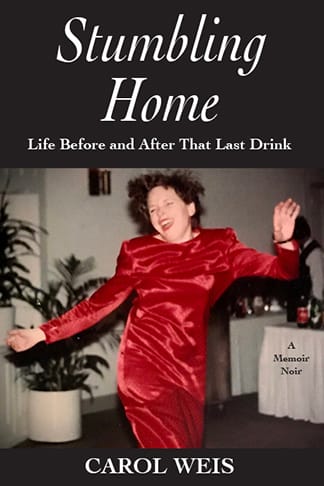
    Excerpted from STUMBLING HOME: Life Before and After That Last Drink by Carol Weis, now available on Amazon.

    View the original article at thefix.com

  • They Fell In Love Helping Drug Users. But Fear Kept Him From Helping Himself.

    Beeler worried that a failed drug test — even if it was for a medication to treat his addiction (like buprenorphine) — would land him in prison.

    She was in medical school. He was just out of prison.

    Sarah Ziegenhorn and Andy Beeler’s romance grew out of a shared passion to do more about the country’s drug overdose crisis.

    Ziegenhorn moved back to her home state of Iowa when she was 26. She had been working in Washington, D.C., where she also volunteered at a needle exchange — where drug users can get clean needles. She was ambitious and driven to help those in her community who were overdosing and dying, including people she had grown up with.

    “Many people were just missing because they were dead,” said Ziegenhorn, now 31. “I couldn’t believe more wasn’t being done.”

    She started doing addiction advocacy in Iowa City while in medical school — lobbying local officials and others to support drug users with social services.

    Beeler had the same conviction, born from his personal experience.

    “He had been a drug user for about half of his life — primarily a longtime opiate user,” Ziegenhorn said.

    Beeler spent years in and out of the criminal justice system for a variety of drug-related crimes, such as burglary and possession. In early 2018, he was released from prison. He was on parole and looking for ways to help drug users in his hometown.

    He found his way to advocacy work and, through that work, found Ziegenhorn. Soon they were dating.

    “He was just this really sweet, no-nonsense person who was committed to justice and equity,” she said. “Even though he was suffering in many ways, he had a very calming presence.”

    People close to Beeler describe him as a “blue-collar guy” who liked motorcycles and home carpentry, someone who was gentle and endlessly curious. Those qualities could sometimes hide his struggle with anxiety and depression. Over the next year, Beeler’s other struggle, with opioid addiction, would flicker around the edges of their life together.

    Eventually, it killed him.

    People on parole and under supervision of the corrections system can face barriers to receiving appropriate treatment for opioid addiction. Ziegenhorn said she believes Beeler’s death is linked to the many obstacles to medical care he experienced while on parole.

    About 4.5 million people are on parole or probation in the U.S., and research shows that those under community supervision are much more likely to have a history of substance use disorder than the general population. Yet rules and practices guiding these agencies can preclude parolees and people on probation from getting evidence-based treatment for their addiction.

    A Shared Passion For Reducing Harm

    From their first meeting, Ziegenhorn said, she and Beeler were in sync, partners and passionate about their work in harm reduction — public health strategies designed to reduce risky behaviors that can hurt health.

    After she moved to Iowa, Ziegenhorn founded a small nonprofit called the Iowa Harm Reduction Coalition. The group distributes the opioid-overdose reversal drug naloxone and other free supplies to drug users, with the goal of keeping them safe from illness and overdose. The group also works to reduce the stigma that can dehumanize and isolate drug users. Beeler served as the group’s coordinator of harm reduction services.

    “In Iowa, there was a feeling that this kind of work was really radical,” Ziegenhorn said. “Andy was just so excited to find out someone was doing it.”

    Meanwhile, Ziegenhorn was busy with medical school. Beeler helped her study. She recalled how they used to take her practice tests together.

    “Andy had a really sophisticated knowledge of science and medicine,” she said. “Most of the time he’d been in prison and jails, he’d spent his time reading and learning.”

    Beeler was trying to stay away from opioids, but Ziegenhorn said he still used heroin sometimes. Twice she was there to save his life when he overdosed. During one episode, a bystander called the police, which led to his parole officer finding out.

    “That was really a period of a lot of terror for him,” Ziegenhorn said.

    Beeler was constantly afraid the next slip — another overdose or a failed drug test — would send him back to prison.

    An Injury, A Search For Relief

    A year into their relationship, a series of events suddenly brought Beeler’s history of opioid use into painful focus.

    It began with a fall on the winter ice. Beeler dislocated his shoulder — the same one he’d had surgery on as a teenager.

    “At the emergency room, they put his shoulder back into place for him,” Ziegenhorn said. “The next day it came out again.”

    She said doctors wouldn’t prescribe him prescription opioids for the pain because Beeler had a history of illegal drug use. His shoulder would dislocate often, sometimes more than once a day.

    “He was living with this daily, really severe constant pain — he started using heroin very regularly,” Ziegenhorn said.

    Beeler knew what precautions to take when using opioids: Keep naloxone on hand, test the drugs first and never use alone. Still, his use was escalating quickly.

    A Painful Dilemma 

    The couple discussed the future and their hope of having a baby together, and eventually Ziegenhorn and Beeler agreed: He had to stop using heroin.

    They thought his best chance was to start on a Food and Drug Administration-approved medication for opioid addiction, such as methadone or buprenorphine. Methadone is an opioid, and buprenorphine engages many of the same opioid receptors in the brain; both drugs can curb opioid cravings and stabilize patients. Studies show daily maintenance therapy with such treatment reduces the risks of overdose and improves health outcomes.

    But Beeler was on parole, and his parole officer drug-tested him for opioids and buprenorphine specifically. Beeler worried that if a test came back positive, the officer might see that as a signal that Beeler had been using drugs illegally.

    Ziegenhorn said Beeler felt trapped: “He could go back to prison or continue trying to obtain opioids off the street and slowly detox himself.”

    He worried that a failed drug test — even if it was for a medication to treat his addiction — would land him in prison. Beeler decided against the medication.

    A few days later, Ziegenhorn woke up early for school. Beeler had worked late and fallen asleep in the living room. Ziegenhorn gave him a kiss and headed out the door. Later that day, she texted him. No reply.

    She started to worry and asked a friend to check on him. Not long afterward, Beeler was found dead, slumped in his chair at his desk. He’d overdosed.

    “He was my partner in thought, and in life and in love,” Ziegenhorn said.

    It’s hard for her not to rewind what happened that day and wonder how it could have been different. But mostly she’s angry that he didn’t have better choices.

    “Andy died because he was too afraid to get treatment,” she said.


    Beeler was services coordinator for the Iowa Harm Reduction Coalition, a group that works to help keep drug users safe. A tribute in Iowa City after his death began, “He died of an overdose, but he’ll be remembered for helping others avoid a similar fate.” (COURTESY OF SARAH ZIEGENHORN)

    How Does Parole Handle Relapse? It Depends

    It’s not clear that Beeler would have gone back to prison for admitting he’d relapsed and was taking treatment. His parole officer did not agree to an interview.

    But Ken Kolthoff, who oversees the parole program that supervised Beeler in Iowa’s First Judicial District Department of Correctional Services, said generally he and his colleagues would not punish someone who sought out treatment because of a relapse.

    “We would see that that would be an example of somebody actually taking an active role in their treatment and getting the help they needed,” said Kolthoff.

    The department doesn’t have rules prohibiting any form of medication for opioid addiction, he said, as long as it’s prescribed by a doctor.

    “We have people relapse every single day under our supervision. And are they being sent to prison? No. Are they being sent to jail? No,” Kolthoff said.

    But Dr. Andrea Weber, an addiction psychiatrist with the University of Iowa, said Beeler’s reluctance to start treatment is not unusual.

    “I think a majority of my patients would tell me they wouldn’t necessarily trust going to their [parole officer],” said Weber, assistant director of addiction medicine at the University of Iowa’s Carver College of Medicine. “The punishment is so high. The consequences can be so great.”

    Weber finds probation and parole officers have “inconsistent” attitudes toward her patients who are on medication-assisted treatment.

    “Treatment providers, especially in our area, are still very much ingrained in an abstinence-only, 12-step mentality, which traditionally has meant no medications,” Weber said. “That perception then invades the entire system.”

    Attitudes And Policies Vary Widely

    Experts say it’s difficult to draw any comprehensive picture about the availability of medication for opioid addiction in the parole and probation system. The limited amount of research suggests that medication-assisted treatment is significantly underused.

    “It’s hard to quantify because there are such a large number of individuals under community supervision in different jurisdictions,” said Michael Gordon, a senior research scientist at the Friends Research Institute, based in Baltimore.

    A national survey published in 2013 found that about half of drug courts did not allow methadone or other evidence-based medications used to treat opioid use disorder.

    A more recent study of probation and parole agencies in Illinois reported that about a third had regulations preventing the use of medications for opioid use disorder. Researchers found the most common barrier for those on probation or parole “was lack of experience by medical personnel.”

    Faye Taxman, a criminology professor at George Mason University, said decisions about how to handle a client’s treatment often boil down to the individual officer’s judgment.

    “We have a long way to go,” she said. “Given that these agencies don’t typically have access to medical care for clients, they are often fumbling in terms of trying to think of the best policies and practices.”

    Increasingly, there is a push to make opioid addiction treatment available within prisons and jails. In 2016, the Rhode Island Department of Corrections started allowing all three FDA-approved medications for opioid addiction. That led to a dramatic decrease in fatal opioid overdoses among those who had been recently incarcerated.

    Massachusetts has taken similar steps. Such efforts have only indirectly affected parole and probation.

    “When you are incarcerated in prison or jail, the institution has a constitutional responsibility to provide medical services,” Taxman said. “In community corrections, that same standard does not exist.”

    Taxman said agencies may be reluctant to offer these medications because it’s one more thing to monitor. Those under supervision are often left to figure out on their own what’s allowed.

    “They don’t want to raise too many issues because their freedom and liberties are attached to the response,” she said.

    Richard Hahn, a researcher at New York University’s Marron Institute of Urban Management who consults on crime and drug policy, said some agencies are shifting their approach.

    “There is a lot of pressure on probation and parole agencies not to violate people just on a dirty urine or for an overdose” said Hahn, who is executive director of the institute’s Crime & Justice Program.

    The federal government’s Substance Abuse and Mental Health Services Administration calls medication-assisted treatment the “gold standard” for treating opioid addiction when used alongside “other psychosocial support.”

    Addiction is considered a disability under the Americans with Disabilities Act, said Sally Friedman, vice president of legal advocacy for the Legal Action Center, a nonprofit law firm based in New York City.

    She said disability protections extend to the millions of people on parole or probation. But people under community supervision, Friedman said, often don’t have an attorney who can use this legal argument to advocate for them when they need treatment.

    “Prohibiting people with that disability from taking medication that can keep them alive and well violates the ADA,” she said.

    This story is part of a partnership between NPR and Kaiser Health News.

    View the original article at thefix.com

  • On the Other Side of Addiction, Only Love Remains

    On the Other Side of Addiction, Only Love Remains

    I knew that when we divorced I had abdicated my rights to the family. But I still loved him as I had since childhood.

    In my darker moments I’d search the obituaries for his name.

    Orlando Reyes Jimenez

    Preparing to grieve my ex-husband’s death had become familiar; a routine performed in solitude. My procedure was always the same. I’d fill his favorite silver mug with chamomile tea and type his name into a search engine. I would scroll the death notices and inhale the steam; it smelled of sunlight and grass. I would wrap my hands around his mug until the tea grew cold. After four years I still hadn’t found an obituary but I knew he could be dead. I knew he had been homeless. I knew his health was spiraling downward. I suspected he still drank heavily. I was tired of the shame and silence that surrounded loving him. Alcoholism overshadowed his life. I did not want it to overshadow his death.

    My Second Family

    At the end of our ten-year marriage I had become terrified that he’d die. Almost daily I would help him to bed after whiskey binges led him to black out. He never remembered the way he crawled down the hallway and how I turned him on his side so he wouldn’t choke on his vomit. In the mornings I’d wipe his clammy forehead and smooth his black bangs. His thick hair still curled at the ends just as it had when we met. We were just kids then, only 12 years old. 

    During our teens I spent so much time at his house that his parents and brothers became my second family. His mom fed me bowls of molé with tortillas while his dad and I discussed books and music deep into the twilight. By the time we got married in our twenties, the wedding ceremony made formal what we had known all along: we were family. In our twenties we partied, but I assumed it was just a college thing. I grew out of it and into graduate school. 

    By the time I began teaching college and seeing music therapy clients his party binges had turned into daily drinking. He began punching holes in the walls of our apartment. When I confronted him, he began to hide his drinking. A drunk driving arrest led to rehab and a year of sobriety. But he relapsed and refused help. He began verbally abusing me. I contracted my world around him until the threat of physical violence became obvious. Eventually I got counseling and spiritual advising and we divorced. I no longer sat with his mom and dad at the kitchen table.

    But Orlando and I stayed in touch. After all, we had been friends since seventh grade. He’d call and tell me about his homelessness, his ejection from a halfway house for being drunk. I remarried, moved, and built a healthy life. The gap between our lives widened. After a few years he stopped calling.

    A Way to Feel Connected

    I began my search for his obituary. 

    My search began as a way to feel connected to him. All typical social contact had been severed by both the divorce and his behavior. At first, acquaintances had fallen away after his violent outbursts in public. Then friends stopped calling after he borrowed money and didn’t pay it back. Even his siblings seemed to become disillusioned after he passed out during a backyard barbecue in front of his nieces. By the time we divorced his family had taken over his care and I dropped out of contact with them. United in our love for him, yet fearing for his life, we seemed to retreat from each other as if disconnecting would help us move forward. 

    When his phone calls stopped and he dropped off social media, I was shadowed by the sense of him wandering the world alone. I would picture him drunk and in constant danger of an accident or cumulation of uncontrolled diabetes keeping him a hair’s breadth from death. I could no longer turn him on his side and wipe his forehead. My search became the only way I could care for him. 

    Each time I didn’t find an obituary, it meant there was still a chance he was alive. 

    Six years after our divorce, his family sent me an email. Orlando had died from a pulmonary embolism, just four days from what would have been our eighteenth wedding anniversary. They did not invite me to the funeral or burial and I craved a way to externalize my grief. I sent a request to the Michigan coroner for his death certificate. When it arrived a few weeks later, I went into my garden and read it repeatedly as in ritual. The cause of death was listed as accidental. I tried not to imagine what had happened. I ran my fingers along the coroner’s signature as if the letters could connect me to everyone who loved Orlando.

    I Needed a Place to Put My Pain

    Most family written death notices are quite simple, and I’m not sure why his family didn’t write one. Perhaps their grief was too heavy to share publicly. Perhaps they were ashamed of him. Or maybe it just wasn’t a meaningful part of their grieving process. It wasn’t the length of the obituary I needed, nor its ability to express the complexity of his life. It was the simple and public recognition that he had existed. That his life warranted notice. The grieving process needs two things: solitude and community. An obituary would have allowed me the feeling of sharing my loss with others. I knew that when we divorced I had abdicated my rights to the family. But I still loved him as I had since childhood. I needed a place to put my pain.

    So I once again returned to brewing chamomile tea in his favorite mug, a silver travel mug that was the only thing of his I’d kept after our divorce. I would cup my hands around its rotund shape and for a moment feel his warmth again. I opened my computer, but instead of typing his name into the search engine, I typed it across the top of a new document. I wrote all the words I had searched for. I gave him an obituary. 

    Jimenez, Orlando Reyes, 42, of Waukegan died on August 20, 2016 at a hospital in Detroit. His death was ruled accidental. Orlando will be remembered for the way he loved to make people laugh and for his engulfing hugs. He is survived by his parents, two brothers, and two nieces. He is also survived by his ex-wife, his childhood sweetheart. She continues to use his favorite silver mug in which she brews tea that smells of summer and hope. In lieu of flowers please forgive the addiction and remember the soul. On the other side of addiction only love remains. 

    View the original article at thefix.com

  • Learning to Have Sex in Recovery

    Learning to Have Sex in Recovery

    I had forgotten that I was once again in control of my own life… I needed to take charge of my sexual experiences just like I had taken charge of my recovery.

    So you used to hang from the chandeliers and now you avoid seeing yourself naked in the mirror? I can relate, friends. When I made the decision to stop using drugs 21 years ago, I was told “the only thing I needed to change was everything.” While this was not entirely true, there was one area that needed a complete overhaul: my relationship to sex. I wondered how I would ever transition from substance-fueled sex to a physical interaction that requires a bit of delicacy, and, dare I suggest, intimacy? 

    It wasn’t easy. 

    Men Are Pigs

    For background, I was raised by two very conservative parents that stopped sleeping in the same room by the time I was 12. The only “talk” my mother had with me was to explain that “men are pigs.” Fairly vague, even for the 1980s. My exposure to “sex” was accidentally finding pornographic magazines in bushes, late night movies on cable tv, and being sexualized by drunk adults. Sex became hardwired in my brain as this thing that men required and to which women begrudgingly submitted. There was little to no information about having sex for fun. Sex was associated with a quiet sense of shame. 

    On top of this, I was fat, and that made me feel unfuckable in suburban Ohio. I was okay with this at some level – remember, “men are pigs” — but I still wanted to try it. 

    The summer of my 17th year, my world got turned upside down. I lost 30 pounds, and suddenly the neighbor boy wanted to show me his dick, which I found entirely confusing. He’d never even given me as much as a sideways glance. I frequently got teased for being a virgin until finally my first real boyfriend “took” what I never felt like I had in the first place. Was I supposed to be feeling something? Anything? I mostly felt indifferent. 

    Alcohol and drugs arrived on the scene at the same time I was trying to figure out the machinery of an adult woman. After a few drinks, I would feel this rush of male attention that suddenly made sense. I felt “sexy.” My sexuality was a lure to pull in a person I thought liked me. Sex became a way of gaining what I wanted, a way of garnering much needed attention. Sex suddenly became more interesting. 

    The first time I had sex with a woman, I woke up from a blackout with her underneath me. Oh hey. Sex was this jumble of things, many of which made no sense to me. I had no idea how to make this thing work. Where was the owner’s manual?

    A Sense of Urgency

    Imagine my surprise ten years later when, 24 hours into my last detox, my crotch suddenly sprung to life without notice. There was a sense of urgency to explore the areas I had so frequently ignored while steeped in a nod. Unfortunately, all this was taking place in a jail cell. My bunkmate complained to deputies I was keeping her up at night with my vigorous activities. For the first time in my adult life, my sexual experiences didn’t revolve around what I could convince someone to do to me or with me. I would have to figure things out for myself. 

    When the first 20 pounds of jail house grits and potatoes hit my thighs, I wasn’t particularly worried. I had become so thin after years of heavy use, I vaguely fit the stereotype of a woman. As I was flat chested with the collarbones sunken in, a bit of padding was a welcome addition on my bony ass…until it went from a folding chair to a whole loveseat. My reignited passion for life was matched by my love of food. 

    Slowly, incrementally, the increasing pounds began stripping away my self-esteem. The idea of fucking anyone seemed like an effort. I fell into a state of sadness. I would not consider letting anyone touch me, outside of a few random pats on ass from my “brothers” in the rehab. 

    This was in stark contrast to my life six months earlier. I had spent many years in a community of sex workers, thirsty bottoms, and quid pro quo relationships with the dopeman. There were no boundaries, and even less consent. In those days, my body was open for business, while my mind was frequently sedated and broken into tiny pieces. 

    What was the solution? My first sponsor insisted that I look at myself in the mirror every night while proclaiming “I love myself.” The intention was good but the reality felt forced. What was it I loved? My face– with a distinct scar across my forehead from a drunken car crash? My smile– which was marred by chipped teeth from grinding on meth benders? The insecure person inside? 

    My First Time…Sober

    Despite my fears, I had a growing interest to road-test the plumper machine. My first sober sexual encounter in recovery was clumsy. I was on a four-hour pass from rehab but I returned in less than 45 minutes. I don’t know why I had even bothered to take my pants off. I stuck my head against the wall in the shower, soaking in the regret. I was disappointed he didn’t even notice that my bra and panties matched. The nerve! 

    The second was much more extravagant. We went to a cheap hotel because he did not have the proper ID to visit my sober living. I barely knew him. I just knew he wanted me. He left me a gift: a ring of hickeys around my neck that made it look as if someone had choked me. This skin memento provided uncomfortable material for my next women’s support group. 

    “What are you getting out of this?” one of the group members asked me. 

    Was I supposed to be getting something? I had forgotten that I was once again in control of my own life. It had been so long since anyone had taken my feelings and my pleasure into consideration. I needed to take charge of my sexual experiences just like I had taken charge of my recovery.

    After bumping my head one more time in the early days– literally and figuratively as the person was quite acrobatic– I made a conscious decision to give my body the rest it deserved. Until I could unravel sex from the need for validation, I would be just fine exploring my own body without the bitter aftertaste. I had confused attention with affection. I presumed that desire meant connection. For me, none of these turned out to be the case. It wasn’t bad sex, per se. It was the fact that my expectations were far exceeding the actual experiences. I had done none of the work to heal my wounded soul and had greedily assumed my equally recovering body would be able to catch up. 

    My Body Is a Gift

    My story has a happy ending. It took many years of unraveling my emotional and physical baggage and eventually creating a filter, a boundary, and a screening process. I began to realize that it was 100% necessary to communicate my needs. I had to discover what I liked, create my list of dos and don’ts. 

    For the first time, I began to enjoy my sexual self with no shame. My body is a gift. Not everyone gets to unwrap it. 

    View the original article at thefix.com

  • The Perils of Dating While Sober

    The Perils of Dating While Sober

    I am acutely aware of how careful I am to minimize my recovery journey when I first start dating someone.

    A few months ago, a male friend and I were talking about the frustrations and disappointments of dating. I mentioned how lonely it can be navigating this world on my own, without a traveling companion, a long-term lover, or a hiking partner, without someone with whom to Netflix and chill on a rainy Sunday.

    He said, “Dating is complicated for everyone, but for you, with your history? I can only imagine. Maybe guys are afraid of you, afraid of your intelligence and strength.” He hesitated and then continued, “Or maybe they’re just afraid to get close because of your bipolar diagnosis and…well, you’re an alcoholic. So a drink in a bar is out. Your history makes them wary. It’s going to take someone special, someone who’s willing to accept that risk and all your baggage.”

    All Your Baggage

    All your baggage. My old shame rose up, and his words fell on me like a one-hundred story building collapsing, cinder block by cinder block, The only words I could say in clipped retort? 

    “It’s called alcohol-use disorder now,” I said. “Update your vocabulary.”

    For days I replayed his assessment in a loop, an auto-play rumination and in self-defense, even wrote out a bulleted response:

    • Men afraid of me? Seriously? Maybe he’s afraid of my brain, but I’m afraid of his brawn. I’ve been sexually assaulted twice by two different men. Statistics show that women are more likely to be harassed and assaulted and raped—their lives endangered—by men than vice versa. 
    • I’m on a low dose of lithium now, and eight years stable and on an even keel since my divorce. My psychiatrist thinks I may not really be bipolar, or that maybe my bipolar instability was triggered by the conditions of my marriage.
    • And on dating apps, so many men post pictures swigging beer, wine, and booze and list beer, wine, and booze as hobbies. Almost always the first message they send is, “Do you want to get a drink?” And when I suggest a walk, a museum, non-boozy meetup? They disappear.
    • No drama, no crazies, no baggage: an oft-repeated list of No’s on dating profiles, but then these men (perhaps women do this, too?) indicate that they are married and looking for discretion, no strings attached; they also like to post photos of bloodsport: bare chested with AK-15’s and dead animals. But no drama!
    • And finally, too risky to love me? I’m a safe bet now! Look at the evidence: Sober, stable, all my s*** sorted!

    Doth the lady protest too much? Might my bulleted explanation be my armor against latent shame? Because what I am admitting to in my list is that I am lovable only now that I am well, and that when I was unwell? I was unlovable. 

    Love Is an Inherently Risky Proposition

    “I stopped loving you when you got sick,” my ex-husband told me when we decided to divorce, and it’s what I have secretly believed for so long. Hence, my adamant insistence that I am well, well, well and have been now for years, years, years. 

    But this narrative—I am such a scary person to love that it will take someone with extra-special love powers to love me—is one that no one with any diagnosis or at any stage of recovery should ever buy into. Love is an inherently risky proposition. We are at our most vulnerable when we love, trusting our hopes and fears to each other. And there is always the risk of love’s end, but, too, always the possibility of love’s beginnings, its growing and expanding.

    And yet, finding our way to a beginning of love with someone can be daunting and terrifying as we have to negotiate our commitment to honesty, open-mindedness, and willingness. We must reconcile that old shame that rises up, sometimes in ripples, sometimes in waves, when we summarize our histories or share how we still struggle with one day at a time with a new partner. I am acutely aware of how careful I am to minimize my recovery journey when I first start dating someone.

    “Oh,” I might say, “I stopped drinking because I wanted to live a healthier life, and for a few years I struggled with depression, but it’s all good now. Really, all good now.” Again that adamant insistence, again that background noise in my head: If he can fall in love with me now in all my lovableness, then none of my previous unlovableness will matter. Of course, even for those who have not struggled with mental illness or alcohol or substance use disorders, it is impossible for “all” to be forever good.

    “Really Crazy”

    I recently ended a relationship with someone after two months of mostly happy, breezy fun but I realized I’d been dodging my shame. When we first met, he mentioned early on that his ex-wife was bipolar. “Really crazy,” he said, and gave me a look that put me on notice.

    So I casually mentioned to him that I had bipolar as well, but “Stabilized!” I said, with a giant calm smile plastered across my face, and I even fluttered my eyelashes in flirty dismissal.

    He said he could see I was in a “good place” and not at all like his ex. And because I want the world to believe that I am in a good place (and most days I am), I nodded in enthusiastic agreement. 

    But then, a few weeks later, he mentioned that my town was known for the State Psychiatric Hospital, opened in the 1840’s and now shuttered. 

    “Have you ever been there?” I asked, because it is now a tourist stop—The Walking Dead once filmed a scene at the mostly abandoned grounds and there are historical markers describing the troubling treatment of the mentally ill across its almost 150 year history.

    “No,” he said, immediately and with a laugh. “I’m not one of the crazies.”

    Of course, during a period of my own instability, I was once one of those “crazies,” in and out of a psychiatric hospital. He knew this by now, though maybe because I “presented” as so very very well, he couldn’t believe that was part of my history.

    To be fair, he made these comments casually, without malice, the kind of talk that generally surrounds those of us who suffer from mental illnesses or who are on a recovery journey. They were the kind of comments I often hear because most people assume, by looking at me and my “got it all together life,” that I am one of them, i.e., “not crazy.”

    But even if his comment was thoughtless, I felt that old shame rise up and stayed silent because I didn’t want him to suddenly see me as sick, and hence unlovable, and consequently maybe leave this beginning of us. So I made a silly remark about ghosts who must surely haunt those grounds. 

    No bulleted list at the ready but here’s what I should have said:

    “It’s hurtful to hear you call someone with my diagnosis ‘really crazy,’ and to call those in treatment ‘crazies.’ We all have our baggage, don’t we? We live and stumble and get up and try to live better, always. All of us.”

    But his remarks and my silence unsettled me. How easy it is for me to talk the talk, but how hard it can be to walk the walk. A few weeks later, I ended this beginning because, yes, I have baggage, and it is not just a free carry-on roller bag, but one of those $20K vintage Louis Vuitton trunks that have drawers and a hanger rod, room enough for my pain and my joy, my mistakes and my amends, my shame and my wisdom. 

    That is, a trunk big enough to carry all my necessities for this continuing journey.

    View the original article at thefix.com

  • The Million Dollar Smile: My Life with Bipolar Disorder

    The Million Dollar Smile: My Life with Bipolar Disorder

    As many as 60 million people worldwide have bipolar disorder. Many of those people, like me, lead productive, happy lives.

    He said my smile was worth a million bucks, or was it that I had a million-dollar smile? 

    I remember when smiling was foreign to me. I’d wake in the morning feeling great for a few minutes, and then the dark clouds came, weighing in on my body, pressing down on me. Depression overwhelmed me, so much so that my entire body ached. I felt empty, hopeless, sad beyond belief, and exhausted.

    An Emotional Black Hole

    It was another day filled with mental and physical pain…another day spent looking for ways to make the pain stop. I sought help from the big one – God. I was in the early stages of finding Him. I also saw a psychologist for therapy, joined a support group, and listened to Melanie Beattie healing tapes. I read books like Happiness Is a Choice and joined a running club. Nothing worked. I sank deeper and deeper into an emotional black hole.

    I wondered how I could enjoy my new relationship with God, love Him, and still feel this intense pain. It was like nothing I ever experienced. I began to understand why people kill themselves, they want to stop the pain. So did I, and I entertained thoughts of committing suicide. Once when running, I visualized doing the deed. It felt real. I sobbed and limped home.

    Even in my desperate search for help, my suicidal thoughts were a closely-kept secret. I was afraid that if I revealed them to anyone I would be admitted to a hospital – maybe locked up forever.

    My life was spiraling down fast. Scared, I called my therapist. He referred me to a psychiatrist who focuses on chemical imbalances.

    The psychiatrist listened to me and asked me a series of questions. He seemed to know the symptoms I experienced without me telling him. Our session ended when he diagnosed me as bipolar 2. He said after six weeks of taking the medication he prescribed, a lot of those symptoms would disappear. I left his office feeling optimistic. Maybe this was the help I needed.

    A Real Smile

    Six weeks later, something wonderful happened. I was in my car and heard something funny on the radio. I smiled – something I hadn’t done in a long time. It felt so good that I pulled the car over and looked at my smile in the mirror.

    It was as if the sun burst out from behind the dark clouds, gobbling each one up. The cobwebs in my brain cleared, and I was smiling – even laughing. The medication wasn’t a miracle worker, but it squelched my black depression and left me with the ability to deal with my problems. 

    That was nearly 20 years ago. I don’t remember what it felt like to live with intense mental and physical pain for no apparent reason, and I don’t want to go there again. So, I take my medication and see my psychiatrist regularly. The dark clouds came back to haunt me once in the last 20 years, and I immediately saw my psychiatrist for help and got back on track.

    The Big Secret

    For the most part, I prefer to keep my bipolar status under wraps. I guess it’s out of the bag now with this story. There’s stigma and prejudice against people who are bipolar. Most people don’t know much about people with mental illness and expect us behave in negative, sometimes scary ways. Some of the most common beliefs are that we have wide mood swings, engage in manic behavior, and that we’re promiscuous, wild spenders, and we can’t sustain relationships or jobs. Even worse, some people, including the media, promote characteristics that bipolar people have tendencies to be violent.

    Sometimes the media reports a story about a criminal or murderer, adding that the person is bipolar. This makes me cringe. They don’t comment if a person has asthma, hypertension, allergies, or was overlooked for a promotion. Labeling these people as bipolar compounds the negative stereotype of violence. People with bipolar disorders don’t come in one category, and most of us, like the general population, do not have violent tendencies. 

    Should I Tell Him?

    Because of the negative stigma and prejudice, I’m careful about who I share my diagnosis with and when. I decided 10 months into a relationship would be a good time for this revelation. By that time, the person I’m in a relationship with would know what I’m typically like. I’m an okay, normal person who gets sad when the situation merits it – like when my boyfriend died from cancer or my job was eliminated. 

    Things moved fast when I met my husband. We started falling in love on our first date, so I felt he should know that I’m bipolar 2 sooner rather than 10 months later. Three months into the relationship, I told Larry about my diagnosis. I remember that nerve-wracking evening. When I tried to speak, the words stuck in my throat. It seemed to take hours before I had the courage to tell him. During this time, Larry grew nervous and wondered if I was going to break up with him. After I told him about my diagnosis, Larry acted like I told him about the weather – not anything serious like being bipolar 2.

    At my suggestion, Larry came with me to the psychiatrist so that my doctor could tell him about my case and answer his questions. Again, I was nervous. I believe I’m okay, but what will my psychiatrist say? What if I’m a nutcase in denial? My psychiatrist of 17 years told Larry that I have a mild case and will be okay as long as I continue taking my meds regularly and get enough sleep.

    Larry and I have been married for three years. As I expected, there haven’t been any crazy episodes or depressions.

    I feel very lucky that I’m getting the treatment I need. I started seeing my psychiatrist four times a year; now I see him twice a year. When I asked him if I could get off the meds, he said it’s not a good idea. I’m fine because I take the medicine.

    There Are a Lot of Us

    As many as 60 million people worldwide have bipolar disorder. Many of those people, like me, lead productive, happy lives. Some articles state that our 16th U.S. President, Abraham Lincoln, had bipolar disorder. Other people with this diagnosis include Catherine Zeta-Jones, Oscar-winning actress; Mariah Carey, singer; Jean-Claude Van Damme, an actor; Ted Turner, media businessman and founder of CNN; Patricia Cornwell, crime writer; Patrick J. Kennedy, Jesse Jackson, Jr., and Lynn Rivers, former members of the U.S. House of Representatives; Jane Pauley, a television journalist; maybe your colleague, sibling or neighbor…and me, a corporate communications and freelance writer.

    Bipolar disorder is a chronic illness with no cure, but it can be managed with psychiatric medication and psychotherapy. I’ve been doing it for nearly 20 years and plan to do that for the rest of my life. Being free of bipolar symptoms enables me to smile…and mean it. 

    View the original article at thefix.com

  • Jason Wahler Reflects on Making Amends to Lauren Conrad in Recovery: "It's Freeing"

    Jason Wahler Reflects on Making Amends to Lauren Conrad in Recovery: "It's Freeing"

    Jason Wahler reconciled with his ex-girlfriend and former The Hills co-star Lauren Conrad as part of his recovery.

    Jason Wahler, along with his girlfriend Lauren Conrad, became reality TV stars on Laguna Beach and then The Hills. Wahler also had a major downward spiral from drinking and drugs, but he finally turned himself around and even opened up his own sober living home.

    As Wahler explained on the E! show Just the Sip, he used to be a “sad lost individual” who “got to a really, really dark place.” In fact, he even tried to take his own life. “The depths of my addiction took me to not contemplation, but attempting suicide.” 

    From The Hills to Recovery

    Wahler felt his downfall began about ten years ago when The Hills first hit MTV. “I’m not proud of it, but 10 to 12 years ago I was the drunk, womanizing alcoholic,” he says. “I was very lost. After we shot Laguna Beach going into season one of The Hills is when my addiction took full force. Drugs and alcohol were my solution.”

    Wahler got sober after hitting bottom, and he did the standard 12-step process of making amends to people you hurt in your addiction. He of course reached out to former girlfriend Lauren Conrad, and back in 2011 he confessed, “There’s stuff that happened in the past with my drunken ways that I need to address.”

    Now he says, “Part of the process of recovery and living your life sober is making amends and I made amends to Lauren. It’s freeing. When you can take ownership of your actions and let people know you truly want to make things right and you apologize and you take the actions to fix what you did, it feels good.”

    In the past, Wahler said that Conrad was “a big part of my life,” and that “she’s an incredible person and so supportive of anything I do to stay clean.”

    Wahler added that he’s “definitely transformed. I’m happy to be able to say that. I’m content in my own skin. I can sit here and look you in the eye and I’m comfortable, I’m confident, I’m happy. I have a great group of people around me.”

    Celebrity Rehab

    After starring on The Hills, Wahler did a stint on Celebrity Rehab, and he told The Fix, “I think Dr. Drew kind of nailed it on the head. I don’t necessarily agree with everything he says, but I’ve been to a lot of rehabs and seen a lot of doctors, and he’s definitely up there with the best. He said that being young, and being on the TV and limelight and stuff kind of ignited [my alcohol use disorder]. It’s going to come up at some point if you have it, but this lifestyle kind of set fire to it and made it come up a hundred times faster.”

    View the original article at thefix.com

  • You Are Not My Father

    You Are Not My Father

    I had spent my whole life seeking certainty and security and this break exposed the foolhardiness of that quest. Here was the raw slate of rock bottom once again.

    Last year, a few days before Father’s Day, we were driving home after a week in South Carolina with my parents, the kids asleep in the back. My husband and I had basically just spent a whole week as strangers, sleeping in different bedrooms, not connecting. He had to work late every night — his reason for sleeping in a separate room. I felt our bodies repelling each other from the moment we arrived at their house. I had sensed that force around him often but something about the new setting made it more palpable.

    For months I had been unable to wear my wedding bands because a rash flared up each time I kept them on for more than a few hours. Denial protected me from these not-so-subtle warning signs.

    On one of the first nights of the trip my son woke up screaming with ear pain. It could have been from the pool water or from the mounting pressure of his parents’ silent stalemate. His dad very kindly ran out to get him medicine; he was always very loving about things like that. Our little boy’s seeming agony mysteriously vanished as quickly as it came on and we retreated to our separate rooms.

    I made some really terrible meals that trip. I had brought my Insta-pot, which I was not yet savvy with. I made big pots of mushy things amidst a lot of steam. I worried he was quiet because the food sucked; he wasn’t super on board with my change to a plant-based diet. It was both sweet and heartbreaking how hard I was trying. As if I could make it all okay by making a good enough meal; so the family could be good enough, so I can be good enough. Food wasn’t going to fix it.

    The hardest moment was on the third day of the trip. We were in the living room and it was late morning. He and I had been coming and going in opposite directions. He’d take our son to a golf lesson early, then I’d take the kids to the beach while he stayed at the house to work. That third morning I decided to speak up.

    “Do you have to work so much? Usually when people go on vacation they send an auto-response email that they will be unavailable until such and such time. Do you think you could do that?”

    To be fair, I don’t even know if I asked him. It’s very possible that I was indirect, and just insinuated that he was being a big old disappointment for working.

    He erupted. He was clearly under stress and I had poked the bear. His explosive anger was nothing new. On that day I didn’t know the full extent of what was really going on with him, but I would find out soon enough.

    I decided to make the most of the trip with the kids and my parents’ company. I made sure I got to some recovery meetings. I called my sponsor. I’m sure she and I laughed at some things. Which brings me back to the beginning of this story about the end of my 12-year marriage.

    I was sitting on the passenger’s side, well into the 13-hour drive back to New Jersey, when he turned to me.

    “What are you going to get me for Father’s Day?”

    Cool as a cucumber, out glided: “Why would I get you a Father’s Day gift, you’re not my father.” Suffice to say I got the intended reaction, both from him and for myself. He raged and banged the steering wheel saying I was so heartless and cruel, while I was able to seal myself off inside, emotionally protected and walled off. The next day I tried to make it right with a card and apology. My comment that day in the car is not the reason for what happened next, but it has taken me a long time to truly accept that.

    By the end of that week he told me he was leaving, that our relationship had been “too turbulent” and that he “needed to stop living his life trying to please other people.”

    I didn’t see my husband as a man, but as a burden, an overgrown child. At times I hated him for that and other times I took advantage of it. That is not a partnership and this was no longer a union. I suspect it may never have been. A part of me understood his announced departure. The loudest parts of me did not.

    For the first month I chewed on his abandonment (I mean break-up) speech in my mind and was reminded of what my first sponsor said to me when I disingenuously bemoaned my people pleasing defect. She looked me in the eye and said “Jane, there is no such thing as people pleasing, the only person you are interested in pleasing is yourself.” That resonated. I had considered myself a virtuous victim and was seeking attention for how taken for granted I felt. But I wasn’t able to use that card anymore. And yet here I was, years later, applying my sponsor’s observation to my husband’s behavior so I could justify my resentment, superiority, and self-pity. Ugh, I had become a smug sober person.

    He had to rehearse his break up speech to me several times, as I tried coaxing him to go see a therapist together or be open to any more conversation about it. He was resolute, and he moved out the next day. He had been in therapy for six months and knew this is what he wanted. The last night with him in the house, I lay alone in the giant king-size bed, a terrified child. I had spent my whole life seeking certainty and security and this break exposed the foolhardiness of that quest. Here was the raw slate of rock bottom once again.

    From the beginning my wrongs and disappointment haunted me: I see-sawed between guilt/shame and blame/anger. I had been sober long enough at this point to remember men and women who had walked through the death of children, unexpected illness, and other horrific circumstances, and they continued to show up and not drink. So I knew I could do that too, one day at a time.

    The following weeks and months after were brutal. I rapidly dropped 20 pounds, found a lump in my breast, got into twisted relations with an older man in a 12-step meeting and did my best to care for two confused and upset children as an angry-hungry-tired-lonely-just-not-drinking mommy. I got an excellent therapist right away. I upped my meditation game by taking the TM training and sticking with it. I wrote a fourth step, did the fifth, immediately tried to make amends and get him back (yes I’m embarrassed to write that).

    After about six months I started coming out of it. I learned that my willingness to talk and express and work things out with people can go to an extreme, placing me in a position to be harmed. I made my circle smaller. Slowly I’ve experienced a loosening of all the places inside me that had wrapped and toiled and contorted to survive in what I had perceived as a very unfriendly place to live, because it had been, because of how I had been living.

    We got married before I got sober. We spent 15 years together, during which I discovered 12-step recovery. My husband never objected to my meetings and I was able to make recovery the center of my life from the beginning. While together, I gave birth to two healthy, loving, fearless children. I’m grateful for all that my marriage gave.

    I’ve grieved the loss of what I thought we could have had. There are days when I am hurt and take his choices and continued actions personally but I do not miss his presence in my life. I’ve experienced a year full of character defect withdrawal. I notice how the spaces where the unhealthy behaviors used to be sometimes fill up with stories about how terrible I am, how unworthy I must be of love and belonging, how I’m too much, and don’t really matter. These stories are loud and call for my attention. I tell them I hear them and continue taking positive action in my life anyway.

    Now, a year out from that car ride and the ensuing events, I am changed. I speak up where I once would have avoided a conversation, I am no longer interested in being all things to all people, I don’t feel the need to be busy all the time, and I’m really good at enjoying my own company. My relationship with my family of origin also dramatically changed this past year and sometimes I feel that as an unexpected additional loss. And yet, having grown up within a family with the disease of alcoholism, it’s a loss I have been suffering my entire life and not grieving.

    My husband’s leaving revealed a lot of my dependencies. I had used his presence as a source of security after getting sober. His absence is no longer a source of insecurity.

    On Father’s Day this year I know my God as an unconditionally loving parent. Like it says in the Big Book of Alcoholics Anonymous “He is the father, we are his children.” I didn’t have to drink to hit bottom and find a new relationship to a Power that allows me to thrive. If I had continued living like I was, I would be missing out on the experience of my own sobriety.

    View the original article at thefix.com

  • Mistakes I Made on My Journey Toward Self-Compassion

    Mistakes I Made on My Journey Toward Self-Compassion

    The emotional and physical abuse had cost me every last ounce of self-respect I had. But I refused to see myself as weak, a victim.

    John is escorted into the courthouse wearing a dirty ochre jumpsuit, cuffed at both the wrists and ankles. He looks straight at me in the wing and then quickly lowers his eyes, while I follow him boldly with my gaze, as if this is a staring contest I intend to win.

    I notice the public defender right away, a small bald man who pulls his briefcase behind him like a suitcase. He is wiry and can’t sit still, either hopped up on coffee or cocaine. The district attorney has instructed me not to get emotional. “This is just a hearing,” she says, “there’s no jury yet, and judges don’t like it when you seem like an unreliable narrator.”

    I roll my eyes. “I’m not going to get emotional,” I say, “It’s not my thing.” She tells me she has seen public defenders get hostile, make accusations, try strategies to get a victim discombobulated, to contradict herself, to look mentally unstable.

    Not me.

    When I received the subpoena to testify, I was also given a victim’s packet, a small handful of pamphlets informing me of shelters, therapists, and resources available to petition for restitution. I threw them away. I refuse to be a victim.

    They call me Jane Doe and I am satisfied with this identity. I would rather be anyone than who I am: a survivor of his raging chaos, the predictable woman who positions herself as collateral damage in a psychodrama in which she envisions herself the savior. I internally restructure my story to cast myself as a resilient hero, an arbiter of the complicated events of my life that have somehow made me stronger, clearer, more potent in my circuitous journey.

    I tell myself John was an opponent, not my perpetrator. A perpetrator is an illusion, a false dichotomy of black and white hats. He didn’t beat me up, I beat myself up. He was my sparring partner, and I wanted to know my weaknesses and where to grow stronger. Like Clouseau with Cato, I gave him access to my home, my body, my mindset, my skill-set. I gave him my weapons and the keys to my personal kingdom. I asked him not to use them against me, but God knew we would eat of the fruit and gave us access to it anyway.

    I run through the ways I never trusted John, as this is proof that I couldn’t have been betrayed. Either I don’t believe I deserve happiness, or I generated my own ultramarathon training session. I suspect it’s the former, but I try to convince myself it’s the latter. I may lose a battle, but I won’t lose the war. I repeat this to myself as I sit in the DA’s office, waiting to be called to the stand.

    “Did anything the defendant do frighten you?” she asks.

    Very little the defendant has done the past four years has not frightened me. To be more precise, the emotional and physical abuse have cost me every last ounce of self-respect I had. But I refuse to see myself as weak, a victim.

    “No.”

    She doesn’t shake her head in disgust, but rather acquiesces, as if she has seen this over and over.

    ***

    The first time John broke into my home, I was at work. When I got home, he was on the balcony with a kitchen knife he’d used to cut his hair. When he saw me, he pressed the knife to his throat, just slightly, to make an indentation without blood. He stared at me until my fear softened to compassion. I hadn’t seen him in months, but I didn’t call the police. I just calmly talked him down the stairs, as if he were a negligent child, and reminded him that he could have seriously hurt someone. I politely asked him to please not break in again.

    “Okay,” he said.

    When his mom hadn’t heard from him in over ten days, she called me to ask for help. I researched addiction symptoms online, and searched local arrest records until I found him. Since his arrest had nothing to do with me, I convinced myself I could be of service and made an appointment to visit him in West Valley Detention Center. The weeks that followed were a jumble of court proceedings and miscommunications.

    He was released in less than a month with a misdemeanor and a punch card for Narcotics Anonymous meetings.

    I saw him as the victim of a system that didn’t understand his illness and I was defensive and proactively defiant. I spent his first night out of custody in a motel room with him, nurturing his wounded spirit.

    Then I helped him get his car out of impound, let him borrow money, helped him get medications and appointments, helped him get back into school and into a part-time job, and genuinely believed we would fight the madness with surefooted logic and love.

    No matter how deep into the rabbit hole of illness he descended, through the drinking, cocaine and hallucinogens, and even when his numerous arrests would sometimes lead to jail and eventually prison, nothing shook my loyalty.

    “I love you,” I reassured him, “As long as you exist in any form, anywhere, I will find you. I will always come to you. Wherever you are, I will be there. There is nowhere I won’t look. In life or in death, I will come for you.”

    And I meant it. I loved John irrationally, with an intensity I didn’t have for myself or my well-being. I loved him in all the ways no one loved me, and I nurtured his brokenness like I wish someone had nurtured mine. I couldn’t go back and hold myself as a little girl, so I clung to him, and to the idea of rescuing him.

    I didn’t ask him to change, I didn’t even know what change would look like. I loved him without regard to what he did. I loved every muscle and hair on his body, every nuance of his mouth: the way it silently shook instead of making noise when he laughed, the wide sardonic grin, and even pursed with displeasure. I loved his deep voice and his dramatic anger, louder and more direct than anything I am or could ever display.

    I loved him for his ability to fall apart.

    When he broke into my home again, the consequences were more dire.

    ***

    After John was convicted, I broke all communication with him and got myself into therapy. After the hearing, the judge insisted on a protective order for me and my children. Shaking, I took the papers into the bathroom and looked at myself in the mirror, a skeleton of a woman, 25 pounds thinner than I was when I was first subpoenaed. I didn’t recognize the frail woman looking back at me. All I knew is that I needed to change.

    I was raised to turn the other cheek. If someone takes your cloak, give him your shirt. If he imposes on you for one mile, go with him two.

    My mother taught me if a man tries to abduct you, pretend you adore him, and you won’t get hurt. I never fought back. I was raised to respond to aggression with a smile.

    I was drawn to people with addictions the way I am drawn to sugar, metabolizing them quickly and easily, with a counterintuitive calm. I was drawn to the way they let me play a supporting role in their life drama, so I didn’t have to recognize my own drama. With someone chaotic and wild and suffering, I didn’t have to think about myself. There was always somewhere to hide.

    I thought turning the other cheek made me a good person. I didn’t care how many slaps that got me or how much it hurt. I just kept turning the other cheek.

    My therapist recommended a daily yoga practice, so I began the journey of learning to listen to and trust my body. Through yoga, I learned to pay attention to my body. I began to recognize I could feel, and that I did feel, and I learned to be more honest with myself about the trauma lodged in my body.

    Before yoga, I didn’t even recognize trauma.

    It took sitting in my pain, rather than working to fix everyone else’s, to teach me to pay attention to my own needs. The process started with breathing mindfully, and then moving mindfully. Eventually I learned to feel my body, then recognize its pain, and eventually, recognize desire.

    I am a recovering enabler. I had to unlearn self-abnegation to understand that you can’t really be empathetic until you know where you end and someone else begins.

    Meeting my own needs serves as an example for others to meet theirs. When we show compassion and care for ourselves, we give others in our lives implicit permission to find wholeness in themselves, without needing or relying on us.

    Now I begin every morning with sitting in stillness, listening to my body, and paying attention to what comes up, even if it’s painful. Especially if it’s painful. Since I’ve committed to this daily spiritual practice of ruthless self-honesty, I haven’t had time to rescue anyone else. I have enough to rescue right here.

    Listening to the wisdom of my body has healed the cognitive dissonance once lodged in my psyche. I can now talk lovingly to the demons inside, rather than projecting them onto other people, trying to heal in others what I didn’t know was wrong in myself.

    Letting someone hurt you in the name of love hurts them too.

    Before we can be in a healthy relationship with another, we need to be self-aware enough to know who we are, and to identify what we want and don’t want. And we can’t do that when we spend all our time running around trying to fix other people.

    I no longer want to be anyone’s light or hope or savior. Now, I’m committed to being my own best friend.

    View the original article at thefix.com

  • How I Stopped Hurting Myself in the Name of Love: Tales of a Recovering Enabler

    How I Stopped Hurting Myself in the Name of Love: Tales of a Recovering Enabler

    The emotional and physical abuse had cost me every last ounce of self-respect I had. But I refused to see myself as weak, a victim.

    John is escorted into the courthouse wearing a dirty ochre jumpsuit, cuffed at both the wrists and ankles. He looks straight at me in the wing and then quickly lowers his eyes, while I follow him boldly with my gaze, as if this is a staring contest I intend to win.

    I notice the public defender right away, a small bald man who pulls his briefcase behind him like a suitcase. He is wiry and can’t sit still, either hopped up on coffee or cocaine. The district attorney has instructed me not to get emotional. “This is just a hearing,” she says, “there’s no jury yet, and judges don’t like it when you seem like an unreliable narrator.”

    I roll my eyes. “I’m not going to get emotional,” I say, “It’s not my thing.” She tells me she has seen public defenders get hostile, make accusations, try strategies to get a victim discombobulated, to contradict herself, to look mentally unstable.

    Not me.

    When I received the subpoena to testify, I was also given a victim’s packet, a small handful of pamphlets informing me of shelters, therapists, and resources available to petition for restitution. I threw them away. I refuse to be a victim.

    They call me Jane Doe and I am satisfied with this identity. I would rather be anyone than who I am: a survivor of his raging chaos, the predictable woman who positions herself as collateral damage in a psychodrama in which she envisions herself the savior. I internally restructure my story to cast myself as a resilient hero, an arbiter of the complicated events of my life that have somehow made me stronger, clearer, more potent in my circuitous journey.

    I tell myself John was an opponent, not my perpetrator. A perpetrator is an illusion, a false dichotomy of black and white hats. He didn’t beat me up, I beat myself up. He was my sparring partner, and I wanted to know my weaknesses and where to grow stronger. Like Clouseau with Cato, I gave him access to my home, my body, my mindset, my skill-set. I gave him my weapons and the keys to my personal kingdom. I asked him not to use them against me, but God knew we would eat of the fruit and gave us access to it anyway.

    I run through the ways I never trusted John, as this is proof that I couldn’t have been betrayed. Either I don’t believe I deserve happiness, or I generated my own ultramarathon training session. I suspect it’s the former, but I try to convince myself it’s the latter. I may lose a battle, but I won’t lose the war. I repeat this to myself as I sit in the DA’s office, waiting to be called to the stand.

    “Did anything the defendant do frighten you?” she asks.

    Very little the defendant has done the past four years has not frightened me. To be more precise, the emotional and physical abuse have cost me every last ounce of self-respect I had. But I refuse to see myself as weak, a victim.

    “No.”

    She doesn’t shake her head in disgust, but rather acquiesces, as if she has seen this over and over.

    ***

    The first time John broke into my home, I was at work. When I got home, he was on the balcony with a kitchen knife he’d used to cut his hair. When he saw me, he pressed the knife to his throat, just slightly, to make an indentation without blood. He stared at me until my fear softened to compassion. I hadn’t seen him in months, but I didn’t call the police. I just calmly talked him down the stairs, as if he were a negligent child, and reminded him that he could have seriously hurt someone. I politely asked him to please not break in again.

    “Okay,” he said.

    When his mom hadn’t heard from him in over ten days, she called me to ask for help. I researched addiction symptoms online, and searched local arrest records until I found him. Since his arrest had nothing to do with me, I convinced myself I could be of service and made an appointment to visit him in West Valley Detention Center. The weeks that followed were a jumble of court proceedings and miscommunications.

    He was released in less than a month with a misdemeanor and a punch card for Narcotics Anonymous meetings.

    I saw him as the victim of a system that didn’t understand his illness and I was defensive and proactively defiant. I spent his first night out of custody in a motel room with him, nurturing his wounded spirit.

    Then I helped him get his car out of impound, let him borrow money, helped him get medications and appointments, helped him get back into school and into a part-time job, and genuinely believed we would fight the madness with surefooted logic and love.

    No matter how deep into the rabbit hole of illness he descended, through the drinking, cocaine and hallucinogens, and even when his numerous arrests would sometimes lead to jail and eventually prison, nothing shook my loyalty.

    “I love you,” I reassured him, “As long as you exist in any form, anywhere, I will find you. I will always come to you. Wherever you are, I will be there. There is nowhere I won’t look. In life or in death, I will come for you.”

    And I meant it. I loved John irrationally, with an intensity I didn’t have for myself or my well-being. I loved him in all the ways no one loved me, and I nurtured his brokenness like I wish someone had nurtured mine. I couldn’t go back and hold myself as a little girl, so I clung to him, and to the idea of rescuing him.

    I didn’t ask him to change, I didn’t even know what change would look like. I loved him without regard to what he did. I loved every muscle and hair on his body, every nuance of his mouth: the way it silently shook instead of making noise when he laughed, the wide sardonic grin, and even pursed with displeasure. I loved his deep voice and his dramatic anger, louder and more direct than anything I am or could ever display.

    I loved him for his ability to fall apart.

    When he broke into my home again, the consequences were more dire.

    ***

    After John was convicted, I broke all communication with him and got myself into therapy. After the hearing, the judge insisted on a protective order for me and my children. Shaking, I took the papers into the bathroom and looked at myself in the mirror, a skeleton of a woman, 25 pounds thinner than I was when I was first subpoenaed. I didn’t recognize the frail woman looking back at me. All I knew is that I needed to change.

    I was raised to turn the other cheek. If someone takes your cloak, give him your shirt. If he imposes on you for one mile, go with him two.

    My mother taught me if a man tries to abduct you, pretend you adore him, and you won’t get hurt. I never fought back. I was raised to respond to aggression with a smile.

    I was drawn to people with addictions the way I am drawn to sugar, metabolizing them quickly and easily, with a counterintuitive calm. I was drawn to the way they let me play a supporting role in their life drama, so I didn’t have to recognize my own drama. With someone chaotic and wild and suffering, I didn’t have to think about myself. There was always somewhere to hide.

    I thought turning the other cheek made me a good person. I didn’t care how many slaps that got me or how much it hurt. I just kept turning the other cheek.

    My therapist recommended a daily yoga practice, so I began the journey of learning to listen to and trust my body. Through yoga, I learned to pay attention to my body. I began to recognize I could feel, and that I did feel, and I learned to be more honest with myself about the trauma lodged in my body.

    Before yoga, I didn’t even recognize trauma.

    It took sitting in my pain, rather than working to fix everyone else’s, to teach me to pay attention to my own needs. The process started with breathing mindfully, and then moving mindfully. Eventually I learned to feel my body, then recognize its pain, and eventually, recognize desire.

    I am a recovering enabler. I had to unlearn self-abnegation to understand that you can’t really be empathetic until you know where you end and someone else begins.

    Meeting my own needs serves as an example for others to meet theirs. When we show compassion and care for ourselves, we give others in our lives implicit permission to find wholeness in themselves, without needing or relying on us.

    Now I begin every morning with sitting in stillness, listening to my body, and paying attention to what comes up, even if it’s painful. Especially if it’s painful. Since I’ve committed to this daily spiritual practice of ruthless self-honesty, I haven’t had time to rescue anyone else. I have enough to rescue right here.

    Listening to the wisdom of my body has healed the cognitive dissonance once lodged in my psyche. I can now talk lovingly to the demons inside, rather than projecting them onto other people, trying to heal in others what I didn’t know was wrong in myself.

    Letting someone hurt you in the name of love hurts them too.

    Before we can be in a healthy relationship with another, we need to be self-aware enough to know who we are, and to identify what we want and don’t want. And we can’t do that when we spend all our time running around trying to fix other people.

    I no longer want to be anyone’s light or hope or savior. Now, I’m committed to being my own best friend.

    View the original article at thefix.com