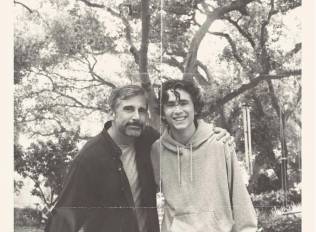
Even though it’s a positive change, adjusting to marriage with a newly sober spouse is a challenge. Some situations are a little tricky to navigate.
After being with my husband for 15 years, it might seem like there would be few suprises left. We have the kind of relationship that includes conversations like, “Hey, Harmony, will you cut off this skin tag on my back?” followed by, “Um, no; I’ll make you a doctor’s appointment.” And later, “Does this look infected to you?”
Robbie is what people in recovery like to call a “normie.” When it comes to alcohol, he can take it or leave it. He can just have one beer, and he doesn’t obsess over when he’ll have the next one. He likes to have fun, and he doesn’t really care if that fun involves alcohol. By the time I entered recovery, he rarely drank anymore; I was always the one drinking, and one of us had to stay sober enough to drive.
The suprise here is that I am the alcoholic and he is the normie, because everyone who knows us assumed it was the other way around.
My husband and I built the foundation of our relationship on having as much fun as possible. (Read: we partied a lot.) We’ve been to New Orleans, our closest major city, many times over the years, visiting for Mardi Gras, romantic getaways, concerts, plays, art events, and stuff with our kids. In true alcoholic form, I remember very little of any of it.
Since I entered recovery, our relationship has shifted considerably. He is exactly the same as he’s always been, but everything about me is changing — how I react to things, what I do and say, how I view and enjoy my life, and how I relate to my husband. All these changes bring up a lot of questions and discussions, obviously, like if we go to New Orleans, will my husband drink? How much? Will I be able to handle it?
Recently, he scored amazing tickets to an NFL game in the New Orleans Superdome. When he asked me to go, I panicked: I’ve got under two years of sobriety under my belt, and we’ve never been to any major city without alcohol. In fact, the last time we went down there, I started with a hand grenade on Bourbon Street and ended with what I believe to be absinthe. None of this was my husband’s fault — we were just there having fun — but his version of “fun” is a lot less dangerous than mine. When I start drinking, I drink to forget.
Neither of us knew how severe my issues were when we met and fell in love. We got married, had a bunch of kids, and BAM! I was in so deep I almost didn’t find my way out. But that’s the beauty of true partnership; Robbie supports me fully in everything I do, and he wants nothing more than to see me happy and healthy. Even so, adjusting to the evolution is a challenge, and even though it is a very positive change for our family, there are still times when it can be a little tricky to navigate.
So, what does my sobriety mean for us as a couple? What are the rules of marriage when one person is an addict and the other is not?
What to do with the alcohol. The issue of what is and is not allowed in the house is a big one. I’m a stay-at-home mom, which means I’m the one staring at the liquor cabinet at 5 p.m. while our children complain about dinner. For us, getting the alcohol out of the house and keeping it out was vital to maintaining my sobriety. I can’t even have Oreos in the house, lest I eat them all, so for now, it’s better this way.
However, I do know many couples who still have alcohol at home and the alcoholic partner isn’t bothered by it. It really boils down to triggers. I, for example, am triggered every damn day when I’m home alone with the kids. If I have alcohol around me and no other adults as backup, I would have a very hard time resisting. Robbie understands that and it’s not a problem for us. Also, we didn’t have to throw any of it out because I drank every last drop of it myself before sobering up.
Prescription medication. Because I’m the mom, I’ve always been in charge of the meds. Uh, I wasn’t exactly responsible — and it was very hard to admit that, both to myself and to my husband. So for a while, and at different points since then, he’s had to take over administering the medication so I don’t eat the entire bottle like candy. He’s been willing to do that because he knows it’s an easy way to help me on my journey to wellness.
What about the chocolate? One of the biggest problems I’ve had in recovery is my insane sweet tooth. Every time my husband or the kids bring home candy, cupcakes, Lucky Charms, or cake, I generally eat it all before they have a chance to even taste it. Robbie started hiding his stash of cookies from me, which naturally I found, and to be honest we’ve had more spats over the junk food than anything else.
Am I always going to be the designated driver? GOD NO. I’m not stable enough to drive around a bunch of drunks. This is why there is Uber.
Football season is huge in our house, and as I mentioned above, we went to an NFL game where everyone was drinking. And it was tough — but as long as I’m honest with him about my struggles, he is happy to help. It’s the honesty part that gets me: being willing to admit that I am powerless over alcohol.
On the morning of the game, I got up early to attend a meeting, and prepared before we left to avoid getting too hungry, tired, or thirsty. It was literally the most fun I’ve ever had at a football game, ever — and that includes when I was drinking.
Parties! We go to them. We might have to leave earlier than we’d like. I hope that gets better, but I’m proud of myself for going.
Meetings. We have three children under the age of 10, and my husband is rarely home before 8 p.m. Finagling our schedules to allow for me to make it to meetings is probably one of the biggest issues we face, and sometimes I get resentful when I really need to go but have to wait until another time. He learned pretty quickly that when I go, I’m much easier to live with, so he does everything he can to accommodate me. Smart man.
Sex. That’s a topic for a whole other essay. Suffice it to say, it’s been an adjustment.
I can honestly say, for the first time in a very long while, that I’m truly the person that Robbie fell in love with all those years ago, and his patience with me as I fumble my way through recovery has completely renewed the love I have for him. Marriage in recovery is a beautiful, beautiful thing.
Even though it’s a positive change, adjusting to marriage with a newly sober spouse is a challenge. Some situations are a little tricky to navigate.
After being with my husband for 15 years, it might seem like there would be few suprises left. We have the kind of relationship that includes conversations like, “Hey, Harmony, will you cut off this skin tag on my back?” followed by, “Um, no; I’ll make you a doctor’s appointment.” And later, “Does this look infected to you?”
Robbie is what people in recovery like to call a “normie.” When it comes to alcohol, he can take it or leave it. He can just have one beer, and he doesn’t obsess over when he’ll have the next one. He likes to have fun, and he doesn’t really care if that fun involves alcohol. By the time I entered recovery, he rarely drank anymore; I was always the one drinking, and one of us had to stay sober enough to drive.
The suprise here is that I am the alcoholic and he is the normie, because everyone who knows us assumed it was the other way around.
My husband and I built the foundation of our relationship on having as much fun as possible. (Read: we partied a lot.) We’ve been to New Orleans, our closest major city, many times over the years, visiting for Mardi Gras, romantic getaways, concerts, plays, art events, and stuff with our kids. In true alcoholic form, I remember very little of any of it.
Since I entered recovery, our relationship has shifted considerably. He is exactly the same as he’s always been, but everything about me is changing — how I react to things, what I do and say, how I view and enjoy my life, and how I relate to my husband. All these changes bring up a lot of questions and discussions, obviously, like if we go to New Orleans, will my husband drink? How much? Will I be able to handle it?
Recently, he scored amazing tickets to an NFL game in the New Orleans Superdome. When he asked me to go, I panicked: I’ve got under two years of sobriety under my belt, and we’ve never been to any major city without alcohol. In fact, the last time we went down there, I started with a hand grenade on Bourbon Street and ended with what I believe to be absinthe. None of this was my husband’s fault — we were just there having fun — but his version of “fun” is a lot less dangerous than mine. When I start drinking, I drink to forget.
Neither of us knew how severe my issues were when we met and fell in love. We got married, had a bunch of kids, and BAM! I was in so deep I almost didn’t find my way out. But that’s the beauty of true partnership; Robbie supports me fully in everything I do, and he wants nothing more than to see me happy and healthy. Even so, adjusting to the evolution is a challenge, and even though it is a very positive change for our family, there are still times when it can be a little tricky to navigate.
So, what does my sobriety mean for us as a couple? What are the rules of marriage when one person is an addict and the other is not?
What to do with the alcohol. The issue of what is and is not allowed in the house is a big one. I’m a stay-at-home mom, which means I’m the one staring at the liquor cabinet at 5 p.m. while our children complain about dinner. For us, getting the alcohol out of the house and keeping it out was vital to maintaining my sobriety. I can’t even have Oreos in the house, lest I eat them all, so for now, it’s better this way.
However, I do know many couples who still have alcohol at home and the alcoholic partner isn’t bothered by it. It really boils down to triggers. I, for example, am triggered every damn day when I’m home alone with the kids. If I have alcohol around me and no other adults as backup, I would have a very hard time resisting. Robbie understands that and it’s not a problem for us. Also, we didn’t have to throw any of it out because I drank every last drop of it myself before sobering up.
Prescription medication. Because I’m the mom, I’ve always been in charge of the meds. Uh, I wasn’t exactly responsible — and it was very hard to admit that, both to myself and to my husband. So for a while, and at different points since then, he’s had to take over administering the medication so I don’t eat the entire bottle like candy. He’s been willing to do that because he knows it’s an easy way to help me on my journey to wellness.
What about the chocolate? One of the biggest problems I’ve had in recovery is my insane sweet tooth. Every time my husband or the kids bring home candy, cupcakes, Lucky Charms, or cake, I generally eat it all before they have a chance to even taste it. Robbie started hiding his stash of cookies from me, which naturally I found, and to be honest we’ve had more spats over the junk food than anything else.
Am I always going to be the designated driver? GOD NO. I’m not stable enough to drive around a bunch of drunks. This is why there is Uber.
Football season is huge in our house, and as I mentioned above, we went to an NFL game where everyone was drinking. And it was tough — but as long as I’m honest with him about my struggles, he is happy to help. It’s the honesty part that gets me: being willing to admit that I am powerless over alcohol.
On the morning of the game, I got up early to attend a meeting, and prepared before we left to avoid getting too hungry, tired, or thirsty. It was literally the most fun I’ve ever had at a football game, ever — and that includes when I was drinking.
Parties! We go to them. We might have to leave earlier than we’d like. I hope that gets better, but I’m proud of myself for going.
Meetings. We have three children under the age of 10, and my husband is rarely home before 8 p.m. Finagling our schedules to allow for me to make it to meetings is probably one of the biggest issues we face, and sometimes I get resentful when I really need to go but have to wait until another time. He learned pretty quickly that when I go, I’m much easier to live with, so he does everything he can to accommodate me. Smart man.
Sex. That’s a topic for a whole other essay. Suffice it to say, it’s been an adjustment.
I can honestly say, for the first time in a very long while, that I’m truly the person that Robbie fell in love with all those years ago, and his patience with me as I fumble my way through recovery has completely renewed the love I have for him. Marriage in recovery is a beautiful, beautiful thing.
“A really cool expression of the family bond in the film is how the love survives everything that the disease can throw at it. Despite so much trauma, at the very end, you see that that core love never goes away.”The journey from addiction to recovery is a personal one, with details usually confined to family, friends, and maybe a therapist’s office or sobriety fellowship. But what happens when you open the doors to the public, laying bare the trials and triumphs that got you to this point? Since the publication of his father’s award-winning memoir, Beautiful Boy: A Father’s Journey Through His Son’s Addiction, his own memoir, Tweak: Growing Up on Methamphetamines, and his writing for The Fix and other publications, Nic Sheff’s experiences with addiction and his subsequent recovery have played out under the public’s gaze.
Now, with the Amazon Studios wide release of the feature film Beautiful Boyon October 12th, Nic Sheff is going to experience a whole new level of recognition and fame. Now more than ever, anonymity is a thing of the past, but he remains dedicated to his personal recovery and the principles of a healthy program. With the premiere fast approaching, The Fix is honored that Nic took time to sit down and talk to us.
The Fix: How did you and your father decide to initiate and move forward with the movie project? Was it agreed upon from the beginning that your book and his book would be turned into a combined film if successful? How did you go about deciding to combine Tweak: Growing Up on Methamphetamines with the Beautiful Boy story, or was this choice made by the filmmakers?
Nic Sheff: We always thought the best idea was to combine the two books. Right after publication, we met with Jeremy Kleiner, a producer with Plan B Productions, and this is before the company had won two Academy Awards for producing 12 Years a Slave and Moonlight. They were just starting out, but when we sat down with him over dinner, I just felt that he got what we were trying to do with the books. Also, we had a friend in common who had been a heroin addict and had died due to this disease. It gave us an immediate emotional connection.
You have to realize that there have been so many movies about addiction that show the downward spiral of a person as the drugs overtake their life. Many of these films show these people hitting bottom, then end with them dying or getting into rehab and ending on a hopeful note. Although there have been some great movies like that, our idea was to do something different. We wanted to show the effect the addiction has on the family because my Dad had written about it so amazingly in Beautiful Boy. We wanted to combine the family narrative with the addiction narrative.
Along with that combination, we wanted to show a process that so many people experience when they first try to get sober — the cycle of relapse caused by the pain of being without the drugs and having to face your feelings. When the pain comes, we reach out to the one thing that we know has kind of made us happy for so long, and we end up relapsing. As soon as we take the drugs again, they immediately take hold, and we can’t stop. I felt that process of relapsing had never been depicted in films. We wanted a movie that shows how hard it is to get out of that cycle. Ultimately, the answer, if there is an answer, is that there is a love that exists within a family, and that love never goes away. The ending of the movie doesn’t tie up the story with a bow, but it does emphasize that that love is still there. It will never go away. I know that is not true in all cases, but it was true in our story. As a result, I thought it was a really powerful way to end the story.
Nic Sheff Image Credit: UCLA Friends of the Semel Institute Open Mind Community Lecture and Film Series
In an interview with Variety, Timothée Chalamet said about first meeting you, “It was all trepidation on my part — nerves and anxiety — which was immediately settled by [the] extraordinarily warm and kind and intelligent and wise person that Nic is, that is innate to him but also through his experiences and his life.” What was it like for you to meet the actor that would play you and tell your most deeply personal story on film? What do you think stands out about his portrayal of you?
God, that is so sweet of him to say that about me. He’s such a sweet guy. I must admit that I wasn’t familiar with Timothée’s work when we first met at a coffee shop. As soon as he came in, I saw that he has this incredible energy and passion for his work. Sure, I could tell that he was nervous about meeting me, but he also was just so committed to getting it right. I immediately felt comfortable with him because I knew he was coming to the role with a very open mind. He wanted to make his portrayal of this young person struggling with addiction as honest and as authentic as possible. He was so willing to learn in an active way.
He asked me a million questions about everything from the emotions I was feeling to the physicality of what it actually looks like to be high on these drugs and what it looks like to be detoxing from these drugs. There’s something really amazing that Timothée does in the movie. It’s something I feel that I’ve not ever seen in a movie about addiction before. Even as he’s in the trenches and high and doing these unconscionable things like breaking into his parents’ house and stealing from his little brother and sister – at the very moments when he’s being volatile and angry and out of control – he conveys this self-awareness that he doesn’t want to be this person and he doesn’t want to be taking these actions. It seems like his body is almost possessed.
As a performer, Timothée was able to hold those two contradictory elements at once. He really expresses that sense of being trapped in the addiction and the behavior. At the same time, you see him fighting to hold onto who he was before the addiction took over; you can see how much guilt and shame he feels about everything he is doing, even while he is doing it. I thought that was so remarkable because it was exactly how I felt when I was out there. I saw myself doing these behaviors, and I was so horrified at myself, but I couldn’t stop. Indeed, that feeling of powerlessness is so devastating. It’s at the heart of the disease, and to see it captured so well on film I thought was truly remarkable.
At the Colorado Health Symposium in August, you talk about how watching the movie makes you feel so grateful because it’s such an amazing reminder of the miracle of recovery. Is gratitude the very heart of your recovery?
Absolutely. Although I know the film wasn’t made for this reason, I felt that the filmmakers gave me such an incredible gift by making this movie. It is such a visceral reminder of everything we went through as a family. It’s such a great help for me because I’m still very much involved in recovery. It’s a big part of my life every single day. In some ways, however, I have moved on. I write for television now, and I am doing things that aren’t necessarily connected to telling my story and writing about addiction. Seeing the movie, seeing my life reflected back to me, it hit home in a way that I hadn’t felt in a long time. I felt again on a very deep level what an incredible miracle it is that I survived and how much came back to me. My family and I have such a close relationship, and it’s beyond anything I ever thought possible. It makes me so grateful.
Every day, gratitude is such an essential part of my existence. Battling this disease, I have gone through such hell that coming out the other side is something I need to acknowledge on a daily basis. I try to be grateful and to express my gratitude. The amazing thing about being sober is how you learn to appreciate and love the simple moments of life. I am so grateful to be able to go out on a walk with my dogs or go out to dinner with my wife. The little things are so sweet like just watching a movie. Gratitude is a gift of sobriety that I keep close to me.
Like you, I first tried drugs when I was eleven years old, smoking pot. Although I didn’t develop a problem until high school, I know my eyes were opened to that feeling of escape. It felt like an answer. Did you feel this way as well? Do you believe the movie effectively highlights the real dangers of early drug use?
Yes, I felt that way exactly when I first smoked pot when I was eleven. I felt this very immediate sense of relief. Up until that point, I had felt so insecure and uncomfortable in my own skin. I just didn’t fit in anywhere. Smoking pot for the first time felt like the first real answer that I had ever found. I kept turning to drugs to cope with everything from success to failure to shyness and everything in between. Thus, when I wasn’t using, I really developed no skills to handle what life threw at me. I kept going back to the drugs because they were the only coping mechanism that I’d ever learned.
In the movie, I do think we show that relapse is not about having a good time. Most people think addicts relapse because they want to keep the party going. They think we are enamored with this fast-paced life. In my experience, I was just in a tremendous amount of pain, and I kept reaching out to the drugs to try to feel better. I really see that theme well-expressed in the movie. Every time Timothée relapses, it’s because he’s in pain. He doesn’t want to relapse, but he can’t stop himself. He does not know how to break that cycle.
For example, there’s a scene in the movie where Timothée and Steve are smoking pot together. Timothée is in high school, and he’s convinced his Dad to smoke pot with him. In the scene, you see that the Dad is trying so hard to connect with his son on a personal level. He believes that smoking pot with his son might help connect them. However, for the son, he’s already in his disease. All he can focus on is the drug. In that scene, we see how he keeps bringing the topic back to the drugs, and he wants to hear about the other drugs his Dad is doing or has done. He wants ammunition so he can feel justified about his using, and he wants to be exonerated in the process from his feelings of guilt. He doesn’t care about connecting; he cares about what his disease wants him to care about. He’s so obviously obsessed with the drug. I definitely felt like I hadn’t seen anything like that before.
Dr. Gabor Maté writes, “The question is not why the addiction, but why the pain.” What does that quote mean to you? Do you agree with him? Is treating the underlying trauma behind the addiction the key to long-term sobriety?
I think that quote is amazing. It makes me remember my last treatment center. When I got there, they asked, “Why are you here?” I replied, “Because I am an addict, and I can’t stop using meth and heroin.” They said, “That’s not the reason that you’re here. It’s not because of the drugs. It’s because of the feelings that were making you use the drugs.”
I knew right away how true that was for me. As I said, I was in a lot of pain growing up, and drugs were the one thing that I found that made that feel better. I’m sure it’s different for many people, and I am not an expert in addiction. I am just sharing my own experience. It definitely was super helpful for me to start exploring and treating that underlying pain behind the addiction. Some of it was just chemical. Going on antidepressants helped at first, then I was diagnosed as bipolar. Now I am on lithium for the bipolar disorder. All of that stuff helped to address that pain and break the cycle.
To me, recovery is like trying to put together this puzzle. There are all these different puzzle pieces. They are not the same for everyone, but for me, those puzzle pieces have been therapy, medication, fellowship, and 12-step. All of these puzzle pieces come together to allow me to stay sober, and they are all really important. However, they are different for everybody. I wish there was one solution that worked for all people, but unfortunately, that’s not the case.
In Tweak: Growing Up on Methamphetamines, you write, “There is this crazy fear I have of being rejected by anyone – even people I don’t really care about. It’s always better to leave them first, cut all ties, and disappear. They can’t hurt me that way – no one can.” Is this fear at the very core of what drives the escapism of addiction?
That’s a fascinating question. I think it definitely was a big contributor to the pain that I needed to use the drugs to help relieve. As I’ve gotten more long-term sobriety and had the opportunity to work on myself, I have found that I have developed these amazing friendships with other people. I never before had anything like the friendships I have today. Before I got sober, it was too scary for me to be vulnerable enough to have friends. Having friends means the potential of losing those friends. The lasting friendships that I’ve been able to form mean so much to me. It’s such a gift.
You have to realize that my disease wants me to be alone. It wants me to be isolated so it can take control. When I was alone, my disease would be talking to me, and it would make me feel like I wasn’t worth anything. Still, it does take courage to have friendships. Without my recovery, I don’t think it would have ever happened. My recovery and those friendships go so well together.
Worrying does not serve me at all. When I get into that negative headspace, I still have a hard time getting out of it. Luckily, I have friends that I can talk about it with, and they help me get more perspective. They help me take a step back and see again the value of my life. It’s one of the greatest gifts of authentic connection.
You know from firsthand experience how hard the disease of addiction is on families. Should families see this film together? Should parents take their teenagers? If they do, how should they prepare both themselves and their kids for the film before and what should they do afterward?
It’s hard for me to be prescriptive about anything. I really only can express things that come from my own experiences. I do believe that having conversations about this subject are really important for a family to consider. I have learned a lot by going around with the film to screenings and talking with people afterward. The main reason I’m doing it is that this film opens the door to such a great opportunity to have conversations about these issues. Watching this film raises awareness by making it easier for people to have honest talks about this disease.
Even more importantly, it is helping to not only emphasize recovery but also reduce the stigma around addiction that prevents such talk in the first place. From my perspective and beyond my personal stake, I believe the more people that see this film, the better. It will raise conversations that might not have occurred without it.
It made me proud to be connected to this film after I first saw it, and I realized there is nothing glamorous about the drug use in the movie. There is a scene in the movie where the son relapses. He does drugs with this girl, and it doesn’t look like a lot of fun. Instead of presenting it as fun or wild or on the edge like they do in a lot of movies, you really see how much guilt and shame the son has about it. There is no party period. Right after it happens when he’s alone, he breaks down and starts crying.
The power of the movie is that it really shows that the reason people use is because of this pain that they are experiencing. Relapsing tends to be a desperate attempt to escape that pain. It also shows the effect that a relapse has on the family. It was painful to watch it on the screen and kind of relive it again.
Watching the film reminded me of when I first read my Dad’s book. It was so hard to realize and see how much of a negative effect I had on him and my whole family. It was important to me that the film would capture that feeling, and it does it so well. Thus, I believe it would be amazing for families to see this film together. I think it would encourage honest conversation afterward.
The one warning I would add to that recommendation is that for people in recovery, especially early recovery, it can be really triggering to watch the explicit drug use in the film. There are some very intense scenes of IV drug use that could be triggering. I would encourage people in early recovery not to put themselves in a position where they might be triggered. If they are worried that it might be a possibility, then I would recommend that they choose caution and not take an unnecessary risk.
In Tweak: Growing Up On Methamphetamines, you write, “Sure, I buried it. I buried it and buried it and turned away from everything light and sweet and delicate and lovely and became so scared and scarred and burdened and fucked up. But that goodness is there, inside – it must be.” Do you believe this movie can help people struggling with addiction find the goodness within themselves and embrace recovery? If so, how?
Wow! That’s creepy to hear that quote again. I haven’t gone back and read Tweak in such a long time, and hearing it is such a sad reminder of how I was feeling. It amazes me how far my life has come since then, and it makes me feel so grateful.
This movie exemplifies that gratitude by showing in such a beautiful way how much love there is within a family. You really see the love within our family, and it’s a reflection of the way that families are. I am so impressed by the incredible bond between parents and children, and also between brothers and sisters. A really cool expression of that bond in the film is how the love survives everything that the disease can throw at it. Despite so much trauma, at the very end, you see that that core love never goes away.
I remember when I was out using, I had this horrible thing happen. My girlfriend OD’d, and I had to call 911 and do CPR. Thankfully, she came out of it, but she had to go to the hospital. Of course, I went with her, and it was such a wake-up call. I decided I had to do something to stop all of this. I called my Dad, and I told him, “Okay, I don’t want to go into rehab, but I want to come home and get clean on my own.”
My Dad had learned enough at that point to know that wasn’t going to be a good idea, and I wasn’t going to be able to do it on my own. He knew he couldn’t let me come home and put everyone else at risk. He said to me, “No, you can’t come home. I really hope you get help, but I can’t help you unless you’re willing to go into treatment.”
When I heard that from him, I was devastated. It was devastating to hear that from my father. All I wanted to do was come home. I was angry and hung up the phone, but even at that moment, when he said I couldn’t come home, I also recall this profound awareness of his love for me. I knew he wasn’t drawing that boundary because he didn’t care about me. Even after everything that had happened, I instinctively knew that love was still there. In the movie, the themes include that such deep love never goes away and that forgiveness is always possible. For people struggling with addiction, that’s a powerful message that they need to hear and that needs to be heard.
Nic and David Sheff Image Credit: UCLA Friends of the Semel Institute Open Mind Community Lecture and Film Series
The date turned out to be a boobytrap of triggers that I wasn’t totally prepared for. But mindfulness, resilience, accountability – recovery – kicked in when I needed it most.
I startled as my phone buzzed a text against my thigh. It was my date.
“I’m late, but I’ve got tacos!”
Relax, I urged myself, taking a breath and taking in the surroundings. It’s going to be fine. It’s just tacos.
This was my first date in well over six months. Unless you include a Saturday night in late August while I vacationed in Iceland. We ran all over Reykjavik searching for traditional lamb meat soup, to no avail. It was whimsical, it was carefree, but it was all the way in Iceland. And it didn’t even end with a kiss. This taco rendezvous felt like a legitimate return from a dating hiatus.
Dating is challenging. Sober dating can be truly precarious. First of all, I have very little courtship experience. My M.O. has always been meet, mate, marry. Eventually, I learned not to wed every guy who showed interest. Twenty years of consecutive long-term relationships meant that at 36 years old I became sober and legitimately single, for the first time in decades. SCARY.
At the very least, it’s uncomfortable. And why do so many of us drink? To treat discomfort! “Meeting for drinks” is both neutral ground, and grants permission for each party to self-medicate throughout the ordeal.
It’s natural to want a strong drink (or in my case a strong drink and maybe a powerful pill) to relax. When I’m home getting ready, agonizing over my hair, outfit, and what to say, “just one” would go a long way towards numbing my nerves. But “just one” steers me down a dangerous path. Before I know it, I’d be back on stage at POP-Solo karaoke, blackout wasted, singing “Sexy Back” off key. (ALLEGEDLY! There’s no evidence.) It’s just not worth the risk.
Deciding when, or whether to “out myself” as sober to a guy is always a gamble. He had mentioned “wine” more than once as a suggestion for our first activity. (An early red flag I adeptly ignored). Refusing a glass in the moment can be difficult and awkward, so I casually commented prior to the date, “I actually don’t drink…but if you want wine, it’s cool.” When he didn’t respond with the all-too-common: “Really?? You don’t drink ever??!!??” my optimism was buoyed.
So I waited for Taco Guy with zero alcoholic pre-lubrication, counting breaths as a healthy coping mechanism instead of throwing back shots at the bar. He arrived, tall and attractive. He had a large bag of local Mexican food in one hand, a spirited canine attached to a leash in the other. He even brought me a Fresca, remembering my preference for sparkling water. Fresca is no La Croix, but he got points for thoughtfulness.
The date started out smoother than expected. As dinner wrapped up, he clumsily remarked he wasn’t sure what to do next. “Normally I’d take you to a bar, go wine tasting…something revolving around drinks.” My teetotaling ways left him at a loss.
I remember those days, pre-sobriety. Alcohol: a necessary ingredient for every situation. I once turned down an otherwise solid, yet sober guy over this. “Sorry, beer is seriously that important to me. I practically live at breweries. We’ll have nothing in common!”
Taco Guy was stressed about what we wouldn’t get to do together in future meetings. “Wine tasting? BBQs and Beer? How do you have fun without drinking?”
In nearly two years of sobriety, I’ve hardly been bored. I secretly questioned his capability for booze-free entertainment, but stayed aloof. “Anything you can do with alcohol, you can do without. I promise. I’m super fun.“
“Do you do anything bad?” he asked skeptically. I laughed out loud, thinking how he’d probably never know the truth about my former IV drug use and three years left in probation.
“Trust me,” I assured him. “I’m not all good.”
He had a teasing smile. “Oh yeah?” Sweetly persistent and skilled at flattery, he convinced me to bring our dogs to his place. They could play in the backyard and we could watch Netflix.
What the hell, I thought. Prove you can be fun!
Within 15 minutes, I was standing in his small, tidy apartment. He’d called me beautiful and made his interest in me obvious. Did this mean we were going to make out? Was I ready? Do I make the first move? What are the rules?
In the past, this was easy. Drink, flirt, and use alcohol as an excuse for whatever indiscretion occurred. Sober dating is not easy. Sober sex is on a whole other level.
He spoke, blessedly interrupting my thoughts. “I’m going to have a whiskey, do you mind? I’m really nervous.”
“Go ahead, of course!” I answered bravely, but thought REALLY?!?! Not fair!! I’m stone cold sober, trying to navigate first date rules, and you get to wash away your worries with hard liquor while I sip water to tame my cottonmouth. UGH!
He poured a hefty amount of Jack Daniels over ice, and I took the opportunity to use the bathroom.
Shutting the door behind me, I leaned against it, worrying. Is he going to kiss me? Or more? Is my deodorant still working? Should I wash under my arms? I should use his mouthwash!
The mirror reflected back glossy color on my freshly styled hair, nervous rosy cheeks, and a trace of pink lipstick that had mostly wiped off on the Fresca. I looked decent. I’m not a bad catch, for a sober chick. Wait, what if he tastes like liquor? Is it weird if I ask him to use mouthwash? No that’s crazy. Or is it?
Leaning into the sink to wash my hands, a familiar sight stood out on the countertop: the bright, cunning orange of a medicine vial. Right there, in plain sight. No cupboard snooping necessary.
My vision went fuzzy on the edges. Drying my hands on a towel, I waited for the buzzing feeling to dissipate. I’ve been sober awhile, but I’m not immune to triggers. Medication bottles are not just benign bathroom articles.
I chewed on my bottom lip and thought over my next move. One of the labels was readily visible: “Metoprolol.” Phew, I thought. Heart medicine. No big deal. Without warning, my hand took over and snatched up another bottle, turning it label side up.
Hydrocodone-acetaminophen. Otherwise known as Vicodin.
Opiates were my drug of choice, my former best friend and the most seductive, manipulative, toxic lover I’ve ever tangled with.
Setting the menacing vial down, I stepped away from the sink, clenching my hands at my sides.
I could take a couple.
It only took a second for the thought to formulate. I envisioned the euphoric, care-free feeling. Pictured worrisome “first date rules” slipping away, letting go and enjoying the moment.
Picking up the bottle once more, I shook it lightly.
How many are in here? I bet he wouldn’t notice any missing.
The thought was brief. But it was charged with deadly potential. Lucky for me, mindful recovery teaches me I don’t have to believe my thoughts. I have a choice.
I don’t want this. It isn’t me anymore.
I extricated myself from the bathroom, delivered from temptation.
Taco Guy was on his second tumbler and had stepped outside to smoke. Menthols. Of course! My brand. At least they were, once upon a time. This date presented landmines everywhere I turned.
Against my better judgment, I stayed long enough to play with fire. Taco Guy is pretty hot, kind and gainfully employed. I wasn’t planning a future together, but I hadn’t yet ruled out seeing where the night would go. Holding a menthol between my fingertips, I said flirtatiously “It’s been awhile.” I took a drag, hoping I looked dangerous and sexy. Coughing, I just ended up likely looking like a silly girl who hadn’t inhaled in awhile.
I stayed long enough to smoke the cigarette and regret it. Long enough to sulk and wish things were different. It’s not fair. I don’t want to be an addict. I want to be normal – I want to be able to get drunk and make out. I wished, for a moment, that Taco Guy and I weren’t so incompatible.
While I pouted privately, I knew I was kidding myself. The truth is, we are incompatible and I was uncomfortable. I don’t really wish I could drink and have an excuse for my behavior. I definitely don’t wish I could take his pills or go back to using. What I guess I really wanted was just to be on a date where I could be my honest, open, sober-out-loud self.
I don’t want to date if I can’t be real. That probably means when I’m genuinely ready, I’ll date guys who are also in recovery. I’d questioned this when I first became single and sober. Who do I date? Can I date someone who drinks regularly? I got my answer this night.
Crushing the cigarette in a well-used ashtray, I reached for my keys.
He looked rejected. “You’re leaving? I promise to be a gentleman. We’ll just watch a movie.”
Within a couple hours in his presence, I’d given in to smoking. Next, I might ask for a sip of whiskey. Once the brown liquid passed my lips, burning the back of my throat, I’d slink into the bathroom. Tilting the bottle of Vicodin back and forth, contemplating the siren song as the pills clicked against one another.
Nope. Not gonna happen. I love myself too much to go back there.
Driving home, I felt a mix of relief, pride, and sorrow. And a touch of nausea from the cigarette. When was the last time I’d looked a bottle of pills in the face and walked away?
The date turned out to be a boobytrap of triggers that I wasn’t totally prepared for. But mindfulness, resilience, accountability – recovery – kicked in when I needed it most. I was tempted, but not overwhelmed. I won that battle.
A few days later, Taco Guy texted. I had to be firm and honest. “I can’t date someone who drinks. That’s become very clear. Thanks, and good luck.”
To my surprise, he replied with a compromise:
“I shouldn’t drink either. I’ll try to stop. You could be a huge support and help to me with this.”
As if the triple threat – alcohol, cigarettes and pills – wasn’t enough, co-dependency alarms rang in my ears. The final red flag was flown.
Firmly informing him that his request was wildly inappropriate, I blocked his number.
Over the last 20+ years, I’ve made really disappointing, damaging relationships decisions. Looking back, all I manage is, “What the fuck were you thinking?”
Just for once, I’d like to look at my life and think, “Well done, girl. You’re doing your best. It’s not easy, it’s not painless, but you’re making smart choices.“
I think that time might be now. I could be doing it right for once. Saying “yes” to a drama free, recovery-centric era of radical self-love. Saying “no” to drugs, alcohol, and self-destructive behavior one nerve-wracking date at a time.
Tiffany Swedeen, RN, BSN, CPC/CPRC is a certified life and recovery coach, She Recovers Designated Coach, and a registered nurse in recovery herself from opioids and alcohol. Tiffany lives “sober out loud,” proudly sharing her story through advocacy and blogging and is passionate about helping others do the same. Her goal is to eradicate shame and empower all to live a life of radical self-love. You can contact Tiffany through her website Recover and Rise, read her blog www.scrubbedcleanrn.com and follow her @scrubbedcleanrn.
Sobriety doesn’t come with a handbook. If it did, you’d have to be sober first to read it.
People with addiction issues are not used to setting boundaries, especially when those boundaries involve behaviors we have reinforced for years.
I spent years violating boundaries as a drunk. Particularly when it came to relationships. Piss me off and I’d become belligerent. Let me drink all night and I’d throw up on your carpet. Invite me to a party and I’ll embarrass you in front of your friends. Weddings? Absolutely! Sign me up as the drunkest attendee. For drunks, the people who let us violate their boundaries are the ones we come back to over and over again.
I chose to become sober and dry after drinking made my life unbearable. My fiancé Jill didn’t make that choice. She didn’t have to; she wasn’t experiencing the same struggle with alcohol abuse I was. Drinking was ruining my personal and professional relationships. I spent my days trying to make up for what I destroyed at night. She had a glass or two of wine when she felt like it and functioned fine the next day.
***
Sobriety doesn’t come with a handbook. If it did, you’d have to be sober first to read it. Perhaps I would have learned about being a decent sober person if I had gone to an in-house treatment program. I did my sobering up in the wild, so to speak. My changes, positive and negative, took place in front of everyone around me.
Jill and I were blindsided by boundary-setting issues early in my sobriety. Our relationship was one of the few things from my drinking days I wanted to save. At best, it was hanging by a thread. We agreed to stay together while I tried to get a firm grasp on sobriety. She gave me support and encouragement as I experienced little successes: one day sober, one week sober.
I appreciated Jill’s support. We never discussed the specifics of what I’d need from her. I wouldn’t have known what to ask for anyway. I intended to go to AA every day for the first 90 days and I was seeing an individual counselor and going to a weekly all-male support group. I was bursting at the seams with support; I was exhausted from so much support.
Jill drank wine. Not my drink of choice. I was the typical Philadelphia-living, bearded, tattoo-covered, craft beer drinker. The higher the ABV the better. The more ounces the better. Wine? No thanks. I hadn’t asked Jill to stop drinking or to keep alcohol out of the house but she had naturally done so, initially. I assumed we had an unspoken agreement.
A couple weeks into my sobriety, we had plans to spend a relaxing afternoon and evening together. I was leaving work early to watch a Team USA World Cup soccer match, an event I would have typically used as an excuse to overconsume alcohol on a weekday. Just like football games, tennis matches, holidays, and days ending in a y.
However, my newly-sober-person plan consisted of spending time watching soccer and eating takeout Thai food with Jill.
Jill sent me a text asking if I would pick her up a bottle of wine on my way home from work. It was a reasonable request on the surface; she didn’t have a car, so it was easier for me to pick up the wine on my way home. Pennsylvania has interesting liquor laws: you can’t walk into any random gas station or grocery store and grab an alcoholic beverage; there are special stores for buying wine and spirits and separate bottle shops where you can purchase beer.
Jill’s request didn’t offend me at first. She knew I didn’t drink wine and she was supportive of my sobriety and told me she was proud of me. I knew her request for a bottle of wine meant we were likely going to have sex that evening. I had no issue with that – of course I could bring her a bottle of wine.
On the way home, I picked up the finest bottle of $10 red wine I could find. I guess we weren’t going to watch soccer after all.
We had the kind of evening you can only have when you are in a relationship that’s starting to heal after a long period of damage. You know, sexual healing? Jill had a glass of wine or two over the course of the night. I found out later Team USA had won their game.
Everything was perfect.
Until it wasn’t.
There were a couple things I hadn’t told Jill about my trip to the wine store. First, I had broken out into a panic while I was in the store. I’m no stranger to anxiety attacks, but this one hit me hard.
Making matters worse, I chose to get her wine from a store directly across the street from the meetinghouse for the AA group I was attending. I felt like I was sneaking behind enemy lines as I came and went from the wine shop. I expected to see someone I knew from meetings standing outside smoking. I bent my head down and rushed back to my car.
To hell with them, I thought at the time. If someone sees me, I’ll tell the truth. I flashed back to the time my middle school friend told his parents the open beer he was holding was for a friend. Not a believable story then, still not a believable story as an adult.
No one from the group had seen me, but mentally the damage was done. I tend to ruminate on things until they drive me crazy and I spent the next few days stewing on what Jill had asked me to do. How rude. How disrespectful. Didn’t she understand my position? How absurd I should have to say that I don’t want to go into a wine shop as an alcoholic.
I decided I needed to tell Jill about my boundary issue when I picked her up from work that Friday. Every Friday I’d pick her up from the University of Pennsylvania campus where she worked, we’d get Indian takeout and go home to Netflix.
“You really screwed me over the other day,” I started the second she sat in the car.
“What are you talking about?” She asked.
“Why did you think it was OK to ask me to pick you up a bottle of wine?”
“You didn’t have to say yes. I could have gotten it myself.”
Our conversation spiraled into an argument.
“I don’t want that poison around me right now. What would I have done if someone from AA saw me?”
“I won’t ever ask you to pick me up wine again. That’s easy.”
“Oh, I’m beyond that,” I told her.
“Are you asking me not to keep alcohol at home? That’s easy too.”
“That’s the least you can do.”
“You can’t ask me never to drink. That’s too controlling for me. I’m a grownup.”
“Fine. I’d appreciate you not doing it around me for a while.”
We drove home without getting our food.
***
I told the story of the bottle of wine and our argument at my next men’s group meeting.
“I’d say I did a good job setting my boundaries,” I proudly told Counselor Gary and the group.
“You did a piss poor job setting boundaries,” Gary replied. “You willingly crossed your own unstated boundary. And then you got mad about it.”
“At least she knows now what I won’t stand for,” I shot back
“You don’t have a right to tell her what you won’t stand for. I’d say you have a lot of work to do on yourself before you get to that point. Especially with Jill.”
“Why should she get to drink still if I can’t? How will we get along?” I asked.
“You can remember she’s an adult and she can do what she wants. That includes choosing to stay with you. You should focus on that, and not nit-picking behaviors she has no idea rub you wrong.”
“I have boundaries, damn it!” I said.
“Right. That’s new for you. That’s new for the people around you. People can’t read your mind. You’re responsible for setting your boundaries. You’re responsible for maintaining them. Not Jill.” Gary shut me down.
I sat, arms crossed and unreceptive the rest of the session. Gary’s words stung. I was responsible for setting my boundaries? How could I do that? I drove home wondering how I could verbalize the things I was feeling.
***
I worked hard as my weeks of sobriety turned into months; hard at my work, hard at my relationships. Jill and I turned a corner. We found a way to work with each other and communicate our needs.
We set some basic boundaries, ones that would have made sense to a sober outsider. I would never be asked to handle alcohol in any way. No purchasing, no opening a bottle, no carrying a drink to her across the room. The tradeoff, although Jill didn’t ask for it, was that wine could exist in our house without upsetting me. She could have a glass of wine at a dinner out and I wouldn’t feel affronted.
Other boundaries were a little less perceptible. We had to negotiate the boundaries needed for a healthy relationship. I communicated my needs to Jill more often. She began to open up more to me about her needs. We found ourselves more in periods of harmony as we strengthened our bond.
Gary was instrumental on my end. He provided an unbiased view of my unacceptable behavior. He gave me feedback on how I could approach situations without sabotaging them. He coached me on identifying situations I wasn’t comfortable with, and how to better communicate them to my friends and family before things got out of hand.
Today, Jill and I are married with a three-year-old daughter. I recently passed the fourth anniversary of my sobriety. Parenting and being a husband are rewarding and challenging roles that require setting and respecting boundaries. It’s something I’ve gotten better at in my sobriety and something I’m thankful for the opportunity to continue improving.
So many people rush into relationships in early recovery. This may be related to neurochemistry: we’re suddenly deprived of the substances that made us feel good and we need to find a substitute.
I’ve spent the last six and a half years of recovery wondering why I have been so emotionally immature when it comes to romantic relationships. Why have I sulked over communicating my needs? Why have I formed such insecure attachments that I wonder when I’ll see the person again before they have even left? Why have I felt so crazed and simultaneously flummoxed at my behavior? Reflecting on my relationships during my recovery, I can describe them in one word: disaster. But they’ve also been a blessing.
When I found recovery, relationships were the last thing on my mind; I could barely function. I spent most days struggling to sufficiently caffeinate myself to get out of my apartment and to a meeting. For the first few months, I lugged my 300-pound body around wondering where this elusive pink fluffy cloud was, because it certainly wasn’t on my radar.
As time progressed, my body began to recover: my liver regenerated—which is quite remarkable considering the quantity of cocaine I snorted and the four bottles of wine I drank each day—my depression lifted enough that I was able to function, and I lost weight. I was hardly experiencing the promises, but I could see that my life had improved. The fact I no longer felt compelled to drink was a miracle in itself.
Sufficiently recovered—or so I naively thought—I looked for romantic distraction in the rooms. A smile from someone at the break would elicit a rush of feel-good hormones. I wonder if they like me? would play through my mind (well, that’s the PG version I’m willing to share, but you get the picture). Needless to say, this didn’t end well.
I ignored the guidance to stay single for a year after finding recovery, because in my mind I was thinking: I’m a 32-year-old woman. Why shouldn’t I date? I’m an adult! Off I went and dated, just like every other person in the room because—let’s face it—few people actually adhere to that rule!
And so I chose some lovely chaps from that swimming pool of dysfunction, Narcotics Anonymous. Promises that they’d treat me right, and that they really liked me, were exactly that: just promises. Even though I expressed my desire for a relationship over just messing around, my experience was that once these guys got what they wanted, they were off. Wondering what was wrong with me—and playing the victim role really well—I’d move on to the next dude.
I couldn’t see until much later in my recovery why I was so terrible at picking a suitable partner. I was blind to my part in these encounters and all of the emotional baggage I brought to them. I’d often act like a teenager: sulking, gaslighting, and holding the person emotionally hostage. I was incapable of adequately and maturely communicating my needs, or of listening and hearing theirs.
It took several years of recovery to unpack my insecurities around attachment and the trauma I had suffered that made forming a healthy attachment nearly impossible. I can’t imagine many people would want a relationship with a needy, insecure, obsessive woman. And that wasn’t helped by my choices: people who were completely avoidant. It was never going to work.
Keen to explore why we act this way in early recovery, I asked recovery scientist Austin Brown about it. He explained that we have to look at our inclination to use external objects, or people, to provide instant changes in mood—just like we experienced with drugs. Also, Austin says, many of the social developmental benchmarks we pass from childhood to adulthood are slowed by active use.
“The early stages of romance offer a thrill and an escape,” he goes on. “In fact, they operate on many of the same pleasure pathways as our substances used to. One interesting phenomenon I have noted in clinical work is the almost overwhelming desire to get into a relationship that occurs when people initially get into recovery. To me, this is likely a neurochemistry issue; a starvation of the stuff that makes us feel good. So, we act on it, having neither the maturity or the self-awareness that is required for a complex adult human relationship.”
Explaining why we act so immaturely in relationships, Austin says, “If we started using as teens, emotionally we are still there those first few months. This is a well-known facet of the disorder. But we want—and therefore think we are ready for—a relationship, often before we even get out of treatment, have a stable job, or even have a place to live. Entering into any relationship under those conditions is statistically unlikely to succeed.”
About our inability to communicate, Austin says, “At a more scientific level we are talking about the ability to identify AND verbalize our emotional states. Often all we know are ‘want’ and ‘relief’ when we come into recovery. Those are woefully short-sighted emotional states when it comes to equitable human relationships and partnerships. It’s like bringing a juice box to a gunfight.”
The upside is that if we work hard to grow in recovery, we can mature fairly quickly. “I usually calculate about a year to six months of growth per every month of recovery. If we started using 12 years ago, it takes us at least a year to emotionally resemble our peers. Might even take two, depending on how hard we work at it,” he says.
Even though we think we might be ready for a relationship after we’ve achieved a few weeks of recovery, Austin says, we might want to be cautious. “Unfortunately, early recovery relationships slow our emotional maturation as well, just like substances,” he says. “If someone else can give us a sense of relief, why do all the hard work to achieve emotional growth? Early-recovery relationships prolong our process of healing and can often throw our recovery off disastrously, sometimes even to the point of a return to use and even death. So, it is quite serious business, and yet no one really talks about it in any tangible or helpful way.”
“Personally,” he goes on to say, “I have seen relationships in early recovery ruin more lives than substances themselves. Why relational health isn’t the central focus of early recovery support is frankly beyond me.”
Was I really at an AA meeting as I claimed, or was this the night that I—and all hope for our marriage—would vanish anew?
For my wife Patricia and me, it’s been a long road to even. Ish.
My wife said “I do” in April 2007 to a man who, despite depression and anxiety issues, did not suffer from addiction. The honeymoon period didn’t last long: By 2009, I was a full-blown alcoholic. A year later I became unemployed and, as substances other than alcohol steepened my spiral, unemployable.
After a semi-successful rehab stint in early 2011, I began stringing together sober weeks instead of days, disappearing once a fortnight while my wife waited hopelessly. Finally, with one of Patty’s feet firmly out the door, I started my current and only stretch of significant sobriety in October 2011.
We’d been wed just 4½ years, and the rollercoaster marriage dynamic was about to take its third sharp turn. Patty had gone from a warm wife to a cold caretaker – from a blushing bride to blushing with anger and embarrassment as her husband descended into addiction and all its indignities. She was fed up and worn down.
And now she would be asked to transition yet again, to cede the necessary high ground she’d claimed so that someday, hopefully, we could once again stand on even footing.
Our journey together has been imperfect, but has taught us both about how addiction warps the dynamics of a marriage – and how that damage can be repaired in recovery. For couples committed to staying together in addiction’s aftermath, let’s explore likely marital dynamics at three stages of single-spouse alcoholism: active addiction, fledgling sobriety and long-term recovery.
Active Addiction
Ironically, perhaps the least complicated dynamic any marriage can have is when one partner is mired in active addiction. One spouse has lost all credibility and the capability to make mutually beneficial contributions, while the other has, onerously, had the scales of responsibility tilt completely into her lap – or, more accurately, fall on her head. The addict has been stripped of all rightful respect and authority; he is a nuptial nonentity, because adulthood is a prerequisite for marital influence.
Simply put, my wife signed up for a husband and got a child instead.
The logistical stress my wife shouldered—scraping by on one income, coming home to a drunk husband in a smoke-filled apartment, the transparent excuses and laughable lies—should be familiar to most spouses of alcoholics.
Throughout this stage, the marital power dynamic is non-negotiated and unsustainable. It is also deeply scarring, for both parties. My guilt and shame, her resentment and disappointment. My elaborate schemes and emphatic denials, her eroding ability to give me the benefit of the doubt. For us both, a creeping sense of confusion, hopelessness and doom.
All of this creates a silo effect. The deeper my bottom fell, the higher the wall between us rose. For the marriage to once again become… well, a marriage—a union of two equal halves—the walls would need to crumble. But they had to crack first.
And then, after one last humiliation comprised of a drunken hit-and-run and handcuffs, I was finally done.
A marriage stumbling on a high wire now had a chance to regain some balance. But for couples, one spouse’s early recovery can shake like an earthquake, causing seismic shifts to a power dynamic that, though broken, proves nonetheless stubborn.
Fledgling Sobriety
However simple (albeit awful) the marital dynamic during active alcoholism, the relationship during nascent sobriety becomes, conversely, exceedingly complex. This timeframe is crucial to the marriage’s long-term survival, as both parties simultaneously try to heal fresh wounds, regain some semblance of normalcy and find a workable path forward together.
For Patty and me, my fledgling sobriety was, at the same time, emergency and opportunity. This might not have been my last chance at recovery, but it was likely our marriage’s last chance at enduring.
In those vital first months, the power dynamic shifted dramatically, despite my wife’s understandable reluctance to budge an inch lest I take several yards. After being on the receiving end of years of lying about our actions and whereabouts, our spouses struggle to believe we’ll come home at all, let alone come home sober. Was I really at an AA meeting as I claimed, or was this the night that I—and all hope for our marriage—would vanish anew? The PTSD of a waiting wife, burned too many times to trust, is an excruciatingly slow-mending injury.
That injury is soon joined by insult. Because my wife watched as perfect strangers did something her most fervent efforts could not: get and keep her husband sober.
She felt suspicious, and scornful… and guilty for feeling either. Her downsized role in my recovery seemed unfair given the years wasted playing lead actor in a conjugal tragedy.
For alcoholics, swallowing pride is a life-and-death prospect pounded into our heads by program literature, AA meetings and sponsors. For their spouses, though, this ego deflation is just as necessary to the survival of their marriage, and generally comes without guidance or reassurances. Considering this, my wife’s humility-driven leap of faith was far more impressive than my own.
And throughout this, she was forced to cede more and more marital power to a man who, mere months ago, deserved all the trust afforded an asylum patient. I was gaining friends, gaining confidence and, sometimes, even gaining the moral high ground.
When your spouse has been so wrong for so long, the first time he’s right is jarring. Somewhere in my wife’s psyche was the understandable yet unhealthy notion that the one-sided wreckage of our past absolved her of all future wrongdoing. Fights ensued as I argued for the respect I was earning while she clung to a righteousness never requested but reluctantly relinquished. Unilateral disarmament—intramarital or otherwise—is counterintuitive and, given my history, potentially unwise.
The harsh truth was that the marriage had to become big enough for two adults again, and the only way that could happen was for one partner to make room. This is patently unfair and, I believe, a key reason many marriages end in early recovery. That my wife and I navigated this turbulent period is among the most gratifying achievements in each of our lives.
Long-term Recovery
Our road became considerably less rocky when my wife, for the first time, became more certain than not that her husband’s sober foundation was solid enough to support a future. For us, that unspoken sigh of relief came about 18 months into my recovery, though this timeframe can vary widely.
For couples, an invaluable asset ushered in by long-term recovery is the ability to openly address not only each individual’s feelings, but the likely influencers behind those feelings – especially those concerning the disparate, often difficult-to-pinpoint damage one spouse’s alcoholism inflicted upon both partners’ psyches. My wife and I each have our own semi-healed, often subconscious wounds that, still frequently, reopen in the form of a visceral repulsion, reflexive resentment or other knee-jerk reaction.
At times, then, there remains residual weirdness between us. But the reassurance of my reliable recovery provides safe harbor to explore these issues as our marriage’s power dynamic draws ever closer to even.
Many of these mini-problems are a blend of individual personalities and lingering, addiction-related trauma. My wife and I both have foibles that, we agree, are part intrinsic and part PTSD; fully parsing the two is impossible, even when examining ourselves rather than each other.
An example: My wife is markedly introverted, and I certainly know her better than anyone. But even for her closest comrade—me—praise and positive acknowledgement come sporadically at best. At least some of this, she admits, is not simply her quiet nature but rather a prolonged hangover from years of my alcoholic drinking. Perhaps seven years is too little time for proactive cheerleading; check back with us in another seven.
There are also times when my 12-step recovery delivers on its promise of making me, as the saying goes, “weller than well.” For my wife, who’s been consistently well enough her whole life—insomuch as she’s never sideswiped a taxi blind drunk and then tried to outrun a cop car—sometimes this growth is mildly threatening, especially in terms of our still-tightening power dynamic. Her character defects were never so dangerous that they required emergency repair. Still, as my demeanor has become less volatile, there has been a softening of her own character. Whether this is her absorbing some of my progress or simply letting her guard down another notch is anyone’s guess – including hers.
No matter the progress, we will both always be damaged, however minimally, by my addiction – a permanent weight that makes truly equal marital balance unlikely, if not impossible. We will always be better at forgiving than forgetting, and the inability to accomplish the latter carries a weight that tips scales, slightly but surely.
We have, we believe, as much balance as possible considering where we were and where we are now. For couples with a spouse in long-term recovery, appreciation for that tremendous leap forward in fortune can more than make up for the inherent inequality addiction inflicts on a marriage – a gap that shrinks substantially but never completely closes.
What are the things you can’t live without in a relationship? Those are your needs. And what are the things you’d like but could live without? Those are wants.
Romance and Finance. Two of the toughest things to manage in recovery—and the most likely to lead to a relapse. While someone with addiction can stay abstinent from drugs and alcohol, we must learn to moderate when it comes to love and money. This is a tall order for a group of “all or nothing” people. So what do we need to know to make sex, money and power work out more Hollywood ending and less tabloid headline? I spoke with three experts who offer their wisdom and tools for understanding and solving the riddle.
Psychotherapist, Sex Addiction, and Financial Disorders Expert Debra Kaplan points out that underlying attachment issues surface a few years into sobriety from drugs and/or alcohol, and when they do, romance and finance become all the more difficult. ”Attachment is the process by which we gain our knowledge of self— we know who we are because it has been reflected back to us by a co-regulating other,” she explains. Most people with substance use disorders suffer from some ruptures in attachment— a bond that may not have been consistent throughout our developmental process. When this process goes awry, we may become insecure about our self-worth. Kaplan says we must understand that sex and money are “stand-ins for self-esteem and self-worth.” This is why so many people who start in one 12-step program like NA or AA also end up in DA (Debtors Anonymous) and SLAA (Sex and Love Addicts Anonymous)—many times when they’ve been brought to their knees by these issues. So this this is a question of both living sober and relapse prevention.
According to a 2016 Ameriprise study, “Approximately 31% of all couples clash over their finances at least once a month.” We all know this is a leading cause of divorce. Sex and money are tied like Christian Gray’s shoelaces: tightly. As Kaplan says, “When there are financial troubles, the bedroom is the canary in the mine.” Her years as a successful Wall Street trader and her work as a psychotherapist make her uniquely qualified to acknowledge the connections and disconnections between sex, money and power.
All of the experts I spoke to agree: the first key to success in love and money is negotiation. There is no question that a power differential exists in romantic relationships. Just as we create contracts in business, we create contracts with one another. Would you sign a business contract without knowing what was important to you? And yet so many of us in sobriety will rush into relationships because of our insecurities. One pitfall Kaplan warns against is the tendency to blend money early in a relationship by buying or leasing property together too soon. Kaplan says, “Ask yourself, do I know how my partner operates when it comes to money and work?”
These conversations are scary but in order to have successful relationships, we need to develop some negotiation skills. The truth is we are communicating all the time every day whether we speak or not. Kaplan says: “There are two levels of negotiation; spoken agreements and silent arrangements.” From the outset, even in the early stages of dating, we must acknowledge what Kaplan calls “relational currency.” She defines this as “My worth, what I’m bringing to the table, what we expect from each other.” It can be anything from youth or beauty to social access or financial wealth. This currency plays into the negotiations we are making silently, even with ourselves. For example: Well, he’s not making as much money as me, but he’s ten years younger and considerably better looking.
Dr. Pat Allen, a Certified Addiction Specialist and Transactional Analyst and author of the recovery tome Getting To I Do, agrees: “Ninety percent of all communication is nonverbal,” she says. One of her five tools for negotiation is a marvelous way to bring that nonverbal communication into conversation. The script she suggests is: “I sense by the look on your face you’re upset, yes or no? What can I do?” Or, for a man: “I think by the look on your face you’re upset, yes or no? What can I do?” The languaging, Allen says, varies from gender to gender. Generally, the feminine “feels” and the masculine “thinks.” This tool brings the issue to the floor and allows it to be dealt with rather than festering in a dark corner and becoming a resentment.
Allen explains her point of view: “Einstein said ‘everything is energy’ and we are both yin and yang, this is physics. Men have yang bodies but yin souls, women have yin bodies but a yang soul.” So there is a built-in duality in all of us to consider in relationships and in negotiating. People—even pansexual people— play different roles in relationships, not necessarily based on gender, but on the choice between masculine and feminine principles. They may not be static, but we usually have one that is more prevalent. So, Allen says, “Before you even go on a date, know which role you want to play.”
Kaplan echoed the importance of self-examination, saying that the key in early stages is, “Know thyself.” Know what your needs and wants are and the difference between the two. What are the things you can’t live without in a relationship? Those are your needs. And what are the things you’d like but could live without? Those are wants.
According to Allen, a quick way to determine which role you are playing is to ask yourself— “Do you want to get laid or paid?” The masculine wants to get “laid” and picks with his eyes. The feminine wants to get “paid” and picks with her ears.
Once you know what role you want to play, the trick is negotiating the contract of the relationship. “Ask for help!” Kaplan says. Her work with couples involves uncovering some of the underlying beliefs about self, sex, and money in order to make conscious decisions. This is important considering the underlying attachment disturbances that may be triggered. Her book, For Love and Money: Exploring Sexual and Financial Betrayal in Relationships also has an inventory that can be helpful in identifying patterns. Allen says that couples should negotiate every three months for the first year, then once a year, or whenever any large issue arises.
Dawn Cartwright is a renowned Tantra teacher who received her degree in psychology from the University of California, Davis, and has had extensive training in Tantra, Yoga, Sexuality, Bioenergetics, Meditation, and Expressionistic Movement & Art. When it comes to negotiating, she too brings it back to self-responsibility. “When I can keep myself regulated and stay in an emotionally available state even when I need to say no, that gives the person I’m involved with a lot more freedom to be my ally, rather than my therapist. I have to make sure that I’ve had enough sleep, eaten well, I’ve got some friends. I need to look at how many hours I’m working and make sure that I develop a well-rounded life so that when my partner and I come together it’s about being partners and it’s not about being rescued.”
Cartwright suggests setting aside a specific time to solve problems and talk budget, “Create a chart of all the things that need to get done but only talk about that once a week during a family meeting— even if it’s just the two of you, so those things don’t bleed over into your romantic sexual connection.”
It’s easy to get complacent at any stage of a relationship. Cartwright suggests: “We can continue to let every date be the first date.” She recommends a process she calls pleasure mapping. “Maybe we take some nights where we don’t actually have intercourse but we explore and experiment, what are some places on your body that you’d really love to be touched? Do we like massage there or feather kisses here? Do we want to hear sweet words? What is our pleasure map? When we do that we’re actually creating a greater bond with our partner and releasing more neurochemicals and we’re not falling into habits that are just highlighting certain parts of the brain over and over again. Each person has their needs and we negotiate. But we stay in the game. We stay in the yes and.”
With tools like these, you are on your way to that happy ending! I know what you’re thinking, but I didn’t mean it like that. Or did I?
If anyone could relate to loneliness, abandonment, depression, it was Phil. We got each other.
If my cat could talk, he’d say “You’re so fucking crazy.” Also, feed me, asshole. And not that gluten and grain-free slimy shit. Meow Mix from the corner bodega, where you’ll often spend seven dollars on an activated charcoal latte paired with a fifty cent Camel Light loosie, which I judge your embarrassing fat ass for. You’re actually insane. I’ll kill you.
Phil, that’s his name, has tried to kill me before. He’s a very dramatic attention-seeker. Anxious, needy, moody. Damaged goods. I’ve got similar symptoms because, according to several psychiatrists, I’m bipolar II and, according to me, crazy. Phil’s been through a lot, and admittedly, I am partially to blame.
Oh, and Phil is a pyromaniac. Though I can be and have been terrible, I’m pretty sure I’ve never deserved to die via apartment fire—puking under the bed would’ve been more reasonable— but Phil takes his feline frustrations to the extreme.
The first time Phil turned the gas stove on, I thought, maybe his back paw had innocently hit the knob on his way up. But that was my brain on drugs. Despite being perpetually overweight, he’s not clumsy. He’s light on his feet; a decent ballerina in a past life. This was intentional. This happened more than once. This was really testing what my problematic as-a-result-of-anxiety-and-amphetamines pulse could handle.
Redundant scenario: Phil would just LOVE greeting me when I entered my apartment at 7-ish AM by standing perfectly still over a flaming stove burner in taxidermy pose, staring right into my bewildered AKA tweaked-out eyes, and then maniacally meowing with the subtext: I’m seconds from plopping my fat ass on this flame if you don’t get your shit together. I dare you to abandon me for a day or two once more to get as high as Mount Everest and fuck everything at an open 24-hours bathhouse in Chelsea.
Phil’s penchant for pyromania emerged circa 2013, when I was at my most mentally ill and near-ish-death-ness. But I was growing tired of perspiring out regret, poppers and lube, anyway. And Phil was just offering me tough, traumatic love! Okay, maybe he was just miserable living with mentally fucked, miserable me, and into the idea of both of us dying in a local news-making manner. Maybe Phil was doing us both a favor. End us.
“Suicide kitty.” That’s what my ex-roommate, Messy Mark*, called him because of Phil’s impressive rabid flying squirrel-like antics. I inherited Phil from messy Mark. Pre-Phil, I hated cats and the only cat I tolerated was the dead one I had to dissect in Anatomy class in high school. But when the formaldehyde wore off and his thighs developed mold, my teacher discarded him and I received a D+ on my report card, which made my hating-on-cats restart. It was a short-lived although intimate relationship. I never even knew his name.
Phil was already named Phil when Mark brought him home to our janky South Williamsburg apartment in the summer of 2009. Mark had been sober for like, a month, and he told me, with his enchanting albeit decaying-inside eyes, that a cat would keep him sober. I told him I hate cats, they scratch everything, and I knew I’d end up having to take care of the cat, so please God, no. Taking care of Mark was already my pro-bono job. I did my best! Well, the best that I, a party animal (spirit animal: a cat in perma-heat) who proudly has never blacked out, could at the time. (Note: We were in our early twenties and fresh out of college, living it up in a pre-Starbucks/Wholefoods Williamsburg and convincingly adopting the PBR-chugging, Patti Smith-worshipping hipster ways. You know, when kombucha was still a thing.)
Mark, on the other hand, was the drink-to-blackout type. He was an all American twink-next-door type. Charming, cute, book smart. His book cover was colorful and playful, concealing the tattered pages and its painful Comic Sans font. He’d invite himself to my friends’ house parties, because he had no friends of his own, which should have been a WARNING: DON’T BE ROOMMATES sign, and I’d warn/beg my friends to not fall for this troubled trick, because he wouldn’t remember anything in the morning and then I’d have to clean up his mess, including the sometimes charcoal-latte-colored puke. But alas, Mark’s blue eyes and bubble butt was a fuckable force. He’d also sleep with guys I thought I was dating, but I’d forgive him. I was a battered tabby cat to his primped-and-polished persian. We, oops, hooked up a few times too. This wasn’t something I initiated… initially. I knew there’d be trouble post-orgasms. But when your never-not-wasted roomie wakes you up via aggressive seduction, well, I was too tired to object.
Anyway, despite my cat concerns, I came home one day to find Phil crazily rolling around on the Ikea carpet in catnip. My fury segued into an “Aw, it’s fine” when Mark looked up at me with a genuine, heart-tugging smile. I was touched! Perhaps that purring Swamp Thing-y thing on the rug would cure Mark, because 12-step meetings sure as shit weren’t enough. And I’d be free and maybe even happy. Ha!
I was a spineless, clueless enabler. I didn’t understand why Mark couldn’t hold his liquor like a normal early twenty-something millennial. And I didn’t want Mark to die, so I’d do whatever to help. I didn’t want him to ever punch me in the face again when I forced his inebriated ass to look into the mirror at his sadness. I didn’t want to have to drag him through glass after he collapsed into our Ikea cabinet post-bar, as Phil screeched and judged from atop of the fridge. I didn’t want to wake up to a sea of is-this-real-life texts like the time he was in Dunkin’ Donuts and had just pissed his pants after escaping from the ER—apparently he had passed out at the bar the night before and someone normal called 911. This someone also called Mark’s mom, which I realized because of a devastating voicemail, in which she wondered if her son was alive. Not fun. Heartbreaking.
Phil was damaged goods himself, and, as expected, it’d be me, the professional plant killer, responsible for getting him back on track. He was an army brat, and had two unstable homes before being dropped off at a ASPCA in Virginia, where he lived in a cage for a year. Apparently no one wanted a middle-aged, jittery, ordinary tabby cat. I guess the bloody bald spots from Phil’s habit of biting out his fur and furiously scratching himself like a meth addict weren’t so appealing. (Meanwhile, Mark cruelly took Phil off of his anxiety meds because he’d rather save money for happy hour.) Phil’s coat of fur looked like my shredded, smelly Harley Davidson (reminder: I lived in Williamsburg) thrift t-shirts. He was so death-door-y thin, like me at the time (because, drugs), his meow was/still is so grating and loud. It’s nearly as demonic as the iPhone default alarm. And his moniker at the shelter was “alien kitty” because of his macadamia nut head paired with green, extraterrestrial eyes. Anyway, Mark and his manipulative victim ways convinced his Virginia-based friend—his only other friend—to drive Phil to Brooklyn; a non-refundable gift.
While Mark did calm down and get sober for a bit post-cat adoption, he didn’t miraculously develop thoughtfulness or anything. He’d attend evening 12-step meetings after his 9-5 job and then go to sober people Chipotle hangouts. HE WAS SO HAPPY! And I’d never ever see him. I’d been replaced. And I think I was subconsciously jealous of his healing. As a freelance writer, I worked from home, so it was just me and Phil. I took care of him. Not like it’s difficult—food, litter, cuddles, oh my!—but this wasn’t my goddamn cat! Mark would lock his bedroom door at night, so I’d allow Phil’s manic ass to sleep with me and claw at my scalp.
And so, I fell in love with Phil; Mark fell in love with a recovering meth addict. Two months later, Mark casually told me he was moving in with this boyfriend and that I had to find another roommate within two weeks. NBD. But I could keep Phil, because his boyfriend was allegedly allergic to cats. I don’t know why, but I started to ugly cry. (Well, my ex-therapist told me I was, yawn, in love with Mark and I’m scared of intimacy and abandonment etc etc fuck off etc.) It wasn’t until Mark finally “got better” and didn’t need me anymore that I acknowledged and confronted my own issues.
Just kidding. I’d little-by-little distract the pain with sex, drugs and rock bottoms.
Another roommate moved in for a year or two, but then we were bought out of the rent stabilized decrepit apartment for 40k. So, Phil and I moved to a shit but rent stabilized studio apartment on the other side of the Williamsburg bridge in Lower East Side—I signed the lease during what I now understand to have been a manic high, believing that I clearly needed to live alone; to take care of just myself, Phil and my plants. I was so psychotically positive! (I blame my psychiatrist for adding another mood stabilizer.) Living alone would inspire me to get a fantastic full time job, and then I’d be able to afford the studio on my own once the 40k ran out!
Didn’t happen. What did happen was Phil putting up with my unraveling as a result of eternal loneliness with no future, except funerals, in sight. I’m very dark. Phil forgave me, probably, when I’d lock him in the bathroom during a Grindr quickie. He plopped on my chest when I was coming down; he dived off my chest when I convulsed and howled in fetal position because of anxiety/panic attacks. If anyone could relate to loneliness, abandonment, depression, it was Phil. We got each other. Phil’s still with me.
I haven’t seen my ex-BFF since he left me, but he’ll text me like, every five months, informing me of things like how he now lives in a forest or that his boyfriend he ditched me for died of a drug overdose. Mostly, he brings up memories. “Remember that time when ___?” I never remember. I don’t want to remember. My responses are mostly an emoji or two. I’ve intentionally disconnected. His most recent text to me wasn’t a ‘sup. It was a handful of sexually explicit photos, featuring his dick. Ew. If he was ever my real friend, he would’ve remembered that I’m an ass guy. “Are you high?” was my response. He wrote no. I didn’t even care if he was lying, his top talent. I blocked him. I mourned him years ago. I’m all about protection these days. I’ve got some friends, a long-term boyfriend, and a drug-free, inconsistent zest for life.
Today, I’m sometimes very happy. I’m sometimes going under those dark, depression waves. The bipolar isn’t going anywhere. Unless I’m traveling outside of America, I barely leave my house.
And I still have major anxiety. So does Phil, but we’re in this thing together. We’re a lot better, we’ve grown up. He gets me out of bed and gives me a purpose. Feeding him his healthy grain and gluten-free food reminds me to take my meds. We take care of each other! We need each other!
Meanwhile, this triggers my morbid mind. He’s 73 in cat years. Phil’s cremated remains will be in a jar on my Buddhist altar soon enough. It was ME who was supposed to be rotting in a coffin by now, not Phil! But at least it’s been years since I last truly worried about Phil killing me… killing us. (Just kidding—I remove the stove knobs when I’m not in the apartment because, anxiety.)
Just a month ago, I was convinced Phil was dying. It’s a gnarly image that involved scattered around my apartment puddles of puke, heavy breathing, and him hiding from me in the litter box. I didn’t want to remember him like this: lethargic and not wanting anything to do with me for two full days. This wasn’t like him. He’s a cuddle monster in the mornings. And here I was, imagining a life without him. My first pet. Would I replace him? Could I? He’s the only one who, through it all, never left me. He’s tried, but only a handful of times. (He attempted to jump out of the window after sitting on a flame, but it wasn’t open wide enough for his fat ass.)
He’s back to normal-ish for now. I’m trying to appreciate our time together. So many memories. I try to think of only the best memories, but sometimes I’ll look at Phil and I’ll remember Mark, but only for a moment, then I shut that shit down. I’ve let Mark go.
I couldn’t save Mark. Neither could Phil. But we saved each other.
If Phil could read this, he’d eject a hairball because of my cheesiness. He’d roll his alien kitty eyes. And if Phil could talk, he’d say “You’re welcome for saving your life, bitch.” And then go back to sleep.
When my sponsor told me about the suggestion to not date for a year, that I should just concentrate on getting sober, I said: “I’m a really good multi-tasker.”
I thought that when I got sober, I’d get into the best shape of my life, start going to the gym all the time, train for a triathlon, become super successful and meet the man of my dreams. Basically, my version of what advertising says is the perfect life. I wasn’t thinking along the lines of what some people say: the gift of sobriety IS sobriety. Boring. I mean, I was and I wasn’t; I mostly just wanted to stop being miserable. I did a 90 and 90, got a sponsor, joined a gym, took a class in my career of choice, slept a lot, and met a guy.
When my sponsor told me about the suggestion to not date for a year, that I should just concentrate on getting sober, I said: “I’m a really good multi-tasker,” and “I can get sober and date at the same time.” Luckily for me, she didn’t say it was a rule, because there are no rules in the Big Book of Alcoholics Anonymous. Nowhere in the Big Book does it say: “no dating allowed in the first year.” It just talked about some people prefer a little more pepper in their sex life or whatever (page 69) and who are we to tell people what spices to proverbially cook with?
So thank god for that because in my first 90 days, I met a guy. He was a friend of a friend and when we met, he told me that he was going through a big transition in his life.
“What kind of a transition?” I asked, while thinking Oh my God! We have so much in common! We’re both going through transitions! As if a relationship could be built on that alone. Or even a marriage, because I thought that now that I had opened the book of sobriety, everything would change in the blink of an eye. It would be like I just woke up to a new life. That’s how it happens, right? I mean, don’t you kinda hear that all the time? The person’s life was shit and then they got sober and now they’re in this awesome marriage/job/house/car/babies and it all like happened in a year or maybe two? I’m smart and attractive. That shit should happen for me too! I can make that happen. I. CAN. MAKE. THAT. HAPPEN. Higher power who?
So, when I asked the guy what kind of transition, he said poetically, “It’s like my house was taken away so now I have no house, but at least I can see the moon.” And I was like “Wow, coooooool. I totally love the moon.”
For our first date, we went on a bike ride along the river, had lunch where I did not order a glass of wine (the first time that has ever happened) and ordered a coffee instead. I didn’t tell him that I was newly sober. I just told him I didn’t drink, and he said that was cool and he’s thought that maybe he should quite drinking too (uh oh); that he meditates and when he meditates, he feels super clear and drinking gets in the way of that (uh yeah). Then he walked me home and I remember feeling very sensitive and insecure. It was like I was eight years old again with a crush on a boy at school and I forgot how to walk my bike. Or talk. I felt awkward. Which is why, at 16, drinking and boys went hand in hand. Less feeling. More yay.
When I got home, I realized there was no way I could date right now. I knew that if I was rejected or even felt rejected, it would probably cause me to drink. I didn’t have the emotional tools. I talked to my sponsor about it and then called him up and said, “I really like you, but I’m going through something right now where I need to take a year off of dating. I hope you understand.” And he said, “Wow. I should probably do that, too.” Turns out he was going through a divorce and was in no place to be in a relationship or be the man of my dreams/dysfunction right now.
For the rest of the year, I concentrated on going to meetings, fellowship, making new AA friends, eating cookies and milk, binge watching Netflix at night, and it was the most awesome/horrible year of my life. I highly recommend it. I gained 10 or 20 pounds which was weird. Dudes can go through a rough time and get fat and grow a beard and still be considered likeable — but as a woman, it’s harder to hide behind a beard and 50 pounds and be cool. But a girl can dream.
So, a year later, guess who I ran into? No-house-moon dude. And yay! I was like a year sober so totally awesome and fixed, right? It. Was. On. We went on a few dates, and I honestly can’t remember if we had sex. It was only seven years ago and I know we did sexy things but I cannot for the life of me remember. I don’t think we did, because we would have needed to have the talk and well, let’s just say that the time I chose to have the talk was not a good time to have it. Take it from me when I say DO NOT ATTEMPT TO HAVE THE TALK WHEN HIS HEAD IS BETWEEN YOUR LEGS. That should be in the Big Book. It’s a real buzz kill for one and all. And our relationship (if you can call it that) ended shortly thereafter which was okay because he was seriously still mourning the loss of his ten-year marriage.
So that’s my take on dating in the first year. I do know a couple people who hooked up in their first year of sobriety and 30 years later are still married. That might happen to you. I knew that wasn’t going to happen for me. It wasn’t until year two that I met the man of my dreams AKA qualifier who really brought me to my knees (not in a good way) and into Sex and Love Addicts Anonymous which is like the nicest thing a guy can do. Kidding. But not in a way because Girrrrrrrl, I needed some of that SLAA in my life. Since then, I’ve moved to a place that I am happy to call home, am “healthy” dating and more will be revealed. But the best thing is that I like myself – dare I say love myself? I love my friends, my career, and my life and I don’t expect a man or any person or thing to save me. Because I don’t need saving any more. Thank god. Thank HP. Thank program. And thank you.