Author: The Fix

  • Corrections Officer Accused Of Attempting To Bring Drugs Into Prison

    Corrections Officer Accused Of Attempting To Bring Drugs Into Prison

    Officers believe the man intended to distribute drugs found in his car to inmates in the jail.

    A Camden, New Jersey corrections officer has been suspended and charged after allegedly attempting to bring drugs into a correctional facility with the intention of selling them to inmates. 

    According to NJ.com, Christopher Bowie, 47, was caught with 21 Suboxone strips, four pills suspected to be oxycodone and six pills suspected to be Xanax. The substances were found on him as well as in his vehicle, according to court documents and a press release from the Camden County Prosecutor’s Office. 

    Officers believe Bowie intended to distribute the drugs in the jail, though they did not provide a reason for their suspicion. 

    Bowie was immediately suspended, and the internal affairs unit and the prosecutor’s office are investigating. Bowie is facing charges of distributing a controlled dangerous substance, possession of a controlled dangerous substance and official misconduct, according to the prosecutor’s office. 

    New Jersey isn’t the only state confronting such actions from corrections officers. 

    On Monday (Nov. 5) an Arizona detention officer was arrested on suspicion of bringing heroin and other contraband into the Mohave County Adult Detention Facility, according to AZ Central

    A Facebook post from the Mohave County Sheriff’s Office states that Ashley Desiree Aquino, 24, was questioned after law enforcement officials received a tip about the smuggling. Though the heroin was disposed of before Aquino was searched, other contraband was found and she admitted to bringing it into the facility. 

    “I hold all of my personnel accountable to their Oath of Office and will ensure that every measure is taken to fully prosecute Aquino for her actions,” said Sheriff Doug Schuster.

    In October, a former Georgia Department of Corrections officer pleaded guilty after being paid by an inmate to bring meth and marijuana into a prison in North Georgia, according to the Atlanta Journal-Constitution

    Tiffany Cook, 34, was caught with more than 118 grams of methamphetamine and 150 grams of marijuana in July, after police received a tip that she had been smuggling such substances into the prison.

    In 2015, CNN reported in-depth on the issue, even speaking with one former guard who had fallen into smuggling for inmates. Gary Heyward worked at New York’s Rikers Island and was facing financial struggles when an inmate approached him about bringing cigarettes in. In speaking with CNN, Heyward reflected back on his prison guard training instructor.

    “He said, ‘Look to your left. Now look to your right. One of you is going to smuggle something in, some inmate is going to talk you into doing bad,’” Heyward told CNN. “I thought, ‘Oh, no, not me.’ But, you know, you never think it’s going to be you.”

    While in prison for two years, Heyward wrote a self-published memoir called Corruption Officer: From Jail Guard to Perpetrator Inside Rikers Island.

    “A lot of people will look at what’s going on in New York… and wonder why,” Heyward said. “People do what they do for different reasons. It’s just people being human, letting that thing that’s most weak in them get the better of them.”

    View the original article at thefix.com

  • Mixed Results For Marijuana Legalization At The Polls

    Mixed Results For Marijuana Legalization At The Polls

    Advocates received a major win in Michigan, which became the first midwest state to legalize recreational marijuana.

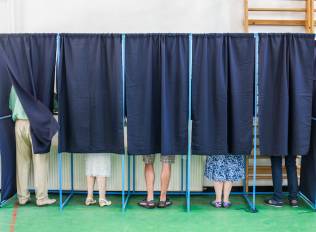
    Marijuana advocates hoping for a mandate on legalization instead got a mixed result at the polls on Tuesday, when Michigan became the 10th state to legalize recreational cannabis and voters in Missouri and Utah approved medical marijuana programs, but North Dakota residents rejected a legalization bid. 

    Michigan became the first midwest state to legalize recreational marijuana, with 56% of voters coming out in favor. 

    “Adults will no longer be punished for consuming a substance less harmful than alcohol, and rather than having to resort to the illegal market, they will be able to access it safely and legally from licensed businesses,” Marijuana Policy Project deputy director Matthew Schweich told The Washington Post

    Michigan residents who are 21 and older will be able to legally posses up to 2.5 ounces of weed in public and 10 ounces at home as soon as the election results are certified, which is likely to be in early September, according to the Detroit Free Press. Commercial sale of marijuana is likely to begin in 2020, although public consumption will remain banned in the state. 

    The change to the law in Michigan means that 25% of Americans now live in a state that has legalized recreational weed, despite the fact that cannabis remains a Schedule I substance under federal law. 

    In Utah, a hotly contested measure to begin a medical marijuana program in the state was slightly ahead with 53% of the vote in unofficial reporting, according to The Salt Lake Tribune. The deeply conservative state is heavily influenced by the Mormon church, which opposed approval of the medical marijuana program. Advocates for cannabis reform say that the victory shows a wide-spread change in the public perception of marijuana

    “When Utah flips, the whole country will be watching, and you all did that,” Christine Stenquist, a medical cannabis patient and founder of the advocacy group TRUCE Utah, told voters on Tuesday night. 

    In Missouri, 65% of voters approved a measure to legalize medical marijuana and tax it at 4%, with the funds directed toward healthcare for veterans. Voters rejected two similar measures that also legalized medical marijuana, but taxed it at either 2 or 15%. 

    However, the news was not rosy for marijuana advocates in North Dakota, where nearly 60% of voters rejected a ballot initiative that would have legalized recreational cannabis without establishing a marketplace or even regulations. 

    “Tonight, parents can sleep easy knowing their children won’t wake up to more marijuana use in their schools,” Luke Niforatos, senior policy adviser to Smart Approaches to Marijuana, a group that opposes legalization, wrote on Twitter. “The sensible, wonderful people of North Dakota have rejected marijuana commercialization in their state.”

    View the original article at thefix.com

  • State Of Mental Health In America "Still Quite Bleak," Report Says

    State Of Mental Health In America "Still Quite Bleak," Report Says

    New data shows “alarming increases in adult suicidal thoughts and major depression in youth.”

    Talking about mental health is becoming less taboo, but is this making a real difference? 

    According to a new report that offers a snapshot of mental health in the United States, overall the picture is “still quite bleak.”

    The annual State of Mental Health report, compiled by Mental Health America (MHA), saw encouraging trends since the release of the first report. These include slight decreases in the number of American adults who have mental health concerns (18.19% to 18.07%) or substance use problems (8.76% to 7.93%).

    However, according to president and CEO of MHA Paul Gionfriddo, the data shows “alarming increases in adult suicidal thoughts and major depression in youth.”

    An estimated 9.8 million adults experience suicidal thoughts—an increase of 200,000 people since 2017. And more than 2 million young people were diagnosed with severe major depression, according to the report.

    Overall, more than 24 million Americans living with mental health issues go untreated.

    “Despite mental health being something that more and more people are talking about—far too many people are still suffering. People are simply not receiving the treatment they need to live healthy and productive lives—and too many don’t see a way out,” said Gionfriddo in a press release.

    The MHA report ranked all 50 states and Washington, D.C. based on rates of mental health issues and access to treatment. Minnesota came out on top at #1, with Nevada ranked #51. States ranked higher were deemed to have lower prevalence of mental health issues and better access to treatment, while states ranked lower were deemed to have more mental health issues with less access to care.

    The report also studied the long-term impact of childhood trauma, and determined that youth affected by trauma are more likely to have problems at school such as missing school, being removed from classrooms, and struggling with schoolwork.

    Thus MHA “strongly supports” integrating mental health services in schools. Early intervention and education can prevent the development of more severe mental health problems and help kids deal with trauma.

    This year, New York became the first state to require mental health education across all grades. Virginia enacted a similar rule this year, requiring mental health education to be taught in the 9th and 10th grades.

    “When young people learn about mental health and that it is an important aspect of overall health and well-being, the likelihood increases they will be able to effectively recognize signs and symptoms in themselves and others will know where to turn for help—and it will decrease the stigma that attaches to help-seeking,” said NY’s Education Commissioner MaryEllen Elia.

    View the original article at thefix.com

  • Mike Tyson To Star In Sitcom Based On His Marijuana Business

    Mike Tyson To Star In Sitcom Based On His Marijuana Business

    Tyson stars in the series along with his real-life bodyguard and comedian Russell Peters who’ll play Tyson’s “useless best friend.” 

    Former heavyweight boxing champion Mike Tyson has begun production on a television sitcom based on his new career in the cannabis industry.

    Tyson will star as a retired boxer who grows marijuana in Rolling with the Punches, which is filming at Tyson Ranch in El Segundo, California.

    The series, which the boxer compared to Curb Your Enthusiasm, echoes Tyson’s own interest in cannabis cultivation and technology, which he plans to oversee from his 40-acre Tyson Ranch.

    Tyson’s business partner, film producer and entrepreneur Rob Hickman, said that a demo reel has been delivered to the major networks. The series is expected to air within five months.

    Tyson stars alongside his real-life bodyguard, Chuck Zito—himself an actor on Oz and Sons of Anarchy—and comedian Russell Peters as Tyson’s “useless best friend.” According to the New York Post, the series will also feature Tyson Ranch merchandise.

    “It’s simple. I’m playing a retired boxer who is growing marijuana,” said Tyson. “It’s basically me acting like me, so people can get a look at what my life could be like in different scenarios.”

    Tyson, who said that he is a both a proponent for medical cannabis and a frequent user—”I smoke it all day, every day,” he told the New York Post—has been making inroads into the cannabis industry in recent years.

    A groundbreaking ceremony for Tyson Ranch, which is located about 60 miles southwest of Death Valley National Park, took place in late 2017.

    The property—which is operated by Tyson Holistic, a company staffed largely by military veterans—would serve as both a resort and cultivation facility, with areas designated for growing cannabis and learning about the industry, as well as a hydroponic feed and supply store and edibles factory.

    Additionally, cabins, camping grounds and an amphitheater will accommodate tourists. Tyson and his partners envision the ranch as a means of giving back to the region through the creation of new jobs.

    Tyson Ranch will also serve as one part of a larger brand that will be devoted to cannabis culture and business; High Times reported that an entity called “Iron Mike Genetics” was trademarked for the ranch’s branding and marketing prospects.

    View the original article at thefix.com

  • Runners In Recovery Conquer The NYC Marathon

    Runners In Recovery Conquer The NYC Marathon

    “It’s a miracle story. This group, last year, some were in prison, now they are in the program running the New York City Marathon.”

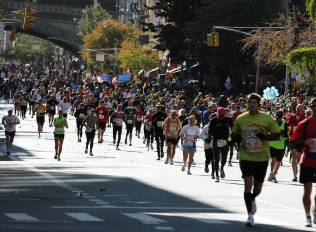
    More than 50,000 people ran in this year’s New York City Marathon on Sunday (Nov. 4). Among them was team Odyssey House, a small group of people in recovery.

    The team of 45 runners included 19 current clients, alumni and supporters, ranging in age from 25 to 72 years old.

    “It’s a miracle story. This group, last year, some were in prison, now they are in the program running the New York City Marathon,” said Odyssey House CEO John Tavolacci, who has run 22 marathons. “I always tell people, society gave up on this group, I tell them everyone has given up on you. This is your opportunity to prove them wrong. This is part of their recovery.”

    Since 2001, the program has seen 500 clients compete in 19 marathons.

    John Kane of Long Island, 47, is in recovery from painkillers and heroin. He has been sober for 1 year and 7 months. “Through hard work with counselors and joining the running team, I’ve overcome my addiction. Running has become my passion. I help train new clients as a volunteer and hopefully they have the same experience I did,” he said.

    Kane says the demand of running the 26.2-mile trek requires skills that are “transferable” to any part of life.

    “The hard work, the perseverance, the dedication it takes to run a marathon can cross over into your everyday life—as far as setting a goal, working toward that goal and achieving that goal,” he said to the New York Times.

    Running, and exercise in general, are popular among people in recovery. An exercise routine can provide structure in early recovery—not to mention the health benefits of improving one’s fitness and a natural feeling of euphoria that come with it.

    “I like the way I feel after a run. I may not want to start running. At the beginning I’m like, ‘I really don’t want to go for this run,’ to be honest. But then I know how I’m going to feel afterward. It replaces the adrenaline that I was looking for when I was using drugs,” says 36-year-old Ryan Stevens, an Odyssey House alumni. Stevens ran her fourth marathon this year.

    This was the 21st marathon for Andre Matthews of the Bronx, 58, who coaches the Odyssey House runners. “I find that when you stay connected in recovery, it’s one addict helping another. It’s a parallel process as you grow and mature in recovery and continue to be a part of people in their recovery, it also benefits you,” said Matthews, who has 20 years of sobriety.

    Matthews’ sister and assistant coach, Sylvia Hyman, has run for the last 10 years to support her brother. “It’s absolutely incredible,” she said. “I was on the sideline watching Andre for so many years… These guys are athletes. It’s like a blessing, they’re like family, it’s inspiring… if they can do it, anyone can do it.”

    View the original article at thefix.com

  • Mac Miller’s Official Cause Of Death Revealed

    Mac Miller’s Official Cause Of Death Revealed

    The 28-year-old rapper passed away in early August.

    A coroner has confirmed Mac Miller’s cause of death. The 26-year-old rapper and music producer (born Malcolm McCormick) died at home in Studio City, California on Sept. 7. Given his history of substance use, early reports pointed to drugs.

    On Monday (Nov. 7), the Los Angeles County Department of Medical Examiner-Coroner confirmed that McCormick had died from an accidental overdose of fentanyl, cocaine and alcohol due to mixed drug toxicity.

    The rapper, who had a tour planned for October following the Aug. 3rd release of his album Swimming, was discovered by his personal assistant in his bedroom. McCormick “struggles with sobriety and when he ‘slips’ he consumes them in excess,” his assistant said, adding that he’d had “several recent ‘slips’” including one three days prior to his death.

    In a 2015 interview with Billboard, the rapper said he was in a good place. “I’m not doing as many drugs. It just eats at your mind, doing drugs every single day, every second. It’s rough on your body,” he said.

    Fentanyl, the synthetic opioid painkiller said to be 50 times stronger than heroin, has also been cited in the deaths of Prince (April 2016) and Tom Petty (October 2017). According to the National Center on Health Statistics, fentanyl was involved in 60% of opioid-related deaths in 2017, an 11% increase from five years prior.

    While fentanyl was created for cancer pain, it is now fueling rising rates of drug overdose deaths. This has prompted the need for a stronger opioid overdose “antidote” to match the strength of increasingly potent fentanyl analogs.

    And this month, the Food and Drug Administration approved a new, more powerful opioid painkiller called Dsuvia. This new drug is said to be 10 times stronger than fentanyl and 1,000 times stronger than morphine.

    While Dsuvia is intended for restricted use only in health care settings—the FDA promised to place “very tight restrictions” on the drug—critics worry that it will only worsen the opioid crisis.

    “We have worked very diligently over the last three or four years to try to improve the public health, to reduce the number of potent opioids on the street,” said Dr. Raeford Brown, who chairs the FDA advisory committee that voted to approve Dsuvia, despite his opposition. “I don’t think this is going to help us in any way.”

    View the original article at thefix.com

  • Blackouts and Memory Gaps: How Alcohol and Trauma Affect the Brain

    Blackouts and Memory Gaps: How Alcohol and Trauma Affect the Brain

    Dissociation is most common in trauma that involves a betrayal of trust. This is a survival mechanism that protects our need for social support.

    Sober October has ended and now (hopefully sober) November begins. Fall brings the annual three-fold challenge: Thanksgiving, Christmas and New Year’s. This year, the midterm elections have created a fourth stressor and some of us are barely muddling through. Recent events have been especially terrifying—mass shootings, pipe bombs, a new report of catastrophic climate change, and the ongoing nightmare that is the Justice Department’s current mandate.

    Recently, Senator Chuck Grassley (R-Iowa) called for an investigation into allegations made by Julie Swetnick—one of the brave women who accused Brett Kavanaugh of sexual misconduct. Unbelievably, Grassley ordered the FBI to open a criminal investigation—into Swetnick.

    Grassley said that Swetnick’s sworn affidavit was not true. Was this just his opinion? It wasn’t based on FBI reports because he and fellow Republicans would not allow the feds to thoroughly investigate her claims against Kavanaugh—nor anyone else’s.

    “During the years 1981–82,” Swetnick said in her sworn statement, “I became aware of efforts by Mark Judge, Brett Kavanaugh and others to spike the punch at house parties I attended.” She also stated, “In approximately 1982, I became the victim of one of these gang or train rapes where Mark Judge and Brett Kavanaugh were present.” Swetnick said she’d seen Kavanaugh drink excessively at these parties and described him as a mean drunk.

    CBS News video:

    The Brett Kavanaugh Hearing

    In late September, Kavanaugh accuser Dr. Christine Blasey Ford went before the U.S. Senate during Kavanaugh’s SCOTUS confirmation process. There were times during her testimony that I felt sick to my stomach. It was as if she were telling my story. Dr. Ford stated that some of her memories were seared into her mind. She also acknowledged that she wasn’t able to recall every detail from that day. But who remembers every detail of any event?

    It was reassuring when Senator Patrick Leahy (D-Vermont) acknowledged this:

    “Ford has at times been criticized for what she doesn’t remember from 36 years ago. But we have numerous experts, including a study by the U.S. Army Military Police School of Behavioral Sciences Education, that lapses of memory are wholly consistent with severe trauma and stressful assault.”

    But the Republicans were not interested in further investigation and, despite the #MeToo and #TimesUp movements and all of the highly publicized Harvey Weinstein and Bill Cosby survivors, much of the country remains obtuse when it comes to the shared traits of traumatized women: remembering some things but not others, and not telling anyone what happened to them for decades.

    Ford’s assault happened at a party when she was 15, in 1982. When I was 13 I was gang-raped by classmates at an outdoor gathering. Ford tried to forget what happened. So did I. She didn’t want to think about the worst night of her life. Neither did I. It took both of us decades to tell anyone. Ford said: “I convinced myself that because Brett did not rape me, I should just move on and just pretend that it didn’t happen.” Confused and freaked out, I, too, decided to pretend my rape didn’t happen and believed that would “erase” it.

    Ford told the committee: “I tried to yell for help. When I did, Brett [Kavanaugh] put his hand over my mouth to stop me from yelling. This is what terrified me the most, and has had the most lasting impact on my life. It was hard for me to breathe…. Both Brett and [his friend Mark Judge] were drunkenly laughing during the attack.”

    Through much of the hearing I was shaking and sobbing, wiping my eyes so I could see. The identification triggered the sensation that I was reliving my experiences. When she said her mouth was covered, it felt as if mine was, too. I felt like I couldn’t breathe. The laughter from the boys that hurt me is burned into my memory. When I went public with my story in January 2012, I wrote: “[My friend] grabbed me, clamped his hand over my mouth….I tried to scream but it came out muffled. They laughed. I gagged.”

    I became so upset watching the live video that I almost called a close friend. I stopped myself because I knew she’d say, “Stop watching it!” Inspired by Ford’s bravery, I felt a sisterhood during this historical moment. It felt like my duty to bear witness.

    During the hearing, Senator Feinstein addressed Ford: “You were very clear about the attack. Being pushed into the room, you say you don’t know quite by whom, but that it was Brett Kavanaugh that covered your mouth to prevent you from screaming, and then you escaped. How are you so sure that it was he?”

    Ford responded: “The same way that I’m sure that I’m talking to you right now. It’s just basic memory functions. And also just the level of norepinephrine and epinephrine in the brain that, sort of, as you know, encodes—that neurotransmitter encodes memories into the hippocampus. And so, the trauma-related experience, then, is kind of locked there, whereas other details kind of drift.”

    Alcohol Blackouts

    The second half of the Senate hearing was shocking. Who but an alcoholic would mention beer nearly 30 times in a job interview? This was to determine if Kavanaugh was right for a lifetime position on the highest court. He whimpered, cried and lashed out. Did baby need his bottle? When Sen. Klobuchar asked if Kav ever had a blackout, he responded, “Have you?” Twice.

    Video clip of that part of the Kavanaugh Hearing:

    A few days after the Kavanaugh hearing, still feeling wrecked, I reached out to neuroscientist Apryl Pooley, PhD, an expert on the brain and memory and the author of Fortitude: A PTSD Memoir, which documents her road to healing from rape, child abuse, PTSD, and addiction.

    Both Dr. Pooley and I were blackout drinkers. We discussed how unpredictable alcohol is. In my teen years, I blacked out if I drank too much too quickly or hadn’t eaten. But in the last few years of rum and cocaine, I could go into a blackout after one gulp, or I could guzzle 5-6 drinks and feel totally sober. Pooley said her experiences were similar.

    But both of us found it difficult to believe that Kavanaugh was telling the truth at the hearing. It’s possible he didn’t know that he blacked out, but that is highly unlikely. After many of my drunken binges, friends would refer to things I’d said or done that I had no memory of. When I asked them if everybody knew I was that drunk, they’d say no. “You seemed normal, maybe a little high.”

    Pooley said, “I’d be walking around and having conversations. People wouldn’t know if I was blacked out. When someone is blacked out, it means their blood alcohol level is so high that it’s impairing that part of their hippocampus, that part of your brain that encodes those memories.”

    She said that everything you’re doing and seeing may or may not be getting stored in your brain. I asked her about being in and out of consciousness. Sometimes I could remember a snippet of an evening. Chatting with a friend at a bar, but then I had no idea how I got home.

    “That’s called a fragmentary blackout,” she said, “or a brownout. That happens when you are blacked out for a while and then come out of it. That can mean that you’d metabolized some of the alcohol, enough of it to regain that function.”

    She also said that some people might think a blackout means passed out or unconscious, which can also look like you’d just fallen asleep.

    Blackouts from Trauma

    According to Pooley, Ford was correct when she spoke about how the brain and memories work. Ford stated that a “neurotransmitter encodes memories into the hippocampus” which explains that trauma-related experience can be “locked in” whereas other details can “drift.”

    Pooley expanded on that: “When recalling memories of trauma, they can pop into your head if you’re triggered, or when asked about a detail.”

    That reminded me of every episode of Law & Order: SVU. Olivia Benson always asks a traumatized victim specific questions: What did they look like? What were they wearing? Can you remember anything unusual? A logo on a hat, shirt or vehicle? The sound of their voice? What they said?

    “Right!” said Pooley. “Those questions can trigger a flashback. The survivor may remember details about the event but not be able to verbalize them. To an outsider, this may look like they don’t remember or are lying. If the survivor was dissociated at the time of the assault, when they remember it later they may seem surprised or confused at their own memory.

    “If survivors feel unsafe when questioned, they may not be able to use their pre-frontal cortex to understand the questions and retrieve certain memories. That’s because their brain was focused on survival. If triggered, they may experience emotional and sensory memories that are as intense as the trauma itself.”

    Aha! That’s why I was shaking and crying while watching the Kavanaugh hearing. And for days afterward. The PTSD had caused my body to react by reliving what happened to me.

    Research backs up Ford and Pooley’s explanations. Memories may be fragmented and certain details missing.

    “But,” Pooley said, “what the survivor does recall is incredibly accurate. Sometimes you hear the term ‘repressed memories,’ which is probably more accurately referring to memories that were stored during dissociation. Dissociation is a survival reflex that can occur when escape is—or seems to be— impossible. A threat may be perceived by the brain as inescapable because of a physical barrier.”

    Ford was afraid she was going to die when she described Kavanaugh’s hand over her mouth. In my case, dissociation happened when I was pinned by five guys. I’d tried to break free. I floated up to the trees and watched. I could see what the boys were doing to me but it took on a surreal quality. It served as a buffer. I was literally scared out of my mind and my body.

    “A threat can also be perceived by a psychological barrier,” said Pooley. “Dissociation is most common in trauma that involves a betrayal of trust. This is a survival mechanism that protects our need for social support. When the trusted individual betrays you, this is a social threat and social threats are real threats.”

    Ford and I both experienced that. She’d gone to what she expected to be a friendly party with people she knew. I thought the guy who tricked me was my friend. He said he wanted my advice about his girlfriend. Flattered, I practically skipped over. That’s when he clamped his hand over my mouth and threw me to the ground and the other boys surrounded me and held me down.

    Pooley explained: “Many people believe that life-threatening trauma only refers to threats to physical safety—like the presence of a weapon—but humans need social support for survival. So, social threats like bullying, ostracization, or anything that threatens social standing can be interpreted by the brain as life-threatening. If abuse or assault is perpetrated by a trusted individual, not only is the event traumatic, but the social threat of losing the sense of safety from that person [or people] is traumatic as well.”

    If trauma leads to dissociation, Pooley said, that can lead to amnesia. Traumatic amnesia is so common that it’s even included in the diagnostic criteria for PTSD.

    “When all or part of the traumatic experience cannot be remembered,” said Pooley, “the risk for developing PTSD greatly increases.

    Throughout the hearing, and frankly, throughout these past few years, I’ve often felt an overwhelming temptation to get high. My mind and body are so wound up that I crave some kind of relief. Rum and cocaine still hover in my mind, pretending to offer salvation. Thankfully my years in recovery have taught me not to listen to my head when it’s trying to get me high, not to keep secrets, and to make time to meditate, keep a journal, draw, hug my dog, and most importantly, remember to breathe.

    If you are shaken by the Kavanaugh Hearing, and especially if it has kicked up flashbacks, there is help. The same is true for anyone who is scared about the midterm election or having panic attacks and high anxiety.

    You can reach out to RAINN, the nation’s largest sexual violence organization. Their website is RAINN.org or you can call their hotline 24/7 at 800-656-HOPE. For any kind of mental health help including addiction, PTSD, or thoughts of harming yourself please visit the National Alliance on Mental Health’s list of hotline resources.

    View the original article at thefix.com

  • How Much Do College Students Know About Heavy Drinking & Blackouts?

    How Much Do College Students Know About Heavy Drinking & Blackouts?

    A new study revealed that a lot of students are unaware of the consequences of risky drinking.

    With some statistics showing that nearly half of all college students who drink alcohol regularly also experience a memory blackout, researchers have launched a series of studies to determine exactly what this demographic understands about alcohol and blackouts, as well as the toll that it takes on their health.

    Their research underscored that while students are aware that hard drinking can lead to blackouts, they were unclear about how to avoid them. They were also unclear about the difference between a full blackout and a “brownout” (a shorter period of fuzzy memory).

    The researchers hoped to use the information gleaned from their studies to provide more detailed information to students about the risks of high-volume drinking.

    The research, published in the October 2018 edition of Psychology of Addictive Behaviors, was drawn from single-gender focus groups comprised of 50 students (28 women and 22 men) from four-year colleges and universities in the Providence, Rhode Island area.

    The researchers analyzed the data and composed three reports, the first of which looked at students’ understanding of the cause of blackouts.

    As Science Daily noted, the students were aware that drinking large quantities of liquor or drinking very quickly could produce a blackout; however, they were less aware of other factors—including mixing drugs with alcohol, gender and genetics—which could be contributing factors.

    The second study looked at how students viewed the experience of blackouts. The results showed a mixed reaction, with many reporting them as “scary” or “embarrassing,” with others describing them as “exciting.”

    External factors, such as friends’ perceptions of blackouts, who they were with at the time of the blackout, and what happened during the blackout, were also determining factors in how the experience was recalled.

    The third report sought to determine if the students understood the exact nature of a blackout. Most respondents described a blackout experience as a period of heavy drinking, though a blackout is defined as a period of complete memory loss lasting one hour or more. Shorter periods of memory loss were described as “brownouts.”

    Forty-nine percent of college students surveyed reported experiencing both blackouts and brownouts in the past month, while 32% only had brownouts and just 5% reported only blackouts.

    Respondents also claimed that brownouts were less troubling than full blackouts, which study co-author Kate Carey from the Center for Alcohol and Addiction Studies at Brown’s School of Public Health noted as “discounting the earlier signs of memory loss, suggesting that they weren’t serving as red flags or even yellow flags.”

    Carey and her fellow researchers hope to use the information culled from the study to create education modules for alcohol prevention programs that target high-volume, high-speed drinking or other behaviors that could lead to blackouts.

    These behaviors include “pre-gaming”—in which alcohol is consumed prior to an event where more alcohol will be available—drinking games or “chugging” were all cited as behaviors that could lead to blackouts.

    Reframing how students view these experiences as outside the norm could also serve as helpful prevention, Carey noted.

    View the original article at thefix.com
  • Francis Ford Coppola Enters The Cannabis Business

    Francis Ford Coppola Enters The Cannabis Business

    Coppola is launching a “cannabis lifestyle brand” in partnership with a sustainable cannabis farm in the Emerald Triangle.

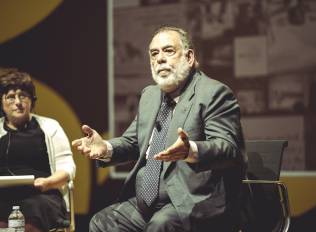
    Francis Ford Coppola is best known as the director of the Godfather series and Apocalypse Now. But in recent years, Coppola has launched a lucrative wine business and also owns hotels in Italy, Guatemala, Belize and Argentina.

    Now, Coppola is getting into the cannabis business, which is shaping up to be a big growth industry. As Forbes reports, Coppola’s new cannabis business is called Sána Company LLC, and it will be independent from his Family Coppola enterprises. Sana is a sanskrit term for marijuana.

    In a statement, the company announced that it wants to “give life to a progressive vision for pioneering the highest-quality, sun-grown cannabis products through sustainable farming.”

    Coppola is launching The Grower’s Series, which he’s calling a “cannabis lifestyle brand.” The company is working in conjunction with Humboldt Brothers, a cannabis farm located in the Emerald Triangle, “the Napa Valley of cannabis.”

    As the famed director declared in a statement, “Wine and cannabis are two ancient and bounteous gifts of Mother Nature, linked by great care, terroir [a Northern California fog that gives cannabis a special flavor] and temperateness. Expertise making one applies to the other. As with growing grapes, location matters, and The Grower’s Series reflects California agricultural expertise creating a true blend of art and science.”

    Coppola’s Grower’s Series will include sativa, indica and hybrid strains that will come in one-gram packages that are shaped like wine bottles. Each package will go for $99, complete with a pipe and rolling papers.

    Corey Beck, an executive at Coppola Winery, told The Drinks Business, “This is another avenue we’ve created for a tasting experience. We need to be able to market to our consumers, wherever they may be. If they are in a dispensary, they can see that bottle and it may resonate with them the next time they see that bottle when they’re in a Safeway or Kroger.”

    The Herb Somm, another cannabis lifestyle brand, will help promote The Grower’s Series. Like Coppola, Somm founder Jamie Evans worked in the wine industry.

    Evans told Forbes, “I think it’s incredible to see such an iconic family get into the space. There are so many synergies that exist between the two industries, especially in Northern California. The more support we can get from leaders like Francis Ford Coppola, the closer we get to breaking the stigma of cannabis nationwide.”

    View the original article at thefix.com

  • How The Situation's Wife Helped During His Journey To Sobriety

    How The Situation's Wife Helped During His Journey To Sobriety

    “She’s definitely my better half and the reason why I strive to be the best version of myself and to fight for our future,” the reality star says.

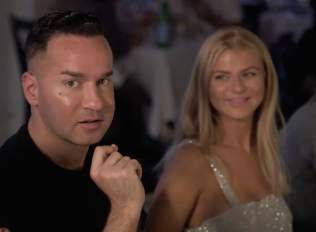
    With the popularity of Jersey Shore, Mike “The Situation” Sorrentino has become a reality TV fixture. He battled a painkiller addiction in the public eye, and now he is a recovery advocate, speaking candidly about his own experience.

    Now Sorrentino’s wife, Lauren Pesce, has been credited with helping Sorrentino stay sober, even as he’s preparing to serve an eight-month jail sentence for tax evasion, which is set to begin on January 15.

    As People reports, Sorrentino and Pesce met in junior college and dated for about four years. The couple took a break from each other during the Jersey Shore heyday, then got back together once the show had ended.

    Pesce has had to endure a lot as Sorrentino’s significant other, including witnessing his fight for sobriety. Having battled an addiction to painkillers, Sorrentino is reportedly nearly three years sober after two visits to rehab—the first in 2012 and the second in 2015.

    As a practicing Catholic, Pesce said she relied on her faith when Sorrentino needed help.  

    “It’s not so much just going to church,” she says. “It’s finding my belief, that God has a reason for everything, and knowing you’re able to overcome anything as long as you have your faith and trust in God. That’s what I did, and Mike really came into that as well and found his own spirituality.”

    Pesce adds, “What I dreamed of, the expectations I had set for him, him getting healthy and sober—I didn’t know that our relationship would survive had those miracles not happened, and they did. He put in the hard work and thanks to the faith in God that we have, we’re in the position we’re in today.”

    Sorrentino called Pesce “my better half and the reason why I strive to be the best version of myself and to fight for our future.” Sorrentino also wants to be “a good example to her, her family and everyone watching—because my life has been under a microscope. I have a lot to prove.”

    Right before Jersey Shore returned to MTV in April, Sorrentino hit a 28-month sober milestone the month before.

    He told Entertainment Tonight, “I’m very proud, it’s one of my finest accomplishments and it was a huge challenge. It’s a ‘one day at a time’ thing and [I’m] just showing people that it’s very possible.”

    Sorrentino also showed off his two-year Narcotics Anonymous medallion in an Instagram post: “28 months clean and sober. We do recover.” 

    View the original article at thefix.com