Author: The Fix

  • Alanis Morissette Describes Third Bout With Postpartum Depression

    Alanis Morissette Describes Third Bout With Postpartum Depression

    “I have been here before. I know there is another side. And the other side is greater than my PPD-riddled-temporarily-adjusted-brain could have ever imagined.”

    Singer-songwriter Alanis Morissette is in the midst of her third bout with postpartum depression—but she was better prepared for it this time around, she revealed in a recent blog post.

    “I wasn’t sure if I would have postpartum depression/anxiety this time around,” said Morissette, who gave birth to her third child, Winter Mercy Morissette-Treadway, on August 8.

    Morissette had previously shared that she struggled with depression after the births of her son Ever Imre in 2010 and daughter Onyx Solace in 2016.

    “I have been here before. I know there is another side. And the other side is greater than my PPD-riddled-temporarily-adjusted-brain could have ever imagined,” she wrote in her October 6 post on her website. “I saw how things got richer after I came through it the last two times.”

    Learning From Past Experiences

    This time around, the “Ironic” singer was better prepared for the impending “postpartum tar-drenched trenches” that came with sleep deprivation, hormones, physical pain, isolation, anxiety, marriage and “all kinds of PTSD triggers,” she wrote.

    “There is so much more support this time. I knew better so I set it up to win as much as I could beforehand,” she wrote. “Support. Food. Friends. Sun. Bio-identical hormones and SSRIs at the ready… PPD is still a sneaky monkey with a machete—working its way through my psyche and body and days and thoughts and blood work levels.”

    Morissette described the anticipation of PPD ahead of Winter’s birth in a previous interview with SELF from June. “I have said to my friends, I want you to not necessarily go by the words I’m saying and as best as I can, I’ll try to be honest, but I can’t personally rely on the degree of honesty if I reference the last two experiences.”

    History Of Depression

    She revealed in the same interview that she had a history of depression, so while PPD was no joke, it was a somewhat familiar experience for her.

    “For me I would just wake up and feel like I was covered in tar and it wasn’t the first time I’d experienced depression so I just thought ‘Oh well, this feels familiar, I’m depressed, I think.’ And then simultaneously, my personal history of depression where it was so normalized for me to be in the quicksand, as I call it, or in the tar. It does feel like tar, like everything feels heavy.”

    Morissette added that her nature of “over-giving, over-serving, over-do-ing, over-over-ing”—i.e. her “work addiction”—set an unsustainable standard for her after each birth.

    She also noted, “This culture is not set up to honor women properly after birth,” seemingly referencing the lack of priority given to allowing women a healthy period of recovery and bonding after giving birth in the United States.

    “I see it changing, which is so heartening,” she added, “but the general way is bereft of the honoring and tenderness and attunement and village-ness that postpartum deeply warrants.”

    View the original article at thefix.com

  • Oregon To Vote On Legalizing Shrooms, Decriminalizing All Drugs

    Oregon To Vote On Legalizing Shrooms, Decriminalizing All Drugs

    The Psilocybin Service Initiative of Oregon (PSI 2020) would allow residents to legally access psilocybin-assisted therapy.

    Oregon voters will soon decide on two major drug reform ballot measures that could result in the biggest changes to any state’s drug policies since Colorado and Washington state legalized cannabis in 2012.

    One measure would legalize psychedelic mushrooms, commonly referred to as “shrooms” or “magic mushrooms,” and another would decriminalize all drugs within the state.

    Oregon In Unique Position For Decriminalization

    According to Vice reporter Jon Walker, a combination of factors that make Oregon unique are responsible for the fact that total drug decriminalization is possible anywhere in the U.S. in 2020.

    “There is no single reason the state is so well-positioned to be a laboratory for drug reform,” Walker writes. “Instead, imagine a vast, multi-layered Venn diagram including public health needs, quirks of local history, unique funding opportunities, costs, arcane ballot access rules, demographics, and politics.”

    So far, only the cities of Denver and Oakland have decriminalized shrooms. The Psilocybin Service Initiative of Oregon (PSI 2020) would allow residents to legally access psilocybin-assisted therapy, which has been increasingly tested as a remedy for a number of mental illnesses including treatment-resistant depression and PTSD.

    Psilocybin is the active ingredient in shrooms and is a naturally occurring psychedelic that can produce sensory hallucinations and intensify states of emotion.

    “We see this not only as a template for Oregon but for the rest of the country and the world,” said Sheri Eckert, a PSI 2020 petitioner. 

    “We feel that Oregonians are ready to take an innovative approach to mental health care and the problem of addictions, because the current modalities and delivery systems have proven inadequate,” added Eckert’s husband, Tom.

    Policy Modeled After Portugal

    At the same time, the 2020 Drug Addiction Treatment and Recovery Act (DATRA) is on its way to the ballot. This bill is modeled after drug policy reform in Portugal, where all low-level possession of drugs has been decriminalized and funding is funneled away from law enforcement and into addiction treatment programs.

    After passing this sweeping drug reform in 2001, Portugal saw its rates of problem drug use, HIV and hepatitis infection, overdose deaths, and drug-related crime plummet.

    According to chief DATRA petitioner Anthony Johnson, in spite of Oregon’s progressive history of drug policy reform, much more work needs to be done.

    “Oregon ranks 50th in the country in access to drug addiction treatment, and I’m hopeful about the prospect of redirecting a portion of cannabis tax revenue so that everyone struggling with addiction can have access to the treatment services they need,” said Johnson to Marijuana Moment.

    View the original article at thefix.com

  • Kat Von D Visits Bam Margera In Treatment Program

    Kat Von D Visits Bam Margera In Treatment Program

    The LA Ink star got candid about her own journey to sobriety after spending quality time with Margera.

    Tattoo artist Kat Von D visited Bam Margera in rehab, and reflected on her own recovery in a recent social media post.

    Von D (born Katherine Von Drachenberg) shared a video on Instagram on Monday (Oct. 7) of the two sketching quietly side-by-side. Margera, a regular cast member of MTV’s Jackass, is in a 90-day treatment program for substance use disorder following a tumultuous year that culminated with his September appearance on Dr. Phil.

    Kat Von D revealed in her Instagram post that she also struggled in her past. Back then she was on the receiving end of a friend’s support.

    Her Journey To Sobriety

    “Getting sober was not easy for me,” she wrote in her caption. “Even though it’s gonna be 12 years in July that I celebrate being clean from drinking and drugs, I still clearly remember the physical pain from withdrawals, the profound desire to die, and the overwhelming sense of loneliness I felt that day I decided to quit.”

    “On day two of detoxing, I was failing to talk myself out of killing myself when a friend came over, and found the most pathetic/vulnerable version of me on my apartment floor,” she wrote. “He said, ‘Come on, Kat. Get up and let’s draw.’ I managed to scrape myself up somehow, find a piece of paper and whatever pencils were laying around. Looking back, I realize he was just helping me put one foot in front of the other. Maybe it was just a distraction, or maybe it was his way of helping me refocus on the one thing that has always saved me from myself. Either way, it’s what I needed at that time, and I am so grateful to that friend.”

    Now on the other side of recovery for over a decade, Von D was able to pass on this kindness by reaching out to Bam in his time of need.

    Supporting Her Close Friend

    “Yesterday, I got to visit my friend [Bam] who’s publicly shared about his current attempt at rehabilitation (which is the only reason I would ever share this). And man, it was beautiful to spend time together and draw!” she wrote. “I’m so proud to see bam sincerely trying to make such meaningful changes—as hard as it is being away from family and home.”

    Having endured her own dark times, Von D was able to empathize with Bam. “No one ever sees the struggle, or the ugly painful moments that take place behind the scenes unless you’re in it yourself.”

    She ended her post with words of encouragement. “Thank you, Bam for always being there for me. I’m so fucking proud of you, and I can’t wait to see all the amazing things you’re gonna do.”

    View the original article at thefix.com

  • Harpies, Bitches, Witches and Whores: Women Write About Anger in New Anthology

    Harpies, Bitches, Witches and Whores: Women Write About Anger in New Anthology

    “People can see an angry man [who is] fighting for a cause and see him as strong. It’s not the same for women—especially not for women of color and trans women.”

    Burn It Down: Women Writing About Anger is a fiery collection of 22 essays. Editor Lilly Dancyger (Catapult, Narratively, Barrel House Books), an accomplished essayist (Longreads, The Rumpus) and journalist (Rolling Stone, Washington Post), brought together a diverse group of writers. Currently Dancyger is working on a memoir about her artist father and his heroin addiction.

    With empathy in short supply these days, Burn It Down is an invigorating read. The collection is filled with compelling creative nonfiction in the form of first-person narratives from women of different races, ethnic groups, and religions. No matter how you identify—cis female, cis male, trans, or nonbinary—there is a lot to learn here. Dark humor and gorgeous prose take you through the lessons learned in other people’s lives.

    The first sentence in Dancyger’s introduction demanded my attention: “Throughout history, angry women have been called harpies, bitches, witches and whores.” With a shorter-than-ever attention span, I was surprised to devour this book in one sitting. Dancyger guided the writers to go deep and spill raw feelings. 

    Dancyger told The Fix about her troubled teen years. She said, “I had good reason to be angry.” Not only was she raised by two people with drug addictions, but her father died at age 43 when she was a preteen. Her beloved cousin Sabina was only 20 when she was randomly murdered.

    “Anger overwhelmed me,” Dancyger said. “It came out in excessive drinking and doing a lot of drugs.” Her life was thrown out of whack, which sent her on a rocky journey where she learned that you need to “make space for anger in your life or it pushes you into self-destruction.”

    “Those were wild, reckless years. Then I dropped out of ninth grade,” she said. She made it to college, still drinking heavily. “There’s a big difference between drinking with your friends and being determined to get drunk every day. Finally, I ran out of steam and decided I was just done.”

    Writing has been healing, Dancyger told me.

    Burn It Down is meant for readers to give themselves permission to access their own anger. “To feel it, recognize it and accept it. There are so many things to be angry about,” Dancyger said. “It can be fortifying to enforce boundaries, pursue passions, and let anger out.” The book acknowledges that men are angry too, but this is a book about women. “People can see an angry man [who is] fighting for a cause and see him as strong. It’s not the same for women—especially not for women of color and trans women.”

    The first piece, “Lungs Full of Burning,” is by Leslie Jamison, who never thought of herself as ill-tempered. She spent years telling people, “I don’t get angry. I get sad.” Jamison writes about her long-held belief that sadness was more refined than rage. Out of a fear of burdening others, she squelched her feelings in order to spare people the “blunt force trauma” of her wrath. She writes, “I started to suspect I was a lot angrier than I thought.” Her essay talks about women in literature and film, pointing to the Jean Rhys novel, Good Morning, Midnight, in which the heroine resolves to drink herself to death, and describing Miss Havisham as “Dickens’s ranting spinster—spurned and embittered in her crumbling wedding dress.”

    I Started to Suspect I Was Angrier Than I Thought

    Jamison writes, “I’d missed the rage that fueled Plath’s poetry like a ferocious gasoline.” She talks about I, Tonya and how it handled what became known as the “whack heard around the world,” where one woman’s anger leaves another woman traumatized. Harding was portrayed as a “raging bitch,” said Jamison. Kerrigan was a pitiable victim. Yet, things are usually not as black and white in real life. Jamison points out how little coverage there was of Harding’s abusive mother and husband.

    “Women’s anger is a necessary conversation to be having,” said Dancyger. On Hillary Clinton, she explained, “Here was a woman who bent over backwards to avoid coming off as shrill. Look at the words used to describe angry women—hysterical, crazy, hormonal, irrational. And women of color experience an extra dimension of misogyny.”

    Alexandria Ocasio-Cortez is “under tremendous pressure. We hear the racism in words like ‘fiery Latina.’ Kamala Harris is an ‘angry black woman.’”

    Erin Khar, editor-essayist-columnist and author of the much-anticipated memoir, Strung Out: One Last Hit and Other Lies That Nearly Killed Me (Park Row Books, Feb. 25, 2020) writes in her essay “Guilty” about panic attacks and anxiety she felt as a child, who then began keeping secrets. She grew into a troubled 13-year-old who turned to heroin. Later she was a chronic relapser: “As a junkie I was a walking apology.” Finally, thanks to a wise therapist, she learned that it wasn’t the guilt that was killing her; it was unexpressed anger. It’s a powerful story that illustrates the madness of addiction.

    There are tough scenes of self-loathing in Khar’s piece: digging fingernails into her arms till she bled, using a box cutter to carve into her leg. Recovering memories of being raped at age four. But the ending is satisfying, with a description of what her life is like today and the steps she took and tools she used to get there.

    Khar was generous with her time and very open in our interview. We covered a wide range of topics and segued into how many women experienced PTSD from watching the Brett Kavanaugh hearings. 

    “Lilly [Dancyger] was editing the essays during the Kavanaugh hearings and I was writing my essay for the book at that same time,” Khar said. We talked about Kavanaugh’s weeping, and blubbering about beer during his job interview for SCOTUS. We teared up as we shared our similar experience of shaking while listening to Christine Blasey Ford. 

    An Angry Black Woman, No Matter the Reason, Is Thought to Have an Attitude

    Burn It Down isn’t about what makes you angry, it’s about anger itself. In the essay, “The One Emotion Black Women Are Free to Explore,” Monet Patrice Thomas writes, “[A]nger spread through me like red wine across a marble floor, but I did not show it.” She describes her conditioning: “An angry Black woman, no matter the reason, is thought to have an attitude.” Her rage was inside her “like a shaken can of soda.”

    In “Rebel Girl,” Melissa Febos writes, “I knew that I was queer and that it wasn’t safe to admit that at school.” She burned with self-hatred that was “slowly blackening my insides.” Then she met Nadia, who was “six feet tall in combat boots … with a shaved head and arms emblazoned with tattoos. She stomped rather than walked.” 

    Lisa Marie Basile describes living with chronic pain and all of the stupid, condescending advice that dismissed her very real symptoms in “My Body Is a Sickness Called Anger.” One doc tells her she probably stuck her finger in her eye too hard. She writes, “I gently remind the doctor…that feeling like absolute shit with two enlarged assholes for eyes just cannot be normal.” Friends say she looks fine, then offer useless unsolicited advice like yoga, green juices, and giving up gluten. Basile’s snarky inner dialogue is hilarious. 

    There is an energizing quality to women’s rage and it builds a united front. Dancyger has succeeded with her goal to “create a place where anger could live” and her vision to display rage on pages that “sizzle and smoke.” As the last sentence of her intro reads, “Our collective silence-breaking will make us larger, expansive, like fire, ready to burn it all down.” 

    Burn It Down is now available on Amazon and elsewhere.

    View the original article at thefix.com

  • From Monster to Mentor: Lexington Outreach Coordinator Offers Free Classes on Addiction

    From Monster to Mentor: Lexington Outreach Coordinator Offers Free Classes on Addiction

    For Timothy Sanders, it’s a chance to use his experience as a person in recovery “to be productive and help people.”

    With heroin overdose rates in the state of Kentucky among the highest in the United States, a man in recovery who became a peer support specialist hopes to use his story to educate his fellow Bluegrass State residents about opioid dependency.

    Timothy Sanders, who serves as the Outreach Coordinator for the non-profit organization Stop Heroin Lexington, is also hosting a free class called “Alternative Perceptions” at area libraries and other locations. 

    The class, which kicked off on September 28 at the Lexington Public Library, is designed to provide information to not only people with addiction but also their families. For Sanders, it’s a chance to use his experience as a person in recovery to “be productive and help people.”

    Sanders, a peer support specialist, told Lexington’s WKYT that heroin addiction in Kentucky has “gotten a lot worse. ODs are high right now. I see a lot of people dying, [and] I see relapse quite often.”

    To that end, he created Alternative Perceptions as a means of reaching out to the public and providing free information about addiction and recovery, a subject that he understands on a personal level.

    From “Menace” To Mentor 

    Sanders overdosed on heroin while he was with his three-year-old daughter, which resulted in not only an arrest but also public shaming when the incident was broadcast on local television.

    “I was blasted all over the news as this monster and drug addict and all that,” he recalled.

    He sought treatment through the recovery program for men at the Hope Center in Lexington, and amassed 28 months of sobriety. He also found himself with a new calling. “I was a menace at one point,” he told WKYT. “Today I’m trying to be productive and help people.”

    The inaugural Alternative Perceptions class offered free information and education to attendees, and enlisted fellow recovery advocates to join Sanders in providing testimony about their paths to sobriety. “I have a team of volunteers that want to be a part of this, to where we can actually have them in all the [Kentucky] public libraries, and we have people that volunteer to get the information out to people.”

    Future Alternative Perceptions events and other information on Sanders can be found on Stop Heroin Lexington’s Facebook page.

    Kentucky has been among the 10 states with the highest rates of drug overdose deaths. However, the state reported that overdose deaths declined in 2018, the first such drop since 2013.

    View the original article at thefix.com

  • Ex-Seattle Seahawk Percy Harvin Talks Using Cannabis For Anxiety

    Ex-Seattle Seahawk Percy Harvin Talks Using Cannabis For Anxiety

    Harvin said that marijuana was the only thing that helped him deal with pre-game anxiety. 

    Percy Harvin, former wide receiver for the Seattle Seahawks, opened up about having anxiety issues before games and how he became dependent on marijuana to deal with it.

    Harvin says he took “multiple” prescriptions to try and combat his pre-game anxiety, but as he told Bleacher Report, “The only thing that really seemed to work is when I would smoke marijuana. There’s not a game that I played in that I wasn’t high.”

    The Worst Years Of His Life

    Harvin played 75 games during his time in the NFL, from 2009 to 2016. His anxiety heightened when he was traded to Seattle in 2013, which he called “probably the worst years of my life.”

    Harvin’s anxiety wasn’t noticeable or problematic until he was in situations he wasn’t ready for. He was thrown off balance by his trade to the Seahawks, and having to do press conferences.

    He described this period as the worst time of his life “just because it came with so much. My anxiety is at its worst when I go into an unfamiliar situation… I started noticing it when I started speaking or going into different environments. Particularly the press conference with the Seahawks. My shirt was sweatin’ and they had to bring me water a couple times during my press conference.”

    Altercation With Golden Tate

    Harvin’s anxiety also led to a physical altercation in the locker room with his teammate Golden Tate before the Super Bowl. “Thinking about it now, I can’t even believe it I did it,” Harvin says today.

    Harvin eventually had seven prescriptions to deal with his anxiety, yet marijuana was the only thing that could calm him down.

    Harvin explained to Bleacher Report that marijuana use does not make you a bad person.

    “That’s what I want the world to kinda see today is, it’s not a stigma, and you know people doing it and getting in a whole bunch of trouble,” he explains. “It’s people that’s just living a regular life that just got deficiencies or just maybe wanna enjoy themselves. It’s a natural way to do so.”

    Anxiety and mental health awareness has become a big issue in professional sports, and Harvin is one of many professional players who’ve had to deal with it. Over the summer the NFL had a mental health conference where they hoped to create resources for players that are suffering, and address their needs better in the future.

    As Solomon Thomas of the San Francisco 49ers explained, “If our brain’s not working, our bodies aren’t going to work.”

    View the original article at thefix.com

  • Hydrogen Cyanide Found In Bootleg Vapes

    Hydrogen Cyanide Found In Bootleg Vapes

    NBC News commissioned a lab test of vape cartridges obtained from both legal and illegal sources.

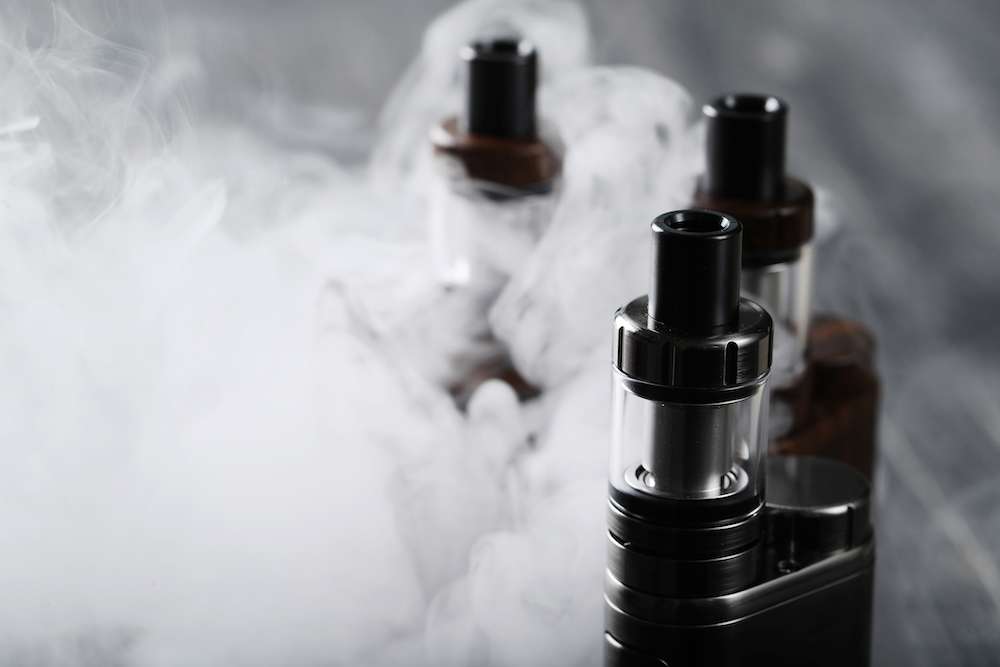
    Independent laboratory testing of vaping cartridges containing THC found that not only was vitamin E acetate present in the majority of samples, but also a variety of pesticides including one which, when burned, transformed into the chemical asphyxiant, hydrogen cyanide.

    Testing The Cartridges

    NBC News commissioned a cannabis testing facility to test cartridges obtained from both legal dispensaries and unlicensed sources. While the cartridges purchased from the former group showed no traces of pesticides, vitamin E or heavy metals, the majority of the other samples—all obtained from black market sources—showed signs of either vitamin E, the pesticides, or both.

    The findings cast new concerns on the growing health problem that appears to be linked to vaping cartridges and, in particular, those containing THC.

    The Centers for Disease Control and Prevention (CDC) reported that as of October 1, more than 1,000 lung injury cases and 18 deaths associated with e-cigarette use have been reported from 48 states and one U.S. territory.

    No Smoking Gun

    Most of the cases involved individuals with a history of vaping and in particular, vaping products with THC. As both NBC, the CDC and the Food and Drug Administration (FDA) noted, no single substance has been shown to be the direct cause for all of the lung injury cases, though some state health officials have pointed to vitamin E acetate, a thickening agent that can cause pneumonia-like symptoms if inhaled.

    This lack of a core “smoking gun” led NBC News to conduct its own tests via CannaSafe, a testing facility located in Van Nuys, California. Eighteen samples of THC cartridges—three from licensed dealers and 15 from black market sources—all purchased in California were included in the test.

    CannaSafe

    None of the three cartridges from legal dispensaries showed any signs of dangerous agents like pesticides or solvents like vitamin E. But in 13 of the 15 obtained from unlicensed dealers, CannaSafe researchers found vitamin E acetate, while 10 of the 15 all tested positive for several different pesticides, including myclobutanil, a fungicide which will become hydrogen cyanide when burned.

    Also known as prussic acid or hydrocyanic acid, the colorless gas was described by the CDC as having the ability to “interfere with the normal use of oxygen in nearly every organ in the body,” and can be almost immediately fatal.

    In recent testimony before a House Energy and Commerce subcommittee, acting FDA Commissioner Dr. Ned Sharpless said that his agency, along with the DEA, is currently pursuing the source of the tainted vape cartridges, but does not intend to target individuals unless they are found to be distributing products “that caused illness and death for personal profit.”

    View the original article at thefix.com

  • "Joker" Hit With Backlash For Its Depiction Of Mental Illness

    "Joker" Hit With Backlash For Its Depiction Of Mental Illness

    “This plot plays to the unfortunate and false stereotype that people with mental illness are violent,” one mental health expert laments. 

    The box office hit Joker has received a wave of critical backlash for its depiction of violence and mental health issues.

    Dr. Ziv Ezra Cohen, who is a criminal psychiatrist at Weill Cornell Medical School, wrote an article for New York Daily News criticizing the controversial film.

    “Some are wringing their hands over The Joker—concerned that it might glorify violence. I have a very different concern about the message it sends,” he writes.

    Addressing The Stigma

    Cohen mentioned that some reviews of the film have brought up concerns about the stigma surrounding mental illness. The character of Arthur Fleck, who eventually becomes the Joker, starts off in a mental hospital, then becomes more dangerous as he’s treated badly by the outside world.

    “This plot plays to the unfortunate and false stereotype that people with mental illness are violent,” Cohen laments. “As a whole, people with mental illness have no increased rate of violence compared to anybody else, and they are more likely to be victims of crimes.”

    And considering there have been fears of violence at theaters showing Joker, Cohen adds, “On a deeper level, the movie may well make connections in viewers’ minds between mental illness and mass violence… Research shows that people who commit mass shootings in the vast majority of crimes do no have a clear mental illness that would explain their behavior. In addition, 1% of gun violence is attributable to mental illness.”

    In trying to analyze Joker, Cohen notes that “the brilliance of the character defies any psychiatric diagnosis. He does not show symptoms of delusions or a thought disorder that one would see in an illness like schizophrenia. He does not show the impulsiveness that one sees in many personality disorders and in bipolar disorder… A term we use in psychiatry to describe such people is psychopath.”

    Starting A Conversation

    As Julie Rael, chief clinical officer at a mental health facility in Salt Lake City told Fox 13, “I think [this movie] is creating conversations around how trauma can impact somebody’s well being. There is a statistic: 3-6% of people with mental illness commit crimes or are violent. People with mental illness are more likely to be harmed or harmed themselves.”

    View the original article at thefix.com

  • Harm Reduction Educator Who Trained Thousands To Use Narcan Loses Addiction Battle

    Harm Reduction Educator Who Trained Thousands To Use Narcan Loses Addiction Battle

    Kevin Donovan died on September 28 at the age of 40.

    The Syracuse harm reduction community is mourning the loss of advocate and educator Kevin Donovan, who died in late September of an apparent overdose.

    According to his obituary, “He lost his battle with addiction following a long-term recovery.”

    Donovan trained many in his community how to administer Narcan, a brand of naloxone, the opioid overdose-reversing drug.

    Saving Lives

    Will Murtaugh, executive director of ACR Health, said that more than 500 people that were trained by Donovan used their Narcan training. “That means, 500 people’s lives were reversed,” he said, according to WRVO.

    ACR Health is a community health center with a syringe exchange and a Drug User Health Hub which offers a range of prevention and sexual health services to people of all ages. Donovan was also the founder and director of Healing Hearts Collaborative, an opioid overdose prevention program.

    Kevin’s work was informed by his own experience in recovery. “To remove the stigma of the disease, he openly shared his struggles with addiction to educate others of treatment options, and he was a staunch advocate for the use of Narcan,” read his obituary.

    Colleagues Speak Out

    According to Murtaugh, Kevin did not seek help at his time of need despite having a supportive community around him.

    “We’re all hurting a little bit, because he knows we were here for him and he could’ve come to us anytime and got that support,” he said. “This is a typical overdose. We’ve had many of them. People end up using alone, and they die alone, because they don’t have those supports around them that they need. We try, and Kevin did too, to educate everyone. Do not use alone. Do a test shot. Make sure that there is Narcan in the house.”

    ACR Health lost two other staff members in 2016 and 2017.

    The center supports having supervised injection facilities, also known as overdose prevention facilities, to give people a place to use under medical supervision where they can access treatment if they feel ready.

    Safe Consumption Sites

    A federal judge recently ruled that such facilities would not violate federal law, which the current administration tried to argue against in court. An organization in Philadelphia was on the other side of the legal fight. It now has the green light to move forward with plans to establish what would be the first overdose prevention site in the United States.

    In May, Donovan was featured by WRVO for giving the Narcan training that saved a woman’s life. The woman became unresponsive inside a local business and staff members responded by administering Narcan. She was revived by the time EMT arrived.

    “What made me really happy was their willingness to share their story, and to say, this is a positive thing we want to do for our community,” said Donovan at the time. “That’s a life. The stigma is so bad, sometimes this stuff happens, and people don’t want to share it, or want anything to do with it in the public vision.”

    Kevin Donovan died on September 28 at the age of 40. He is survived by his son Rowan, his parents, brother and extended family.

    View the original article at thefix.com

  • Pennsylvania Sees Drop In Overdose Deaths For First Time In Years

    Pennsylvania Sees Drop In Overdose Deaths For First Time In Years

    An analysis by the DEA found that in 2018, Pennsylvania saw an encouraging 18% drop in fatal overdoses.

    A new DEA report finds that the state of Pennsylvania saw an overall 18% drop in overdose deaths in 2018, the first drop after years of increasing rates.

    Southwestern counties in Pennsylvania saw the most improvement, seeing a 41% reduction in fatal overdoses. Philadelphia, which had the highest fatal overdose rate in the state in 2017, saw improvements as well, resulting in having the second highest rate in 2018.

    Numbers By County

    However, the recovery wasn’t seen in all parts of the state. Eastern and central Pennsylvania endured some of the worst rates yet in the same time frame. In Schuylkill County, the overdose death rate jumped from 27 per 100,000 residents to 49 per 100,000 residents in 2018. Twenty three other counties also saw increases in fatal overdose rates, and three more saw no change.

    The places that saw a reduction in fatal overdoses also saw an overall drop rate in overdoses in general. Officials aren’t sure exactly what led to this decrease, but it’s likely that the increase in distribution of naloxone and greater access to treatment played a major role. Most recently, a safe injection site was ruled federally legal by a judge against the wishes of the U.S. Justice Department.

    The DEA report also provided some insight with statistical data. Most people who died of overdose were found to have more than one drug in their system. Around 87% had more than two drugs, 46% had more than four drugs, and 16% had six or more drugs in their body.

    Fentanyl Sweeps Through The State

    Fentanyl, which has exacerbated the opioid crisis across the nation, has not spared Pennsylvania. About 70% of all overdose deaths in the state involved the stuff. Fentanyl-adjacent drugs and other synthetic opioids were involved in 23% of deaths.

    The report included demographic data, showing that 79% of deaths were white, 13% were Black, and 3% were Hispanic. While this may initially seem like white residents are disproportionately affected, the DEA notes that this is reflective of the demographics of the state’s population.

    However, overdoses are disproportionately affecting younger residents, especially the presence of fentanyl. Among the 15-24 and 25-34 age groups, 75% of overdose deaths involved fentanyl.

    View the original article at thefix.com