Author: The Fix

  • Aaron Carter Takes Drug Test On Instagram

    Aaron Carter Takes Drug Test On Instagram

    The stunt was a response to rumors that he was using drugs.

    Musician Aaron Carter posted a video on Instagram of himself taking a drug test and showing off the clean results last Thursday.

    In the video, he directly addresses Radar Online, which ran a story about what seemed to be a line of white powder and a credit card visible in a recent live stream by Carter.

    “Radar Online, I’m just letting you know, I’m taking a drug test right now. It says for amphetamines, cocaine, MDMA, meth, opiates, PCP, and THC,” he says in the video, presenting the cup. “I’m gonna piss in a cup right now.”

    He does.

    The Results Are In

    In a follow-up video, he presents the results—two lines, indicating a negative result, for every drug except THC.

    “Negative means two lines, one means preliminary positive,” Carter says in the video. “I only tested positive for THC. This is my nasty ass dehydrated fucking piss, so please shut the fuck up and stop what you’re doing, and Radar Online, you have 24 hours to delete your post.”

    Carter needs to prove he’s drug free because it can affect his career, he explains in the video. If there are rumors swirling around that he’s on drugs, it’s harder for him to get bookings.

    “STOP WRITING LIES ABOUT ME AND START THROWING SOME FUCCKING RESPECT ON MY NAME! @radaronline, your ‘shocking drug’ post about me was desperate and completely misleading to whatever readers you have left these days,” he wrote in the caption. “proving you idiots wrong will NEVER get old to me. so shut the fuck up already with your bullshit.”

    Carter recently opened up about his struggles with addiction on an episode of The Doctors, explaining that he began huffing at 16 and was really using it by 23.

    “I was huffing because I was really fucking stupid and sad but this is really no excuse,” he recounted. “I was huffing because I’m a drug addict.”

    Family Drama

    Aaron Carter has also been in the headlines lately as his brother, Backstreet Boy Nick Carter, and Aaron’s twin sister have filed restraining orders to keep him away due to “increasingly alarming behavior. In court documents, Nick alleges that Aaron told his twin sister that he has thoughts of killing babies and of killing Nick’s wife. Aaron denied the allegations.

    “I am astounded at the accusations being made against me and I do not wish harm to anyone, especially my family,” he wrote in a tweet.

    View the original article at thefix.com

  • Ibogaine: Promising Addiction Treatment or Snake Oil?

    Ibogaine: Promising Addiction Treatment or Snake Oil?

    The induced vivid hallucinations and memories of childhood and formative experiences seem to be the key to ibogaine’s effectiveness in treating addiction, but experts don’t fully understand its mechanisms.

    With the rise in interest of various psychedelic drugs for a range of conditions (MDMA for PTSD, and ketamine and psilocybin mushrooms for treatment-resistant depression, to name a few), it seems only fair that we should pay serious attention to other substances in this family that might treat other conditions.

    Introducing ibogaine. Well, not quite introducing. The fairly-obscure African plant, used traditionally in Gabon, was first patented in the United States for use in treating opioid addiction in 1985. Unlike common street drugs such as MDMA (“ecstasy,” “molly”), ibogaine does not have the reputation of being known as a club drug.

    Like Years of Therapy in One Day

    But Ibogaine is still relatively unknown, despite a guest appearance in an early episode of Homeland. When I have advocated for its use in combating our nation’s opioid crisis, most of the responses range from a confused “What?” to an inquisitive “Oh, yeah. I’ve heard of that.” It isn’t a cheap thrill, something folks are clamoring to ingest. People who have found relief with the African root-bark have compared it to receiving years of therapy in the course of one day. The induced vivid hallucinations and memories of childhood and formative experiences seem to facilitate the process of overcoming addictions, even if it isn’t an automatic or guaranteed cure.

    However, that doesn’t mean it’s free of stigma. The federal government classifies it as schedule one – right up there with heroin, the addiction it is most well-known for treating, despite having “no medical use” according to the law. Statistics vary, with some rates as low as 20 percent. Other data shows  61% abstinence, eight months after treatment.

    So, what’s the issue? If this plant boasts a higher success rate than Suboxone (8.6%, once Suboxone use is discontinued), why is it only available outside the U.S.? Why are we not allowing a treatment method that people with opioid use disorder have touted as the thing that saved their lives?

    Why Is Ibogaine Illegal in the U.S.?

    Some of the fault lies with the media. Much like with LSD, clinical studies are slow and evolution of public consciousness is slower. Most of what we see in the news is negative and exaggerated. As with anything, there are risks. Up to 30 deaths have been documented. When people with other health problems related to addiction are treated by those without medical training, death rates can be as high as three percent. In healthy folks, that same rate is around .3%. 

    But when much of what you see in the news and on television is people panicking, convulsing, or dying, it’s tough to form a well-rounded opinion. We are emotional creatures, and even with positive perspectives from people who swear by their experiences, we can’t get the negative images out of our minds for long enough to consider the benefits of ibogaine treatment. 

    Many of the risks involve heart issues. Most psychedelics function as stimulants, raising the heart rate, but ibogaine can be especially cardiotoxic. Ibogaine affects electricity in the heart and could potentially result in dangerous arrhythmias or bradycardia (low heart rate). Because of this and any other possible risks, legitimate clinics pre-screen patients and offer a small test dose to evaluate the effects. Based on the results, they decide if a full dose will be safely tolerated. 

    Like Other Hallucinogenics, Proven Benefits but Not a Panacea

    The substance seems to work due to the uniqueness of the experience. I’ve read multiple accounts of people having vivid visions of the choices they made, and how they’ve arrived at this particular point in their life. This type of experience seems to be the key to its effectiveness in treating severe opioid and alcohol addictions, but experts don’t fully understand its mechanisms.

    And yet, even with its proven benefits, it’s not a panacea. The person with the addiction cannot just visit a clinic, have an ibogaine experience, and expect to return home without changing anything. There is still a rate of relapse, because they haven’t worked on the external triggers. They must still tackle their disease in a proactive way, which may include altering their life and addressing what led to using in the first place.

    Unlike commonly-used routes of getting off opioids – substitution medications such as methadone and Suboxone – ibogaine doesn’t require a patient to remain on another drug, taking it day in and day out to avoid experiencing cravings or going into withdrawal. Ibogaine seems to work by disrupting the receptors associated with addictive behaviors, as was witnessed in one 2015 study on its efficacy in opioid addiction.

    Scientists found that the substance (which, I learned, doesn’t always produce the talked-about hallucinogenic effects that led to its illegal status) acts on receptors such as dopamine and serotonin, which are linked to addiction and the brain’s reward system. Other psychedelics that are currently being studied for their effects on mental illness and addiction – such as MDMA and psilocybin mushrooms – make use of these same receptors. What makes ibogaine unique is that, rather than attaching to receptors on the outside of a cell membrane, it attaches to the inside. This mechanism seems to be unique to ibogaine; it has not been observed in any other naturally occurring molecule.

    Legal Status of Treatment Creates Financial Barrier and Increased Risk

    A major barrier to receiving an ibogaine treatment is the prohibitive cost. A single week of treatment in Mexico costs $5,000, and that’s after the price of a plane ticket. In Canada, the price for a ten-day round is $8,000. As a result, it’s not an option that’s available to most people in need of addiction treatment.

    We must legalize it here. International travel, necessary funds, time off from your job to recover – all these restrictions make it virtually impossible for the average person with treatment-resistant addiction to crack the barriers of that final, desperate chance at a life beyond drugs or alcohol.

    There is a strong, tight-knit movement of psychedelic therapists, but due to the criminalized status of what should be viewed as medicine, those involved with administering these substances remain underground, increasing risks. Even though many of these practitioners are medical doctors, they work without the support of a hospital or facility. While their willingness to practice this medicine outside of the law is a testament to their belief in its efficacy, it also means they are less able to quickly and safely address problems that may come up.

    Who knows what the genuine death toll of ibogaine is in the U.S.? It’s not likely that underground doctors are reporting these deaths to nurses and other hospital staff. If so, they’d be discovered, in turn ruining their careers and possibly derailing the entire growing movement. At least, that’s what instinct tells me. If nothing else, with the substance legalized, fewer deaths and injuries would occur due to more rigorous testing and administering – and consequently fewer accidents would happen as well.

    Ibogaine has shown lasting benefits in treating addiction, as many people attest. One patient was quoted as saying: “It’s not just [that] it gets you off the heroin, it’s like, it hits the reset button — that’s the only way to really explain it. It’s like a new brain.” Shouldn’t we be listening to the voices of people who have actually been there, rather than tossing their words to the wind and sticking with what hasn’t worked?

    View the original article at thefix.com

  • Sober October Is Here: Inside The Benefits Of Going Alcohol-Free

    Sober October Is Here: Inside The Benefits Of Going Alcohol-Free

    A 2018 study found that heavy and moderate drinkers who abstained for a month saw their health improve.

    Fall is in the air, but many people are passing on craft beers and warm spiked cider, opting instead to participate in Sober October. 

    The idea started as a fundraiser for charities. However, taking a month of drinking can also have some real positive health effects. 

    “I think in one sober month, there can be long-term effects,” Hillary Cecere, a registered dietitian nutritionist, told Refinery29. “One of the biggest effects is a better awareness of a person’s relationship with alcohol. There’s also a sense of accomplishment that [can lead to] lasting changes. More moderate or heavy drinkers may notice higher energy levels, weight loss, and even a stronger immune system.” 

    Improved Sleep Quality, Lower Blood Pressure, Weight Reduction

    Cecere said people doing Sober October will be better rested, and not just because they’re avoiding hangovers. 

    “Drinking alcohol results in a low quality sleep. Without adequate sleep, decision making, memory, and learning abilities are impaired,” she said. So, staying sober for a month could help you rebalance your sleep patterns. 

    A 2018 study found that heavy and moderate drinkers who abstained for a month saw their health improve. 

    “These findings demonstrate that abstinence from alcohol in moderate–heavy drinkers improves insulin resistance, weight, [blood pressure] and cancer-related growth factors,” the study authors wrote.

    Benefits Often Felt During Subsequent Months

    Participating in a sober month can also change your drinking habits in the long term. For example, research has shown that people who do a “Dry January” drink less during the following year than people who don’t participate. 

    “The brilliant thing about Dry January is that it’s not really about January,” Dr. Richard Piper, CEO of Alcohol Change UK, said earlier this year. “Being alcohol-free for 31 days shows us that we don’t need alcohol to have fun, to relax, to socialize.”

    Research from the University of Sussex found that people who completed a Dry January reduced their weekly drinking to three days, from four, on average. They drank less in a setting, and were less likely to get drunk, the report found. In fact, organizations like Alcohol Change UK started toting the long-term effects of a sober month to get people on board with starting the year off without drinking. 

    “The good news is that Dry January is the perfect training ground for helping you cut down from February onwards,” the organization’s website says. “Cutting down permanently is, for many people, very hard, because habits are hard to break. Dry January is an excellent way of learning what your habits are and how to break them, enabling you to cut down longer-term. You can think of it as a bootcamp for drinking self-control.”

    View the original article at thefix.com

  • Counselor In Recovery Offers Free Drug Education Classes

    Counselor In Recovery Offers Free Drug Education Classes

    For Timothy Sanders, it’s a chance to use his experience as a person in recovery “to be productive and help people.”

    With heroin overdose rates in the state of Kentucky among the highest in the United States, a man in recovery who became a drug counselor hopes to use his story to educate his fellow Bluegrass State residents about opioid dependency.

    Timothy Sanders, who serves as the Outreach Coordinator for the non-profit organization Stop Heroin Lexington, is also hosting a free class called “Alternative Perceptions” at area libraries and other locations. 

    The class, which kicked off on September 28 at the Lexington Public Library, is designed to provide information to not only people with addiction but also their families. For Sanders, it’s a chance to use his experience as a person in recovery to “be productive and help people.”

    Sanders, a peer support specialist, told Lexington’s WKYT that heroin addiction in Kentucky has “gotten a lot worse. ODs are high right now. I see a lot of people dying, [and] I see relapse quite often.”

    To that end, he created Alternative Perceptions as a means of reaching out to the public and providing free information about addiction and recovery, a subject that he understands on a personal level.

    From “Menace” To Mentor 

    Sanders overdosed on heroin while he was with his three-year-old daughter, which resulted in not only an arrest but also public shaming when the incident was broadcast on local television.

    “I was blasted all over the news as this monster and drug addict and all that,” he recalled.

    He sought treatment through the recovery program for men at the Hope Center in Lexington, and amassed 28 months of sobriety. He also found himself with a new calling. “I was a menace at one point,” he told WKYT. “Today I’m trying to be productive and help people.”

    The inaugural Alternative Perceptions class offered free information and education to attendees, and enlisted fellow recovery advocates to join Sanders in providing testimony about their paths to sobriety. “I have a team of volunteers that want to be a part of this, to where we can actually have them in all the [Kentucky] public libraries, and we have people that volunteer to get the information out to people.”

    Future Alternative Perceptions events and other information on Sanders can be found on Stop Heroin Lexington’s Facebook page.

    Kentucky has been among the 10 states with the highest rates of drug overdose deaths. However, the state reported that overdose deaths declined in 2018, the first such drop since 2013.

    View the original article at thefix.com

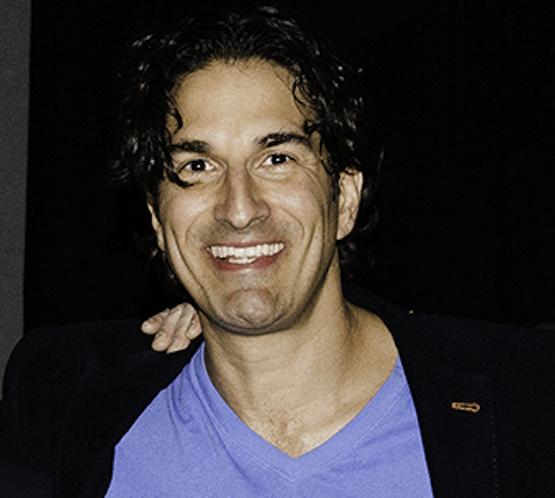
  • Comedian Gary Gulman On Toxic Masculinity, Depression

    Comedian Gary Gulman On Toxic Masculinity, Depression

    Gulman gets candid about depression in his new comedy special, The Great Depresh.

    There’s a lot of pain in comedy writing, but comedian Gary Gulman wants to push back on the idea that you need to be depressed in order to be funny. 

    “It’s a romantic myth, ‘I need to be troubled to write well,’” he said in an interview with The Daily Beast. “But it’s not true.”

    In his new comedy special, The Great Depresh, Gulman speaks openly about his mental illness, and how he keeps depression at bay today. The 49-year old said that he has had a lifetime struggle with depression. 

    “I’ve had episodes of depression since I’ve known myself. Since seven years old I can remember having these feelings. The episodes would never last more than a few months,” he said. However, in 2017 he was hospitalized after a severe episode. “This one lasted for two and a half years.” 

    Difficulty Coping With Mental Illness

    As a kid, Gulman wasn’t taught healthy ways to cope with mental illness. In the special, he jokes about growing up in the 1970s. 

    “The only antidepressants we had access to was ‘snap out of it’ and ‘what have you got to be depressed about?’ That was the second-leading brand of antidepressant,” he says. 

    Gulman was told to toughen up, a message about being masculine that undermined his health, he said. 

    “That didn’t work on me and I paid a price for it in my psyche,” he said. “I was always hiding things about myself and keeping things secret. Name-calling and bullying, either physical or verbal, was very painful for me growing up and when I saw the stance that millennials seem to be taking, I don’t have nostalgia for that. I could have used some more nurturing than I got and it just happened to be the generation I grew up in. We were just so mean to each other.” 

    Constant Vigilance

    Today, Gulman said he doesn’t feel depressed most days. 

    “But it’s in part because I’ve adopted 18 or 20 things that I do every day to stay this way. I’ve never been more vigilant because I’ve never fallen that far.” 

    That’s led him to the “longest, sturdiest recovery of my life,” he said. 

    Gulman told The Daily Beast, “I’m only comfortable talking about it now because I’ve come out the other side.” However, his comedy special opens with a scene of him at a Boston comedy club, right after he was released from the psych ward in 2017. 

    “I have a mental illness. I have a severe mental illness. It’s excruciating,” Gulman tells the audience. “It’s excruciating. This is like a cosmic bottom. This is like a bottom.” 

    Gulman remembers that night, and says he felt like he needed to share his pain. “I had to acknowledge that I was suffering,” he said. 

    Today, Gulman ends his special by speaking directly to those still suffering. 

    “If you are suffering from a mental illness, I promise you are not alone. You are not alone,” he says, then adds, “I’m sorry, you are alone, but only because you can’t leave the house today. But you should.”

    View the original article at thefix.com

  • Toad Venom May Be The Next Psychedelic Frontier

    Toad Venom May Be The Next Psychedelic Frontier

    The venom produces a powerful and immediate reaction that can include immobility, extreme emotional responses and euphoria.

    feature in the New York Post highlights the growing use of toad venom among “well-off New Yorkers” for its psychedelic properties, which have been alternately described as a “total fusion with God” and a direct route to the emergency room.

    The venom, drawn from Colorado River toads, produces a powerful and immediate reaction that can include immobility, extreme emotional responses and euphoria. In certain cases, the response can be disassociation and anxiety that lasts for days and requires hospitalization, but researchers have also found that the toad venom may provide relief for depression.

    His First Experience With The Venom

    The Post feature includes a recollection from social media influencer and life coach Barrett Pall, who described his first experience with toad venom.

    “I was crying really hard, yelling, ‘I’m so sorry’ over and over,” he said. “I saw my younger self with my parents and ex-boyfriends in places [where] I’d been hurt.”

    According to Pall, the venom’s psychedelic properties ran their course after 45 minutes, but left him feeling “reborn.” He immediately broke up with a long-term boyfriend after the experience before booking a global excursion and reaching out to his estranged father. “I was just so sure that everything I was deciding was right,” he explained. “My life has never been the same since.”

    The venom, a milky toxin secreted by the toad when it feels threatened, contains a psychoactive ingredient, 5-MeO-DMT, which is four to six times more powerful than DMT, another naturally occurring psychedelic with a similar history of ritual uses.

    It is apparently extracted from the toad’s glands and then dried to a paste by “shamans” who sell it at ceremonies throughout the United States. Admission to such events can cost between $200 and $500 per person, according to the Post.

    An anonymous source quoted in the feature described the reaction by attendees at one such ceremony. “Some people moaned, cried or convulsed on their backs. Others started dancing, singing or chanting.”

    Promising Clinical Results But Consider The Risks

    The experience is not without its perils. Toad venom is considered a Schedule I classified substance, and as such, can carry fines or prison sentences if found in an individual’s possession. 

    The “trip” is also not without its problems. “It’s such an intense experience that, in most cases, doing it at a party isn’t safe,” said Alan K. Davis, a clinical psychologist and assistant professor at the Psychedelic Research Unit at Johns Hopkins University.

    Davis warned against events overseen by “shamans,” whom he described as “more like drug dealers” than spiritual advisors who are ill-prepared for negative reactions by users. “If people get dosed too high, they can ‘white out’ and disassociate from their mind and body,” he explained. “Anxiety can persist for days, and we’ve heard of people going to the emergency room.”

    Experiencing the venom in a controlled setting with experienced observers is not only advisable, according to Davis, but could also prove beneficial for those who experience depression and anxiety. A study he conducted with 362 users found that 80% of participants felt relief after consuming the venom.

    “One of the hallmarks of depression is feeling disconnected and isolated,” said Davis. “5-MeO-DMT pulls you into something meaningful and makes people feel like they belong.”

    View the original article at thefix.com

  • Mother Accused Of Helping Sons Run Counterfeit THC Vape Operation

    Mother Accused Of Helping Sons Run Counterfeit THC Vape Operation

    Authorities reportedly seized nearly 130,000 cartridges that were either empty or contained THC oil from the family-run operation.

    A Wisconsin mother has been accused of helping her young adult sons run a massive counterfeit vape operation.

    Courtney Huffhines, 43, was arrested last Monday (Sept. 30) and has been charged with maintaining a drug-trafficking place, possession with intent to deliver and misappropriation of personal identifying materials.

    Authorities believe that Huffhines was involved in the counterfeit operation by providing a place to run the business and even helping package the THC cartridges at her real estate office, according to Rolling Stone.

    Jacob and Tyler Huffhines, 23 and 20 respectively, were arrested on September 5. Tyler, “the alleged ringleader,” was charged with maintaining a drug house, identity theft and intent to manufacture and distribute THC over 10,000 grams. Jacob was charged with possession of cocaine, THC and a firearm.

    Police Seize THC Oil Estimated to be Worth Over $1.5 Million

    Upon a raid of the family’s home in Paddock Lake and a condominium in nearby Bristol, authorities seized nearly 130,000 cartridges that were either empty or contained THC oil estimated to be worth over $1.5 million.

    The brothers’ operation produced close to 3,000 cartridges a day. They had employed at least 10 people who were paid $20 per hour to fill the cartridges with THC oil that would sell for around $35 to $40 each.

    Police Cracking Down in Response to Recent Vaping Related Illnesses

    The U.S. is currently experiencing an alarming emergence of vaping-related lung injuries and deaths.

    At the time of Jacob and Tyler’s arrest in early September, officials had estimated there were about 400 possible cases of lung injuries and six deaths related to vaping in the U.S. As of October 4, those numbers have shot up to more than 1,000 possible cases and at least 18 deaths, according to the CDC.

    Investigators are honing in on the cause of this outbreak, but an exact cause is yet to be determined.

    Tyler Huffhines’ lawyer argued in his initial court appearance in September that there was no evidence to suggest that the brothers’ operation was connected to the vaping-related illnesses.

    Authorities in Minnesota raided another counterfeit vape operation in late September, arresting one individual in the process. They seized nearly 77,000 vape cartridges containing THC and $23,000 in counterfeit cash from the operation located in Coon Rapids, a suburb of Minneapolis. The cartridges were worth nearly $4 million, according to NBC News.

    So far Minnesota has reported one vaping-related death. There have been no such deaths reported from Wisconsin.

    View the original article at thefix.com

  • "Let's Talk About Cats" Podcast Shines Light On Mental Support From Feline Friends

    "Let's Talk About Cats" Podcast Shines Light On Mental Support From Feline Friends

    The show uses people’s often hilarious shared experience as cat owners as a way to help them talk about “the toughest and darkest parts of our lives.”

    With recent studies showing that cats do form connections with humans, a new podcast aims to highlight how cats can help us bond with not only others, but with ourselves, and tap into those personal and even painful places that need support and self-care.

    Let’s Talk About Cats,” which recently launched its second season, features conversations between its host, writer/producer and “noted cat lady” Mary Phillips-Sandy, and a diverse array of cat owners, including Daily Show correspondent Dulce Sloan and actor/author Alexander Silber, about how their cats have impacted their lives and emotional well-being. 

    It’s a subject that Phillips-Sandy knows intimately: she weathered debilitating postpartum depression with the help of her own cat, Grendel, who is often the subject of conversation on the podcast.

    Phillips-Sandy, who grew up living with both cats and dogs, initially conceived the idea for the podcast in 2014 after finding that talking about cats could be a “great equalizer” when meeting people for the first time.

    “Anyone who has a cat knows that moment when you’re at a party, and someone says, ‘My cat did the most hilarious thing,’ and then everyone has their phones out and showing pictures of their cats,” she tells The Fix. “You feel this sense of camaraderie with people you’ve never met before, and more importantly, that you might have nothing else in common with.”

    “I Was Hanging On By A Thread”

    That phenomenon led her to consider the idea of a program in which cats might serve as a means to “get to know someone in a very gentle, personal way that could then open the door to all sorts of things.” But then, as Phillips-Sandy puts it, “I lost my mind.”

    Phillips-Sandy suffered from a debilitating case of depression, both before and after the birth of her son, that left her, on some days, unable to get out of bed, which in turn led to her leaving her job and cutting herself off from friends, while also caring for her son.

    Adding further injury to the experience was the death of a cat that she had owned for many years. Its passing was traumatic, but also allowed her a moment to reflect on their shared experiences and emotions. “There was a chance to felt connected to and loved by him,” she recalls.

    Grendel Comes Home

    In the midst of this personal chaos, Phillips-Sandy rescued a feral kitten that she named Grendel. The cat – which is a frequent topic of conversation on the podcast – provided her with support and companionship at a crucial time. “I was hanging on by a thread,” she says.

    So when Phillips-Sandy returned to the idea of the podcast in 2018, she and producing partner Lizzie Jacobs began to revise the podcast from a “straight-up comedy sort of thing,” as she called it, to using the shared experience of cat ownership to talk about “the toughest and darkest parts of our lives, whether that’s grief or loss or addiction or mental illness, and how we get through them and keep living through them. I don’t know if I’d wanted to do that had I not been through that time.”

    Phillips-Sandy knows that for some people, the idea of receiving emotional support from a cat flies in the face of accepted notions about the animals as aloof and distant. But, she notes, cats do provide unconditional love, just as dogs are often credited as doing, although in a different way.

    “There is something about the love you get from a cat because of the sense of having earned it,” she explains. “I know my cat loves me unconditionally, and I know I’ve earned it, but I also know she accepts me for who I am [because] they accept who they are so unconditionally.” 

    Equally important are the moments of mindfulness that a cat can provide simply through its physical presence.

    “Every morning, she’ll come and sit by me, and it’s a little moment for me to start my day by petting her and thinking about nothing at all,” she says. “It’s probably one of the only moments in the day in which my mind is not racing in some way or nothing is happening. And that makes it easier when I don’t want to get out of bed. It gives you that little boost to say, ‘You know what? I can deal with it.’”

    Positive Response

    Response to “Cats” has been positive, and some listeners have reached out to Phillips-Sandy to let her know how it’s impacted their lives.

    “What people tell us is that we are talking about a relationship with a cat in a way that they’ve always felt,” she says. “It’s a comedy, and there’s a lot that’s funny, but being able to talk about heavy stuff, people have said that it helps them feel understood.”

    The second season of “Let’s Talk About Cats” can be heard via Apple, Stitcher, Google, Spotify, and streamed via the show’s website.

    View the original article at thefix.com

  • "The American Dream Is Built on Crime": An Interview with "Godfather of Harlem" Creator Chris Brancato

    "The American Dream Is Built on Crime": An Interview with "Godfather of Harlem" Creator Chris Brancato

    Even though he wants to help his community, Bumpy Johnson is an anti-hero. He is a criminal capable of extreme violence who is visiting horror on Harlem through the sale of drugs.

    Executive produced and written by Chris Brancato, EPIX’s Godfather of Harlem chronicles the complicated criminal life of Ellsworth “Bumpy” Johnson, one of the most notorious African-American mobsters. In 1963, Bumpy is released from an 11-year sentence in Alcatraz on a drug conspiracy charge. Upon his return to Harlem, he realizes that his drug turf has been taken over by the mafia. Bumpy, played by Forest Whitaker, butts heads with Vincent “The Chin” Gigante (Vincent D’Onofrio), the newly-minted head of the Genovese crime family. Heroin is the money drug, and Bumpy knows he has to control the distribution and the supply. The period crime drama also depicts Bumpy going head-to-head with Malcolm X (Nigél Thatch) and Adam Clayton Powell Jr. (Giancarlo Esposito). In supporting roles, Paul Sorvino plays mob fixer Frank Costello, and Chazz Palminteri plays mob boss Joe Bonanno.

    Brancato also wrote the 1997 feature film Hoodlum, about a younger Bumpy Johnson (played by Laurence Fishburne back in the day) and his battles with infamous gangster Dutch Schultz (Tim Roth). In Godfather of Harlem, Brancato revisits Bumpy as an older man fighting to regain his form.

    The Fix: When I interviewed you about your experience making Narcos, you described Pablo Escobar as a psychopath. Would you describe Bumpy Johnson in the same manner? 

    Chris Brancato: John, that’s a great question. Unlike Pablo, Bumpy was not a psychopath nor a sociopath. He was a multifaceted character and a complex human being. Yes, he could be violent, and he could deliver beat downs and such when they were needed, but he did not thrive off of the violence as Pablo did. Any violence that Bumpy committed was predicated on business or maintaining his turn. 

    In contrast, Escobar was fine with blowing planes out of the sky. He did not mind bombing bookstores and causing widespread havoc. He repeatedly caused the death of innocent people, and that’s something Bumpy Johnson would never do. 

    Like Pablo, Bumpy reached out to his community, helping people so they would help and protect him. Today, how would you describe his community outreach efforts? Was it pure self-interest, or did he truly care about the people of Harlem?

    In Narcos, we made a fascinating comment about the nature of drug money. When you have made so much money that you have bought everything you could think of buying, then it’s easy to give it to the people. You don’t need it. Escobar certainly had leftist tendencies, and he did build barrios for the poor. Some of those feelings were likely genuine, but a lot of what he did was self-aggrandizement. Escobar wanted to raise his stature in the eyes of the people of Colombia in general. He wanted to be viewed as a public figure. 

    In contrast, from the beginning of his life, Bumpy believed that education was the step ladder to success. He spent a fair portion of his life in prison, and he was extremely well-read. He promoted the values of education throughout his life. My college friend Paul Eckstein first told me about Bumpy Johnson. Paul is the co-writer on the pilot and the co-creator of Godfather of Harlem. His grandmother was helped by Bumpy Johnson; this African-American mobster paid for her to go to secretarial school. Bumpy also paid the college tuition of the father of the playwright Lynn Nottage, who has won the Pulitzer Prize for two of her plays, Ruined (2009) and Sweat (2015).

    Bumpy was all about education. Although he was well-known for his public gestures like handing out turkeys on Thanksgiving, his desire to improve his community extended well beyond such gestures. Bumpy wanted people to have the advantages he had lacked. He truly believed that education was vital to success. 

    Heroin is a bigger drug today nationwide than it was in Bumpy Johnson’s time. What do you think Bumpy would have said about such a development? 

    I have an interesting statistic to toss at you in regards to that question. In the 1960s and 70s, during the heroin crisis in Harlem, 90% of the heroin addicts were black, and 10% were white. Also, 90% were men, and only 10% were women. In today’s opioid epidemic, it’s actually reversed. 90% of the opioid addicts are white, 10% are black, and the male-female ratio is cut right in half, fifty-fifty. It’s a development that is hugely due to the prescription painkiller origins of the current crisis and the easy availability of OxyContin and morphine-based pain medication. Of course, it’s the same active ingredient. When people get tired of paying $60 for black market OxyContin, they might as well get a $20 bag of street heroin, which will last just as long, if not longer. 

    The show tries to suggest that Bumpy’s criminality was due to lack of opportunity. He wanted to go to city college as a young man, but they wouldn’t accept him. He tried to be a lawyer, but he was told it wasn’t going to happen. He was left between a rock and a hard place. Feeling there was no other choice, he turned to crime. 

    Thus, one of the themes of the show is how second-class, impoverished communities use crime as a step ladder. Crime provides money that leads to political, social, and cultural power. Such criminality continues until that second-class community is woven into the tapestry of the American dream. Crime does not require a college degree, and there is no barrier to starting a career as a criminal. You just have to be willing to take the risk. The fundamental precept that the American dream is built on crime beats at the very heart of the series. 


    Back Row: Chris Brancato, Forest Whitaker, Paul Eckstein; Front Row: Vincent D’Onofrio, Paul Sorvino, Chazz Palminteri (Courtesy of David Lee_Epix)

    When the five families of the American Cosa Nostra were first formed, dealing drugs—particularly heroin—was forbidden. Drug dealing could get a contract taken out on a made man’s life. In Godfather of Harlem, the mafia is neck-deep in the heroin trade. How and why did that happen?

    The fundamental word to use when talking about any criminal organization, including the Italian mafia, is greed. Movies like The Godfather emphasize that dealing in drugs goes against the rules of honor and so forth, but this is a mythic portrayal of the Italian mob. Goodfellas is much closer to the reality of what was happening. It’s more realistic in its depiction of the venality and violence of these men. The lack of honor of these men is much closer to the truth.

    Yes, throughout history, mafia dons have given lip service to not wanting to deal with drugs. However, it’s believed that Lucky Luciano established the heroin pipeline from Turkey to Lebanon to Marseille to New York City when he was exiled and living in Sicily. 

    I have a book of every mug shot the FBI ever took of someone that was reputed to be in the mafia. If you look through it, 70% of the charges behind those mugshots were for narcotics in one form or another. It’s specious to suggest that the mob wasn’t interested in the heroin trade because of some kind of honorable notion that we don’t distribute drugs. It was all about money, and the most money was in the drug trade.

    The prime fear to face in regards to drugs was not dishonor, but long prison sentences. When a mafia soldier is faced with a three-year prison sentence, they’ll keep their mouth shut. When they’re faced with a thirty-year prison sentence, however, they’ll rat out on their superiors to save themselves. Henry Hill from Goodfellas is the perfect archetype of that reality.

    One of my early Facebook friends was Henry Hill. He mainly was using Facebook to sell his paintings, which overflowed with mafia themes like guns firing and bottles of liquor and fast cars. 

    I’ll tell you a funny Henry Hill story. I had the great pleasure of having breakfast with Nicholas Pileggi, the writer of Wiseguy, the book that was the source for Goodfellas. Nick told me that when the book came out, he got a message from Henry Hill that said, “I need more copies of the book. I need like a hundred copies.” At this time, Henry Hill was in the witness protection program. Nick told him that he could get him copies, but he didn’t know where to send them. 

    It turns out that Henry Hill was staying at the Mandarin Oriental in Hawaii, a well-known fancy hotel. It was like the exact opposite of the Witness Protection Program. Henry Hill wanted to give out signed copies of the book to women at the bar so he could get laid. Of course, Henry was telling these women that the book was about him and that he wrote it. He told Nick that the book was working like magic, so he needed a bunch more sent to him. 

    Okay, next question: Drugs, crime, and family play a significant role in the series. I don’t mean crime families, but actual family life. Even in the families of the criminals, drugs lead to trauma. Can you talk about the trauma of drug abuse in families as a theme of the show?

    Since Harlem was wrenched with huge heroin addiction problems, families were torn asunder. Crime was out of control with family members stealing from their own homes. During that time, one guy told me you had to have three locks on your door. Addiction was a horrific blight on the community. 

    At the same time, Bumpy saw it as a commodity that was going to be there whether he was involved with it or not. He’d rather be the one organizing the trade than the Italians. He wanted to keep the money in the community, meaning in his pocket as well. At the same time, he has an addicted daughter. We bring home the storyline that the guy who sells dope has a drug addict in his own family, and sometimes under his own roof. In the course of the series, we plan to move into that territory where the dichotomy gets exposed, and Bumpy’s role gets challenged. 

    You have to remember that back in 1963, there wasn’t the lexicon of recovery that we have today. Dope addicts were looked at as fiends. In other words, you were stupid if you touched that drug because it gets you hooked. In that regard, Bumpy had a great deal of discipline on a personal level. He was never a drug user, and his favored drink when he went out was ginger ale.

    At the same time, Malcolm X, who is a major character in the series, knew firsthand about the seriousness of the drug problem. Part of the recruitment process of the Nation of Islam was taking junkies off the street and helping them to recover. He then was able to bring them into the fold. Saving people from themselves is a great recruitment tool. 

    In terms of family, when you’re doing a gangster show, you have characters who are morally compromised and who are anti-heroes. What you need to do to make them relatable is give them family lives. You need to know the people who are affected by the gangster and his choices who aren’t fellow criminals.

    In Godfather of Harlem, we spend a lot of time focusing on Bumpy’s family. We make a real effort to create three-dimensional African American women characters. They often get short shrift in these kinds of shows, particularly period pieces. We couldn’t let that happen because, at the time of our story, the backbone of the community in Harlem were the women. From the very first time we sat down, Paul Eckstein and I made it a priority to represent complex, fascinating, and diverse women from the African American community of that period. Family life, particularly their relationship with the women in their life, help us to tap into the gangster as a real human being.

    In Parade, co-creator Paul Eckstein said, “A lot of what we were dealing with in the ‘60s is exactly what we’re dealing with today.” What can we learn from the history portrayed in Godfather of Harlem?

    I believe the contemporary parallels of the two drug crises will make the series relevant for our time. Also, without giving any spoilers, we have a story of recovery in the first season that is very powerful. It will take many twists and turns over the course of the series. Paul and I often talk about the show as the ongoing education of Bumpy Johnson. Despite the fact that Forest Whitaker is playing him as true intellect, even though this gangster wants to help his community, Bumpy is an anti-hero. He’s a criminal capable of extreme violence who is visiting horror on Harlem through the sale of drugs. 

    Over time, incrementally, Bumpy is going to become more conscious of his own actions and their effect on the community at large. He also will start to breathe the fresh air of the Civil Rights Movement that is happening all around him. For me, Bumpy’s journey to a deeper realization and even redemption over time will be the home run of the show. I want to show how a criminal figure changes as he becomes more aware of the consequences of his actions and how they negatively affect his community.

    View the original article at thefix.com

  • Sober Man Discovers Gut Bacteria Is Behind His Drunken Symptoms

    Sober Man Discovers Gut Bacteria Is Behind His Drunken Symptoms

    Doctors believe the bacteria was converting the man’s food into alcohol, raising his blood-alcohol level and damaging his liver. 

    When a man in China went to the hospital reporting that he kept getting drunk without touching a drop of alcohol, he unknowingly gave doctors and researchers a clue that could help treat nonalcoholic fatty liver disease, a condition that affects as many as 1 billion people. 

    Jing Yuan is a microbiologist at the Capital Institute of Pediatrics in Beijing. That’s where Yuan first met the patient, according to Science magazine. The man went to the hospital because he kept having episodes where he would feel drunk, even though he hadn’t had any alcohol. His mother breathalyzed him, and his blood alcohol level was high, despite not drinking. 

    In the hospital, the doctors discovered that if the man ate a meal that was high in sugar, his blood alcohol level rose shockingly. In fact, it was as high as it would be if he had taken 15 shots of 80-proof alcohol, Yuan said. 

    His Body Converted Food Into Alcohol

    Doctors then discovered that the man had levels of the bacteria klebsiella pneumoniae that were 900 times higher than normal. That bacteria, they believe, was converting his food into alcohol, raising his blood-alcohol level and damaging his liver. 

    Doctors then studied patients with nonalcoholic fatty liver disease and found that they were significantly more likely to have high levels of the klebsiella pneumoniae bacteria. In fact, 60% of people with the liver disease had the bacteria, compared to just 6% of healthy people. 

    Studying Animals

    Researchers followed up with an animal study. They observed mice that had been fed one of three diets: one normal, one containing alcohol, and one containing HiAlc K. pneumoniae bacteria. Mice that received alcohol or the bacteria developed liver disease, while those with normal diets did not. This further solidified the connection between the bacteria and nonalcoholic fatty liver disease, said Dr. Anna Mae Diehl, who specializes in treating the disease. 

    “The studies are carefully done, and the results are quite convincing,” she said. 

    Potentially, doctors could use viruses to target the K. pneumoniae bacteria to help treat nonalcoholic fatty liver disease. This treatment regimen worked in the mice that were being studied. 

    “I have to admit this is pretty impressive,” said David Haslam of Cincinnati Children’s Hospital Medical Center. “This raises the possibility that phage might be used to treat [severe nonalcoholic fatty liver disease].”

    Identifying the bacteria could also help predict which patients will develop the most severe form of nonalcoholic fatty liver disease.

    “That’s very intriguing and exciting if confirmed in larger human trials,” Haslam said.  

    View the original article at thefix.com