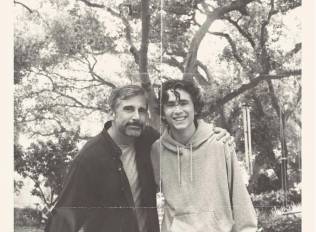
Tag: interview

  • "Soberchella" Kicks Off in Coachella Valley

    "Soberchella" Kicks Off in Coachella Valley

    This year marks the 10th anniversary of the sober community at Coachella Valley Music and Arts Festival.

    Coachella Valley Music and Arts Festival kicks off today in Indio, California. It’s probably safe to say that there will be plenty of drugs and alcohol to go around—but if that’s not your thing, you’re not alone.

    In the nearly 20 years of Coachella’s existence, Soberchella—a small but growing sober community at the festival—has been around for 10 of them. This year, it is celebrating its 10th anniversary.

    The two-weekend festival will feature performances by Ariana Grande, Childish Gambino, Tame Impala, Janelle Monáe, the 1975, Kid Cudi, Khalid, Aphex Twin, Weezer, and more.

    Last year, we discussed the roots of the growing movement with Soberchella co-founder Joseph G. This time around, neither he nor his fellow co-founders will be making the trip to Indio. They’ve passed the torch to a dedicated group of volunteers to carry on Soberchella’s mission—to provide sober support and fellowship to festivalgoers.

    “People are so grateful to find us before they arrive,” Joey W of Los Angeles, who is part of the new team running Soberchella, tells The Fix. This is her third Soberchella.

    “We have a wide variety of Soberchellians, from 70-year-old dancing hippies with 90 days of sobriety who come back a year later still sober, to sober mothers and daughters, ex-gang members, stagehands and Coachella food servers—you name it,” she continued. “People with more than two decades of sobriety down to two days with new perfect strangers and repeat friends, with one thing in common—to have fun and stay sober at Coachella.”

    Joey W, who is 10 years sober, is largely responsible for getting the sober community back on its feet. “It was starting to stagger, and I just want to revitalize it and try and make it really thrive into the next decade,” she said.

    Joey W started by ramping up outreach efforts and getting the word out to meetings and support groups worldwide. “We really wanted to beef up the outreach and let AA/NA and all other 12-step programs know we’re here,” she said.

    In addition to the noon meetings that Soberchella is known for, there will be additional meet-ups at various sets throughout the festival. And if that’s not enough, they also provide information on meetings and support outside of the festival.

    “We also have helped people connect out-of-town travelers with other sober people for meetings in Vegas, LA and the desert,” says Joey W. “One of our Soberchellians’ wife got really sick and he gifted his tickets to another member on our GroupMe Chain who wasn’t able to afford tickets. And they had never met in person. How cool is that?”

    And fielding last-minute calls from fellow festivalgoers in need of support is typical at the festival, she adds. “I hope it has helped someone stay sober another day.”

    Another team member, Fred E from the OC, is helping out for the first time this year, though this will be his 10th Coachella. With 12 years sober, he says that the meetings at the festival are as meaningful to him as the performances. “The amount of gratitude and euphoria that I feel sitting in those meetings with the thump of the bass in the background rivals many experiences that I barely remember from before I got sober,” he tells The Fix.

    Soberchella’s presence at the festival is vital to its members, who hail from all backgrounds. They have one shared goal: to listen to good music, have a good time, and to do it all while maintaining sobriety.

    “No matter who people are coming to see, why people come, or what stage of sobriety people are in, we are all excited to party, listen to music, and have a complete escape from the real world. We are all here to help support people being able to have maximum fun in an environment that can be dangerous for some of us,” says Fred E.

    Kurt G went to his first Coachella back in 2010, with just 22 months of sobriety. After doing a quick “sober at Coachella” Google search, the rest was history. Now 10 years sober, he’s been attending the annual music festival for pretty much his entire recovery.

    “Coachella is an amazing experience but it can be treacherous ground for a sober person to walk,” Kurt G tells The Fix. “I love live music and I love the excitement and joy it brings me and to the other 99,000 of my newfound friends here on the polo fields.”

    “For a lot of attendees, it’s a drug- and booze-fueled party and that can be a scary place for me and my sober brothers and sisters,” he continued. “Attending the Soberchella meetings through the years, I’ve met some old-timers and I’ve met a person that had literally 3 days—a noon meeting sometimes doesn’t seem like enough. For that moment though, we can be candid, we can listen, we can be of service, and we keep coming back.”

    If you would like to learn more about Soberchella, visit Soberchella.com.

    View the original article at thefix.com

  • Learning How to Love and Be Loved: An Interview with Eva Hagberg Fisher

    Learning How to Love and Be Loved: An Interview with Eva Hagberg Fisher

    I think illness was the great wind that just blew through my life and cleared away a lot of the resistance that I had to being vulnerable, by making my need to ask for help a literally life and death decision.

    A medical mystery intertwined with a tale of friendship and sobriety, Eva Hagberg Fisher’s How To Be Loved: A Memoir of Lifesaving Friendship provides a lesson that many of us need to learn: true love does not exist only in the realm of family or romance. Sometimes the most meaningful and life-changing love is found in friendships: the ones who stay even when it gets messy, even when you don’t want them to.

    For Fisher, overcoming addiction and embracing long-term recovery did not mean the end of suffering. Mysterious illnesses, warped family dynamics, and complicated relationships threaten and almost undermine her sobriety. When the doctors are baffled as extreme havoc dominates her health, she wonders how she’ll maintain her balance and move forward with faith in the future.

    With the help of friends made in 12-step programs and elsewhere, Fisher faces the hardest challenges of her health crisis. But maybe the biggest challenge is allowing herself to be loved, which requires more than being brave; it means she’ll have to be vulnerable. In this stirring memoir, Fisher learns to surrender, and through surrender she finds relief, courage, gratitude, resilience, and love.

    Of course, we wanted to know more.

    The Fix: How do you define radical surrender and what part has it played in your life? In 12-step programs, they often say that the meaning of surrender is “joining the winning side.” Do you agree?

    Eva Hagberg Fisher: For me, it’s a constant, ideally daily practice. I don’t know if it’s joining the winning side so much as, for me, joining the only side that is ever going to give me a chance at having a good life. Or any kind of life that’s worth living. Life keeps happening to me, even though the book has an ending! And I need to keep surrendering. I want to keep surrendering because the feeling of safety and relief that I get is what I was always looking for.

    The Buddha’s First Noble Truth is that “Life is suffering.” Do you believe we need to suffer to a certain extent to learn how to grow spiritually? Is the recognition of suffering and how a person then handles that challenge a key to spiritual growth?

    I don’t know that we need to, but it does seem to sort of fast-track a greater sense of compassion and the need for connection. I don’t know whether or not my suffering was necessary, but I think that the way in which I kept wanting to be awake for what was happening is what led me to be able to experience what I’ve seen described as post-traumatic growth.

    Somewhat similar to your experience, my friend just underwent his second operation on a brain tumor and is now going through radiation treatments. It astounds me that he can maintain his sobriety and his sanity through such a life-altering time. Humor and music both seem to play a significant role for him. How were you able to accomplish this?

    I’m so sorry to hear about your friend. And I’m so glad that he has you there. For me, a sense of humor and just highlighting how ridiculous and seemingly inconceivable the complications I faced were was just essential. I think a lot of that is just innate personality — my father is intensely optimistic, as am I. And my friends helped me to have a sense of humor; once they saw that laughing about my situation was really helpful for me, they put a lot of emphasis on being funny with me.

    In September 2015, you were diagnosed with a rare disease called mast cell activation syndrome. This devastating syndrome makes the body feel like it’s allergic to everything. How did you overcome this condition?

    A variety of treatments: a really intense antihistamine protocol, bio-energetic de-sensitization, various meditative modalities, frequency-specific microcurrent, supplements, nettle tea, time. It’s so different for everyone, so I’m definitely not recommending this, but it’s what I did.

    In your book, your illness becomes the force that opens the door to profound friendship. Do you feel like you needed an extreme crisis to be vulnerable enough to accept such friendship and be such a friend?

    Definitely. I think illness was the great wind that just blew through my life and cleared away a lot of the resistance that I had to being vulnerable, by making my need to ask for help a literally life and death decision.

    When you say that you were “constitutionally unlovable” before the events of the book happened, what do you mean?

    I just felt and believed that at my core I was a bad person. That all the mistakes I’d made were evidence for my being constitutionally bad, and that I didn’t inherently deserve to be loved. That I had to prove my value by being helpful or useful or financially supportive.

    What role should the ego play in the context of friendship?

    The role of ego is definitely one that I play with – I try to remember that my true friends are the ones who can spot my ego and lovingly point it out and help me to ground myself. And I also think that my ego drives me to produce art, and be in the world, and I’m grateful for it.

    Tell us a little about Allison and the role she has played in your life.

    She is someone who saw me really clearly — and saw so many other people really clearly — and had no compunction about accepting that everyone has deep and often irreversible flaws, and they are still worthy of love. We had a sort of imbalanced friendship for a while, and then when I got sick I lived with her for a few weeks and prepared for brain surgery, and she showed me how to get through something that I thought was totally unsurvivable. She loved me really completely, and that experience started to put new grooves into my brain for what being really loved could feel like.

    You have said, “My wish is for people who are suffering to not feel like they have to hide it or fit into a certain narrative.” What narrative did people try to fit you into during both your illness and your recovery? What working narrative did you choose to create for yourself?

    I think it’s common for people to see a sick person as a sort of wise sage. It’s definitely a role that I also love because it helps me feel strong and smart and therefore safe, but I think also people were just really compassionate and felt really bad for me that I was going through this, and wanted to be helpful. My own narrative changes all the time — sometimes I want to feel like I’m really blowing everyone’s minds with deep thoughts from the edge of the abyss, and sometimes I just want to feel really kind of regular and like I’m just the same as all my friends.

    This interview has been edited for length and clarity

    View the original article at thefix.com

  • Addiction as a Metaphor for the Climate Crisis: An Interview with Charles Eisenstein

    Addiction as a Metaphor for the Climate Crisis: An Interview with Charles Eisenstein

    The conventional response to climate change is like the conventional response to addiction: “Well, you’re just going to have to try harder to stop.” I understand climate change as a symptom of a much deeper malady that is inherent to civilization as we know it.

    In the fall of 2011, a small protest began in New York City that would later become known as the “Occupy Wall Street” movement; it later emerged in major cities around the world. Among the many leading voices to provide an analysis of the economic crisis that preceded the movement was author Charles Eisenstein.

    Eisenstein had been writing about a variety of crises afflicting postmodern society for years, but his views on the perils of capitalism and the growing ecological and climate issues resonated strongly with the people involved with the Occupy movement.

    Perhaps to humanize, or just to make sense of many of the complex, broad, and intertwining topics he writes about, Eisenstein relies heavily on the power of storytelling, and often uses analogies. One analogy he regularly comes back to is the phenomenology of addiction. Though he does not personally identify as having an addiction (at least in the conventional, pathologized sense), his writing indicates his deep understanding of the myriad ways that addiction may be the best metaphor we have for understanding some of society’s greatest ills.

    Eisenstein recently published his sixth book, Climate: A New Story, and agreed to an interview with The Fix:

    The Fix: Your writing has often relied on the phenomenology of addiction as a metaphor for the harms of capitalism, and now in Climate: A New Story you rely on the metaphor again to help explain the global climate crisis. Why do you often come back to the metaphor of addiction?

    Charles Eisenstein: In the popular media, we hear things like “our addiction to fossil fuels,” and it’s usually used in disparaging terms, which taps into the general prejudice people often use against addicts, too. But I like to take the metaphor seriously – if we are addicted to fossil fuels, what is the underlying need that drives the addiction that the fossil fuels aren’t actually meeting? Fossil fuel consumption, of course, is a symptom of the addiction to economic growth. Or the addiction to consumption; accumulating more and more stuff – bigger and bigger houses, and so on.

    What is addiction, in your view?

    Addiction, in my view, is the result of an attempt to meet a genuine need with something that does not actually meet the need. You’re using a substitute for what you really want, so no amount of it will be enough to meet the real need.

    One should ask then, what drives such an addiction? Well, we have to look at the unmet needs of our society. One of those is certainly the need for community, which has broken down even in the course of my lifetime, but especially in the last century or two. When I was a kid growing up in a suburban neighborhood, we had community. Everybody on the street knew everybody else, and all the kids knew each other, and we all pretty much knew what was going on in everyone’s lives. All the families talked with each other, and we had neighborhood volleyball games, and all the kids were playing stickball in the church parking lot.

    Years later, when I resettled in suburbia for a brief time, after I started having kids, it was a totally different scene. You didn’t see packs of kids roaming around on bikes. The playground in the park, in the middle of the sub-development, was empty most of the time. The neighbors didn’t really know each other. I remember when one neighbor got a divorce and no one even knew about it until six months later. We had no community. We were simply living in proximity to each other.

    How did you first come to learn about addiction, and what perspective are you hoping to bring through your writing?

    I guess I just picked up little bits and pieces of it from the popular culture. I came of age in the mid-eighties/early-nineties, and at that time, there was certainly mention of addiction as a disease in the media. I read some books that had an impact, like Whiskey Children, which was a really beautiful book, but really, my understanding of addiction is part of a more comprehensive worldview.

    I’m looking at the ways in which we are at war with nature, and at war with each other, and at war with parts of ourselves, and how addiction fits into that pattern. I’ve never identified as an addict; I don’t have that kind of story. But, like most people, I saw people around me suffering from addiction and what it did to their lives. My views on addiction are part of a larger program of ending the war against the self, which is a reflection of the war on nature. And that’s why I’m attracted to using addiction as a metaphor.

    Our society likes to wage war on problematic areas – the “War on Drugs” is an obvious one, but we’ve also had the “War on Poverty,” the “War on Terror,” and so on.

    Dealing with an addiction is not about fighting yourself – [it’s] finding an enemy and overcoming that enemy. That is the near universal template of problem-solving in our culture. Find the disease. Find the germ. Find the weed. Find the bug. Find the criminal. Find the bad guy. Find the terrorist – kill him. Find a bad thing in yourself. Destroy it, overcome it. That’s a recipe for endless war. If the conditions that breed disease, weeds, terrorism, crime, and addiction remain present, then fighting the symptom while leaving the cause untouched is a recipe for endless war. I am a peace worker. I want the war to end.

    The first step in 12-step programs is to admit powerlessness over addiction. Another way of viewing this in terms of “internal warfare” is the paradox of “surrendering to win.”

    I have a soft spot in my heart for 12-step programs. My ex-wife had been an addict, and she got tremendous value from being a member. She had this book of daily meditations called Just for Today that she would read. For her it was a source of not only comfort, but also inspiration and strength.

    The principle of the first step is one that I find most aligned with my understanding of addiction. “We realized we were powerless over our addiction.” That’s a key insight. Because in the mindset of fighting the addiction, the implicit solution is, “My willpower will overcome my desire. My willpower will overcome my craving.” The problem with that is that willpower is finite, and the unmet need is an infinite generator of craving. You can resist it for a while, but then you’re going to have that moment of weakness and the willpower disintegrates. And you have a binge, because the unmet desire isn’t met.

    How does the climate crisis resemble this paradox of the failure of willpower to overcome addiction?

    This is obviously a society in pain. When looking at climate change, the conventional response to it looks a lot like the kind of ignorant conventional response to addiction, which essentially is, “Well, you’re just going to have to try harder to stop.” But it doesn’t look at the underlying causes. I understand climate change as a symptom of a much deeper malady that is inherent to civilization as we know it.

    What are the underlying causes?

    The idea that there is a linear direction of our ascent to dominance over nature. That is what needs to change. In my new book, I weave different threads of that narrative. One is our perspective of nature as an instrument for human utility, as a resource. This view might compel us to do something about climate change, because otherwise bad things will happen to us. But that separation from nature is part of the problem; that kind of relationship to nature, where it is an object for our use. That is part of what has distanced us, and isolated us, and cut off our intimate connections with the soil, and water, and plants and animals around us, that makes us feel so lonely and so in need of compensating for that lost connection with more and more stuff.

    And yet it is often said that in order to surrender, one must hit “rock bottom.”

    What “rock bottom” is varies from person to person, and the more love that someone has had in their life, the higher their bottom is going to be. One way to look at it is then, of course, how do we raise the bottom for the people and the planet that we love? Why is it that for one person, rock bottom is when their spouse walks out for a day, or they go to jail for a night? Yet, for another person it’s smoking their last cigarette through their tracheostomy hole after they’ve already gotten lung cancer and emphysema.

    That’s a really important question, which I look at in my Sacred Economics. I look at the question of how do we get out of our addiction to debt? How do we raise the bottom before everything is consumed in order to service the debt? Which is what’s happening. That’s what drives the entire world destroying machine – the debt-based financial system. So how do we raise bottom? In the economic context, the question becomes, “What functions can we reclaim that have been lost to the money economy?”

    What have we as a society lost because of our economic pursuits?

    We are not separate individuals that can thrive as long as our quantifiable needs are met. We are in relation to all beings. As our relationships to other people and to nature are truncated, we suffer a hunger, a loss of our “being-ness,” if you will. We then seek to compensate for that loss through many addictions, but especially through acquisition – adding more and more onto this narrow, cramped, separate self in futile compensation for the loss of connections to people and to nature.

    To make matters worse, the growth economy destroys community, because with economic growth we meet more and more of our needs through the money economy – we purchase more like that’s what economic growth is. It’s the expansion of the realm of monetized interests, and that expansion comes at the expense of the gift realm, the realm of reciprocity, of people helping each other, taking care of each other’s kids, sharing, sharing meals, creating our own fun instead of purchasing fun, creating our own entertainment, our own recreation. Helping each other out with projects, borrowing things from each other instead of renting them.

    When all of those communal functions are converted into owning, or renting it, or hiring someone to do it, the economy grows. But our connectedness withers and our felt connectedness to each other disappears, and we’re left even more lonely. So that’s maybe another hallmark of an addiction, is that the results of the addictive habit strengthen the wound from which the addiction is coming. They make your life worse so then you need even more of the things that fuel the addiction.

    How do we stop fueling the addiction then?

    Our story of the world that told us who we were – how to live life, how to be human, what was important, and what we served – is falling apart. And not only our story, but the systems that are built on that story are not working very well anymore, either. We have a crisis – not only is it a crisis of meaning, but it’s also a crisis of our being, because we are storytelling creatures, and our weave of stories is also a weave of our identity. Until we emerge with a new story, and regain our relational identification with all beings, we will remain stuck in the downward spiral of addiction.

    View the original article at thefix.com

  • A New Addiction Intervention Book: INTERVIEW with Dr. Louise Stanger

    A New Addiction Intervention Book: INTERVIEW with Dr. Louise Stanger

    Addiction and Families

    Addiction affects an estimated one in three American families. So, how do these families get help? Some struggle along on their own. Other families seek help directly treatment providers: detox clinics, psychotherapists, addiction treatment centers, or addiction counselors. Still other families are just lost.

    Still, there is one group of professionals that bridge the gap between families and treatment…

    Interventionists.

    In the next decades, behavioral healthcare professionals will need to increasingly both identify and refer families coping with substance use disorders to treatment. And interventionists practicing solid principles taken from social work and family systems theory may hold the key to our collective progress.

    A Book That Can Help

    A new book called, “The Definitive Guide to Addiction Intervention: A Collective Strategy” introduces clinicians to best practices in addiction interventions. It literally bridges the gap between the theory and practice of successful intervention. Today, we speak with the originator of this strategy, Dr. Louise Stanger.

    Dr. Stanger has developed and refined her invitational method of interventions over decades of working with families. She has performed thousands of family interventions throughout the United States and abroad. And we’re pleased to have her here for a digital interview!

    ADDICTION BLOG: What was your inspiration for writing this book?

    DR. LOUISE STANGER: After growing up in a family with substance abuse and writing about many of these stories in my memoir and in the public sphere, I started to think about what message I’d like to leave for future generations of social workers in this space.

    I maintain that it is very important for the future generations of social workers, psychologists, marriage and family counselors, alcohol and other the drug counselors, doctors, nurses, etc. to not just read one book about one person’s methodology, but to be able to learn a variety of different strategies. Questions like where strategies come from, what is the evidence behind intervention strategies, how have these strategies developed and changed, etc. to inform the reader and open their eyes to the broader scope of intervention and its modalities. As such, I like to think of these strategies as “invitations to change.” The idea is to provide a textbook at your disposal to learn and teach from.

    The truth is that 155 people die from opioids every day – it’s a global crisis, and we need new ways to train professionals across many levels in schools and in practice to help people and their families.

    ADDICTION BLOG: What do you think is the most important message that clinicians can “take home” after a reading?

    DR. LOUISE STANGER: The most important message is that change is possible.

    The key to this, which is talked about in the book, is CIS or Collective Intervention Strategies. This means that in order for an intervention to be successful, a collective team of family members, friends, colleagues, associates, business partners, managers and co-workers must be assembled to bring change in a person’s life, which is the intervention part of it. And finally, strategies, in that nothing is set in stone, we adapt to the unique needs of each individual.

    As a whole, Collective Intervention Strategies is a powerful model for inviting change that readers can take home.

    ADDICTION BLOG: How do most people or families get help for addiction?

    DR. LOUISE STANGER: How do they get help? That’s a great question.

    Talking with and connecting with professionals that are trained in process addictions, substance abuse, chronic pain, etc. You can also get help. Addiction is always bigger than the families, so it’s always best to seek out professional help from a mental health clinic, substance abuse clinic, or clinicians. Help is available. Families don’t have to do it alone. Not alone. For example, they can do 12-step. But when their hearts are breaking, they call.

    ADDICTION BLOG: Do you find that people misunderstand the field of mental health treatment and/or the work that you do? Do you find professionals even have a bit of trouble when it comes to certain areas of your work?

    DR. LOUISE STANGER: I think people by far don’t understand how substance abuse and mental health interface and work hand in hand. They don’t understand the duality or triality of what happens. The two are not mutually exclusive, and as such, must both be assessed (along with any other influencers) to get the best possible picture of the person and begin to build a comprehensive treatment plan.

    For instance, I appreciate the ASAM definition of addiction – it’s a disease of the brain and causes changes in brain chemistry. As such, people are afraid to address the complexity of humans and all the aspects. Therefore, when helping a family or a loved one, it’s very important to understand and learn about that particular individual, you must do a retrospective – bio, psycho, and social – to understand how to help and what kinds of treatment will fit their life.

    As for the professional sphere, there are many people who claim they are pros but have not been properly trained. I don’t think a 5 day training makes one an interventionist. Sometimes it feels like the Wild, Wild West out there. I think there needs to be more education and schooling, professional classes and programs that illustrate intervention as a real treatment option. We need it in our undergraduate, graduate and doctoral programs, across fields of work including counseling, nursing, pre-med, etc. to build it out as a field of study.

    ADDICTION BLOG: How do you hope this book will impact the field of substance use disorder treatment? Where do you hope to see treatment advance within the coming years?

    DR. LOUISE STANGER: My hope is that this book is adopted by both training centers, colleges and universities and hospitals, behavioral health care treatment centers, the legal system centers, senior living centers, doctors, Nurses, Funeral Directors, etc.

    This book takes a deep dive and discusses clinical and reverse interventions, which can be performed in a variety of milieus, shedding light on aspects of intervention that aren’t always talked about in trainings and certification programs. I hope professionals will hire and cultivate staff trained in the strategies talked about in the book, so that knowledge, standards and practices are a part of their tool box.

    In coming years, we are going to see more telephone and internet-based treatment options, the use of AI and other technological advances. Though nothing will replace relationships, we will have higher standards based on improved educational qualifications and higher standards of accreditation for treatment centers – all good things for behavioral health care. The ongoing opioid epidemic will spur change by demanding robust and low cost treatment options to address this issue.

    We will also address ethical issues. For example, the hiring of professionals for treatment centers will need to address marijuana legalization. Questions will arise: do treatment centers have progressive abstinence? Or a firm baseline? Can hired professionals use one substance over another? The ethics of these questions will come to fruition as the issues play out over the next couple of years.

    ADDICTION BLOG: Would you offer a bit of insight for our readers as to how they can best handle trauma and addiction in their family? What are some of the best steps they can take themselves if facing a drug or alcohol problem within the home?

    DR. LOUISE STANGER: The first step is to define trauma as an overwhelming experience that cannot be integrated and one that elicits multiple defenses and dysregulates the person. Or, it can be described as a stress that causes physical or emotional harm that you cannot remove yourself from.

    Then, we may unpack the etiology of the trauma, which may be objective or subjective. Objective trauma is what took place i.e. I fell off a ladder, I was told I was no good, I would never amount to anything, my father was emotionally abusive, I was in a car accident, etc. Subjective trauma is how the person perceives what took place and the emotional aftershocks. This can come from adverse childhood experiences, and the effects of trauma is cumulative over time.

    Once this is understood, seeking out and talking with trained professionals who can put you on the path to recovery is integral to the process.

    Professionals must ask: how can we help clients who experience trauma and then substance abuse/addiction rise to their best possible selves? Also, it is important to give treatment recommendations to other family members so they too can be the best they are. This is a holistic approach to treating a wounded person, and it always comes back around to CIS or Collective Intervention Strategies as the best approach.

    Folks may also consider visiting a 12-Step group such as Alcoholics Anonymous, Al-anon, Narcotics anonymous, etc. And of course there is me in my own independent practice. I always tell my clients that help is just a phone call away.

    ADDICTION BLOG: Through the process of writing, did you learn any important lessons or come across information that you weren’t expecting?

    DR. LOUISE STANGER: I didn’t have any big surprises. I found it humbling that with all the research and time working on this book, I circled back to the one truth that has been consistent in my work – it is imperative to meet the client where they are at. It’s about understanding who they are, where they come from, their family dynamics, traumas, and their place in the world.

    The best theory in the world won’t take into account this human element. With unique people, a multitude of cultures, gender expressions and the changes in our genetic diversity, we must embrace difference as a teacher. That way, you can help plan a strategy that meets their unique needs.

    ADDICTION BLOG: Are there any future projects you’re currently working on and/or have in mind? What kind of impact are you hoping to leave on the mental health world with the addition of this book?

    DR. LOUISE STANGER: I continue to write public blogs – openly discussing the major topics in the behavioral health field. One thing I will wrestle with through public discourse, presentations, trainings and daily practice is ethics in the digital age. Specifically with marijuana legalization, how will this affect the workforce? There will be a multitude of implications and I’m excited to dive in and explore with my practice, clients and continued commitment to service of the behavioral health industry.

    Finally, my hope is that this book is adopted my many universities and schools across the globe. I’m excited about the e-platform, which will make it a living source of knowledge for professionals to keep up to date and relevant for future generations. Also, I hope that whatever my next writing venture is – whether it’s a book, a collection of blogs, or more thought pieces – that it will seep into the mainstream and become a larger public discourse than we’ve seen related to these topics. A wider audience would help ease the stigma of substance abuse and mental health in the public sphere.

    ADDICTION BLOG: Do you have some inspiration you can leave for our readers who are currently handling addiction for themselves or a loved one?

    DR. LOUISE STANGER: Keep doing what you’re doing. As I put in my memoir, keep falling up, which means that stumbles, detours and falls are part of the human experience, so long as you’re out there living and moving forward.

    I strive to look for strengths and goodness in people so everyone may rise to their best possible selves. I hope that readers and those out there struggling with these kinds of issues will do the same. Help is just a phone call away and hope is possible. Dig deeper, think harder, look further, rise stronger.

    ADDICTION BLOG: Do you have anything else you’d like to add?

    DR. LOUISE STANGER: Thank you for the opportunity to be a part of your blog. I appreciated working with you as an editor. Your contributions are immeasurable.

    In closing, I want people to know every day they are inviting people to change, help is available, solutions are possible.

    View the original article at

  • My "Beautiful Boy": David Sheff on Bringing His Family’s Story to the Big Screen

    My "Beautiful Boy": David Sheff on Bringing His Family’s Story to the Big Screen

    While watching the film, I would look over at Nic sitting next to me and get so emotional. I would start to cry and I feel like I’m about to start crying right now because I came so close to losing him.

    In “The David Sheff Solution,” The Fix interviewed the National Book Award-winning author of Beautiful Boy about his struggles as the father of a child with a substance use disorder. Now David Sheff’s story is about to be vaulted to the next level of national prominence. On Friday, Amazon Studios released the feature film Beautiful Boy, starring Steve Carrell as David Sheff and Timothée Chalamet as Nic Sheff.

    As opposed to being intimidated by this move into the public eye, David Sheff is excited. Since helping his son Nic find the path of long-term recovery, Sheff has dedicated his time and energy to raising awareness and continuing his efforts to reduce –and ultimately remove—the stigma surrounding addiction. Without stigma, Sheff knows from firsthand experience, prevention efforts will improve and treatment will become more accessible. Indeed, Sheff’s ultimate goal in allowing his story to be brought to the big screen is to bring greater compassion and understanding for this disease. Given our similar focus at The Fix, we are thrilled to again speak with David Sheff.

    The Fix: Beautiful Boy is a rare combination of both your most deeply personal work as a human being and your most successful book as an author. Was it hard to decide to expose such a story to the world, particularly in a visual format that lacks the distance of the written word? Was it difficult to let go and give director/writer Felix Van Groeningen the space to tell your story?

    The direct answer is yes. It was hard. Even from the beginning, exposing our family to potential criticism in a public forum was worrying. It has been worrying from the very beginning when I first decided to write about what was happening to my family for The New York Times Magazine. I remember asking a friend of mine to read the manuscript after I first wrote it. She was an editor, and I respected her opinions. I must admit today that her response surprised me. She told me, “You can’t publish this. There is all this stigma against addiction, and your family will be judged harshly.” As you can tell, she really counseled against moving forward.

    At that point, I already had made the commitment. I had talked with everyone involved, including Nic, and we decided to move forward. When it came out, there were no negative consequences at all. In fact, it was the opposite. I heard over and over again from people who had been impacted by addiction. It was all about sharing stories, and people seemed relieved to be able to share. They had kept their experiences quiet because these were their deep, dark secrets. They also had felt that they would be judged. It was so positive that the article and then the book led to the creation of such an open dialogue in a variety of ways from in-person to on the phone to online messages in emails plus on Facebook and Twitter.

    It’s important to note that every word in that book I scrutinized. I wanted to make sure that I said what I wanted to say while also protecting everyone involved. It ends up being really complicated. I felt everybody had suffered enough, and I didn’t want to increase anyone’s suffering. As a writer, I tried to be as meticulous as I knew how to be. The idea of allowing someone else to tell our story was scary in a different way: I knew I would not have that kind of control.

    Before it happened, the idea of doing a movie had never really occurred to me. To begin with, the writing started as a way to get through the night. The writing was a way of expurgating this deep, dark turmoil that I was experiencing. When we were approached about doing a movie, the first guy turned out to be the right guy. We were approached by Jeremy Kleiner, one of the principals at Plan B Entertainment, and he was sincerely moved by both of our books. He cared deeply about this issue because he had been through it with friends while also being deeply affected by the Dad’s perspective and the family story. He felt it made it different from the vast majority of addiction memoirs. The key point he made was that addiction was not portrayed in either of our books in a simplistic or clichéd way. He made the commitment to make a movie that would show the complexity of addiction, the fact that there are no easy answers.

    Although Jeremy was just starting out at this time, we believed in him and in Dede Gardner, his partner at Plan B, along with Brad Pitt, who is the CEO and started the company. It seemed obvious to make the decision to make the movie with them. Since then, they have won Academy-Awards for making 12 Years a Slave and Moonlight, but this was before they experienced such incredible success. When they brought on Felix Van Groeningen, the director of the movie, I was even more convinced. He’s a genius, and I was incredibly impressed and moved by his past films. Like the producers, he was connected and committed to the material. I knew we were in good hands, and I knew they would tell our story in all of its complexity.

    Steve Carrell is an American comic icon. In movies like The Office and The Forty-Year-Old Virgin, he has made us laugh (although he showed dramatic chops in Foxcatcher). What do you think of his portrayal of you in this film?

    There is no doubt that he’s a comic genius, but he’s so much more as well. Steve is an astounding actor, and I knew that long before this movie. Indeed, Nic and I remember so clearly the experience of seeing him in Little Miss Sunshine together. He was heartbreaking in that movie in such a beautiful way, and it was a moving experience for us to see that film together when it first came out in the theaters.

    When I met Steve, he was so sincere, warm, and committed to telling the story right. The other thing I realized was that he connected to the story as a father. It was not the drug experiences that drew him to the story, but the opportunity as a father to play a father desperately trying to help a child. He understood the deep desire as a parent to do anything we can to protect our kids. He expressed how badly he wanted to play that role because of the emotional component of the story.

    I must admit, however, that when I saw the movie, I still couldn’t imagine anyone playing me. It just seemed too weird. It really is disconcerting when you think about it, and, as a writer, I tend to think about things. When I finally saw the movie from beginning to end, I feel like he nailed it. He captured how hard it is and how hard it was for me to go through this period in my life. He captured what it’s like to be a parent of an addicted child, somebody you love more than anything and all you want to do is save them, but you keep running into obstacles like the denial and the horror of addiction. He captured that difficulty of helping someone who is angry and rebellious and lashing out at you as you try to save their life. I lived through that anguish, and that anguish is in every nuance of his performance and his expression and in his acting. I really was blown away and felt that he got it. Before I saw him do it, I honestly doubted whether anyone could do what he has accomplished in this film. You see his optimism and his crushing defeat, then you see him become optimistic again and then his desperation as his son keeps relapsing. The up and down and up and down is so powerful, but even more powerful is the through-line of his love for his son.

    How did you and Nic decide to move forward with the movie project? Did you both feel from the beginning that your book and his book should be turned into a combined film? How did you decide to combine the Beautiful Boy story with Nic’s Tweak, or was this choice made by the filmmakers?

    The choice was completely made by the filmmakers. It was inconceivable at first that they would be able to pull off two such different takes on the same story in a single film. However, I had heard how valuable it was for other parents to read Nic’s book and develop a new perspective on what their addicted son or daughter was going through. At the same time, it was really valuable for a lot of kids to read Beautiful Boy to get a sense of what their parents were going through, both from the perspective of the how much they suffered and the depth of their love. Many kids don’t realize how much a parent’s love is a constant in the process of trying to help their child recover.

    Still, each story had been told in book form with over three-hundred pages dedicated to each story. The idea that somebody could pull it all together in a two-hour movie was hard for me to imagine. It was not at all our choice, and it felt like they were jumping into the deep end of a stormy ocean without a life vest. Also, there was no precedent for it. I can’t think of a movie that was ever based on two different memories; one from the parent’s perspective and the other from the child’s perspective. I wasn’t sure that it could be done.

    However, you really got the emotional journey through the parent and the kid. I knew it was going to be challenging, but, once they made the decision, they never looked back. Over the two years that it took to make the movie, they kept to the course, and I feel they did it masterfully. It was a hard choice to make in the beginning, and it definitely was the decision of the filmmakers.

    As an aside, Nic did amazing in his interview. I was so impressed by the depth of his compassion and the veracity of his gratitude.

    He’s an extraordinary example of recovery in practice. All the time, I hear from people who are so discouraged because they’ve been through years of watching a child’s descent into addiction. I hear it about other family members and friends as well. They just don’t feel like recovery is possible.

    We are so lucky that Nic made it. Any parent is lucky that has a child who makes it. Nic’s drug use was so extreme, and the combination of drugs that he was doing was truly dangerous. He put himself into so many life-threatening situations during those dark days. There were so many times when it could have ended up differently. Tragically—and I feel so deeply for them because I could have been there— so many parents now experience the unforgiving horror of that outcome where they lose a child. Given Nick’s recovery now, we were very lucky.

    My experience seeing Nic go through this process has been incredible. People that go through recovery and come out the other end don’t just survive. Because of all the hard work that needs to be done, because of all the suffering, because of all the self-examination required to get sober and then stay sober, they become some of the most extraordinary people that you’ll ever meet. In fact, John, you are a case in point, and that journey from addiction to recovery, as you know from your own experience, can be inspiring to other people that you meet along the way. People that come out the other side can have the most rewarding and fulfilling lives afterward.

    I hear from so many families that are close to losing hope or have lost hope. Their relationships have been shattered, and they can’t imagine them ever being put back together. My experience with Nic has shown that families that do explode; [families that] feel—amidst the ruins—that it’s almost inconceivable that they will survive it—they do survive it, and they can survive. Recovery is still a possibility. If they do the hard work and give it time, they can be closer than ever. I believe we can say that about our family.

    Nic and David Shef
    Image Credit: Reed Hutchinson for UCLA Friends of Semel

    If this movie could accomplish one goal, what would you want that goal to be? What do you believe can be achieved?

    I feel the biggest impediment moving forward to end addiction, to face this disease in all its difficulty, to prevent people from becoming addicted and to treat people that do become addicted, is the ongoing stigma. Too many people keep their problem hidden because they are judged. People don’t go get treatment because they are hiding the reality of their addiction. When people start to get treatment, if they have the normal challenges of the usual ups and downs, if they relapse, they are judged very harshly. Being judged in such a way is the last thing needed by somebody who is addicted. They already feel terrible about themselves. They are caught in a cycle that’s like a vise, and they don’t want to be doing the terrible things that they do to themselves and to their families.

    I hope the movie can show people that addiction is not about choice. It’s not about a young person going out and doing these things just because they want to have fun and party and get high. It might be about that a little in the beginning, but it quickly shifts. Essentially, it is about pain and suffering and a desperate attempt to find some sense of peace within themselves. Addicted people talk about this hole inside them that they are trying to fill. The hole can be anything from an undiagnosed psychiatric problem like depression or anxiety to untreated childhood abuse and trauma. Whatever it is, I have come to see that it is about a pain that the person is trying to self-medicate.

    If this film can help with anything, I hope it opens the door to greater compassion and understanding for this disease. Without the burden of the stigma, we can move forward and actually help the people that need our help. We need to help people by overcoming stigma by focusing on effective prevention and treatment. People who are addicted are not weak. They are ill, and they deserve our compassion.

    At the Colorado Health Symposium in August, you start your keynote address after watching the film’s trailer by saying, “I’ve only seen that once, and it’s hard to watch.” What parts exactly were so hard to watch? Was it a combination of Nic’s descent into addiction and your inability to stop it? Did you have any PTSD-like reactions to the film, or was it a cathartic experience that freed you from the lingering demons of the past?

    Wow! That’s a good question. I guess the answer is both. It brought it all back, and it’s not like I had forgotten. However, when we get past traumatic experiences in our lives, we do put them in a place that we can live with. I feel like I had done that to some degree, and it made watching the film challenging. The experience of seeing it again opened up the whole thing again, meaning it opened up the old wounds. I just remembered how hard it was and how hard it was to watch Nic suffer. I felt again how hard it was for all of us to survive as a family.

    At the same time, it was amazingly cathartic to process what we had been through as a family. It was another version of writing the book, which had been really cathartic as well. It also was an affirmation of the hard work Nic has done to get sober and to stay sober. It was a reminder of how lucky we are to have come out the other side. While watching the film, I would look over at Nic sitting next to me and get so emotional. I would start to cry and I feel like I’m about to start crying right now because I came so close to losing him. It was a reminder of how close I came to losing him.

    In another sense, it was cathartic because I felt like it mirrored the experience of so many other people. It was a reminder of how many of us are in this together. When Beautiful Boy first came out in 2008, I thought it couldn’t get worse in terms of the number of people that were dying from addiction. The number then was about 36,000, and that doesn’t include people dying from alcohol-related causes. Of course, we know that in 2017, it was 72,000 dying from addiction-related causes alone, twice the original number. Things have gotten so much worse, and that’s why I feel that this movie is coming out at just the right time. So many people are suffering, and I hope this movie can help bring us all together and make us feel that we are not alone.

    You talk about how hard the disease of addiction is on families. Should families see this film together? Should parents take their teenagers? If they do, how should they prepare both themselves and their kids for the film and what should they do afterwards?

    Wow! That’s another good question. I guess what I would say is that every family is different. A reality that many of us would prefer not to face is that every kid is going to encounter drugs as they are growing up. It’s a prevalent reality in the world. Many parents ask me if it’s too early to start talking about drugs with their child if they are a freshman in high school. The clear answer is no. It’s not too early to start talking about drugs to your young, young child. Drugs are pervasive in our culture, and kids are curious by nature. They are confused, and it’s our responsibility to provide them with quality information to help lift that confusion. It’s our responsibility to shed light.

    Still, every family and every parent has to determine what’s appropriate for their own child. When it comes to seeing this film, that decision needs to be made for each family. In general, if your child is mature enough to see explicit and disturbing scenes of drug use, then I think this film could provide an amazing way to start that conversation in a family. What does it mean to use drugs? Why do people use drugs? What are the potential consequences to using drugs? These are crucial questions. Before watching the film, there should be a conversation that provides some education. In other words, a conversation that opens the door to a conversation. The best part of such a conversation is if parents can get their kids to talk.

    It reminds me of this recent work I’ve been doing with Jarvis Masters, a California inmate at San Quentin on death row. I’ve spent a lot of time in the prison, and I recently sat in with a group of inmates in the program as they talked about their experiences and their lives. They are trying to face the consequences of their actions by doing restorative justice. When I was leaving, I happened to be going to talk to a group of teenagers that night. I asked these men: “I’m going to talk to these kids tonight. Is there anything I should tell them? Is there anything anyone would have said to you that would have helped you growing up so you could have made better decisions later on? Maybe you would not have fallen into addiction and fallen into crime?”

    A lot of the men had really interesting things to say. At the end, there was this one guy who has been super quiet the whole time. He said something under his breath, and I couldn’t hear him. I asked him to say what he had said again. He looked up at me and said, “When you talk to these kids tonight, don’t say anything. Just listen to them.”

    I thought that was incredibly powerful, and that’s the message I would give to parents. Try to engage your kids in conversation and really figure out who they are and what’s going on in their lives. Then, it’s super important to continue the conversation after the movie. Keep talking and, more importantly, keep listening.

    Finally, people in early recovery should be careful when deciding whether or not to see this film. Given the explicit drug use and the unvarnished reality of addiction presented in the film, it may not be the best choice so they should talk it through with their counselors, therapists, sponsors or whomever they are working with to maintain their recovery. The research tells us that such scenes of drug use can be triggering, and that’s the last thing we want to do with this movie. Part of the reason the movie is so powerful is because the filmmakers committed to telling the truth, and that truth is that drug use is not glamorous in the slightest, but rather horrifying to watch.

    View the original article at thefix.com

  • Beautiful Boy: An Interview with Nic Sheff

    Beautiful Boy: An Interview with Nic Sheff

    “A really cool expression of the family bond in the film is how the love survives everything that the disease can throw at it. Despite so much trauma, at the very end, you see that that core love never goes away.”The journey from addiction to recovery is a personal one, with details usually confined to family, friends, and maybe a therapist’s office or sobriety fellowship. But what happens when you open the doors to the public, laying bare the trials and triumphs that got you to this point? Since the publication of his father’s award-winning memoir, Beautiful Boy: A Father’s Journey Through His Son’s Addiction, his own memoir, Tweak: Growing Up on Methamphetamines, and his writing for The Fix and other publications, Nic Sheff’s experiences with addiction and his subsequent recovery have played out under the public’s gaze.

    Now, with the Amazon Studios wide release of the feature film Beautiful Boy on October 12th, Nic Sheff is going to experience a whole new level of recognition and fame. Now more than ever, anonymity is a thing of the past, but he remains dedicated to his personal recovery and the principles of a healthy program. With the premiere fast approaching, The Fix is honored that Nic took time to sit down and talk to us.

    The Fix: How did you and your father decide to initiate and move forward with the movie project? Was it agreed upon from the beginning that your book and his book would be turned into a combined film if successful? How did you go about deciding to combine Tweak: Growing Up on Methamphetamines with the Beautiful Boy story, or was this choice made by the filmmakers?

    Nic Sheff: We always thought the best idea was to combine the two books. Right after publication, we met with Jeremy Kleiner, a producer with Plan B Productions, and this is before the company had won two Academy Awards for producing 12 Years a Slave and Moonlight. They were just starting out, but when we sat down with him over dinner, I just felt that he got what we were trying to do with the books. Also, we had a friend in common who had been a heroin addict and had died due to this disease. It gave us an immediate emotional connection.

    You have to realize that there have been so many movies about addiction that show the downward spiral of a person as the drugs overtake their life. Many of these films show these people hitting bottom, then end with them dying or getting into rehab and ending on a hopeful note. Although there have been some great movies like that, our idea was to do something different. We wanted to show the effect the addiction has on the family because my Dad had written about it so amazingly in Beautiful Boy. We wanted to combine the family narrative with the addiction narrative.

    Along with that combination, we wanted to show a process that so many people experience when they first try to get sober — the cycle of relapse caused by the pain of being without the drugs and having to face your feelings. When the pain comes, we reach out to the one thing that we know has kind of made us happy for so long, and we end up relapsing. As soon as we take the drugs again, they immediately take hold, and we can’t stop. I felt that process of relapsing had never been depicted in films. We wanted a movie that shows how hard it is to get out of that cycle. Ultimately, the answer, if there is an answer, is that there is a love that exists within a family, and that love never goes away. The ending of the movie doesn’t tie up the story with a bow, but it does emphasize that that love is still there. It will never go away. I know that is not true in all cases, but it was true in our story. As a result, I thought it was a really powerful way to end the story.


    Nic Sheff
    Image Credit: UCLA Friends of the Semel Institute Open Mind Community Lecture and Film Series

    In an interview with Variety, Timothée Chalamet said about first meeting you, “It was all trepidation on my part — nerves and anxiety — which was immediately settled by [the] extraordinarily warm and kind and intelligent and wise person that Nic is, that is innate to him but also through his experiences and his life.” What was it like for you to meet the actor that would play you and tell your most deeply personal story on film? What do you think stands out about his portrayal of you?

    God, that is so sweet of him to say that about me. He’s such a sweet guy. I must admit that I wasn’t familiar with Timothée’s work when we first met at a coffee shop. As soon as he came in, I saw that he has this incredible energy and passion for his work. Sure, I could tell that he was nervous about meeting me, but he also was just so committed to getting it right. I immediately felt comfortable with him because I knew he was coming to the role with a very open mind. He wanted to make his portrayal of this young person struggling with addiction as honest and as authentic as possible. He was so willing to learn in an active way.

    He asked me a million questions about everything from the emotions I was feeling to the physicality of what it actually looks like to be high on these drugs and what it looks like to be detoxing from these drugs. There’s something really amazing that Timothée does in the movie. It’s something I feel that I’ve not ever seen in a movie about addiction before. Even as he’s in the trenches and high and doing these unconscionable things like breaking into his parents’ house and stealing from his little brother and sister – at the very moments when he’s being volatile and angry and out of control – he conveys this self-awareness that he doesn’t want to be this person and he doesn’t want to be taking these actions. It seems like his body is almost possessed.

    As a performer, Timothée was able to hold those two contradictory elements at once. He really expresses that sense of being trapped in the addiction and the behavior. At the same time, you see him fighting to hold onto who he was before the addiction took over; you can see how much guilt and shame he feels about everything he is doing, even while he is doing it. I thought that was so remarkable because it was exactly how I felt when I was out there. I saw myself doing these behaviors, and I was so horrified at myself, but I couldn’t stop. Indeed, that feeling of powerlessness is so devastating. It’s at the heart of the disease, and to see it captured so well on film I thought was truly remarkable.

    At the Colorado Health Symposium in August, you talk about how watching the movie makes you feel so grateful because it’s such an amazing reminder of the miracle of recovery. Is gratitude the very heart of your recovery?

    Absolutely. Although I know the film wasn’t made for this reason, I felt that the filmmakers gave me such an incredible gift by making this movie. It is such a visceral reminder of everything we went through as a family. It’s such a great help for me because I’m still very much involved in recovery. It’s a big part of my life every single day. In some ways, however, I have moved on. I write for television now, and I am doing things that aren’t necessarily connected to telling my story and writing about addiction. Seeing the movie, seeing my life reflected back to me, it hit home in a way that I hadn’t felt in a long time. I felt again on a very deep level what an incredible miracle it is that I survived and how much came back to me. My family and I have such a close relationship, and it’s beyond anything I ever thought possible. It makes me so grateful.

    Every day, gratitude is such an essential part of my existence. Battling this disease, I have gone through such hell that coming out the other side is something I need to acknowledge on a daily basis. I try to be grateful and to express my gratitude. The amazing thing about being sober is how you learn to appreciate and love the simple moments of life. I am so grateful to be able to go out on a walk with my dogs or go out to dinner with my wife. The little things are so sweet like just watching a movie. Gratitude is a gift of sobriety that I keep close to me.

    Like you, I first tried drugs when I was eleven years old, smoking pot. Although I didn’t develop a problem until high school, I know my eyes were opened to that feeling of escape. It felt like an answer. Did you feel this way as well? Do you believe the movie effectively highlights the real dangers of early drug use?

    Yes, I felt that way exactly when I first smoked pot when I was eleven. I felt this very immediate sense of relief. Up until that point, I had felt so insecure and uncomfortable in my own skin. I just didn’t fit in anywhere. Smoking pot for the first time felt like the first real answer that I had ever found. I kept turning to drugs to cope with everything from success to failure to shyness and everything in between. Thus, when I wasn’t using, I really developed no skills to handle what life threw at me. I kept going back to the drugs because they were the only coping mechanism that I’d ever learned.

    In the movie, I do think we show that relapse is not about having a good time. Most people think addicts relapse because they want to keep the party going. They think we are enamored with this fast-paced life. In my experience, I was just in a tremendous amount of pain, and I kept reaching out to the drugs to try to feel better. I really see that theme well-expressed in the movie. Every time Timothée relapses, it’s because he’s in pain. He doesn’t want to relapse, but he can’t stop himself. He does not know how to break that cycle.

    For example, there’s a scene in the movie where Timothée and Steve are smoking pot together. Timothée is in high school, and he’s convinced his Dad to smoke pot with him. In the scene, you see that the Dad is trying so hard to connect with his son on a personal level. He believes that smoking pot with his son might help connect them. However, for the son, he’s already in his disease. All he can focus on is the drug. In that scene, we see how he keeps bringing the topic back to the drugs, and he wants to hear about the other drugs his Dad is doing or has done. He wants ammunition so he can feel justified about his using, and he wants to be exonerated in the process from his feelings of guilt. He doesn’t care about connecting; he cares about what his disease wants him to care about. He’s so obviously obsessed with the drug. I definitely felt like I hadn’t seen anything like that before.

    Dr. Gabor Maté writes, “The question is not why the addiction, but why the pain.” What does that quote mean to you? Do you agree with him? Is treating the underlying trauma behind the addiction the key to long-term sobriety?

    I think that quote is amazing. It makes me remember my last treatment center. When I got there, they asked, “Why are you here?” I replied, “Because I am an addict, and I can’t stop using meth and heroin.” They said, “That’s not the reason that you’re here. It’s not because of the drugs. It’s because of the feelings that were making you use the drugs.”

    I knew right away how true that was for me. As I said, I was in a lot of pain growing up, and drugs were the one thing that I found that made that feel better. I’m sure it’s different for many people, and I am not an expert in addiction. I am just sharing my own experience. It definitely was super helpful for me to start exploring and treating that underlying pain behind the addiction. Some of it was just chemical. Going on antidepressants helped at first, then I was diagnosed as bipolar. Now I am on lithium for the bipolar disorder. All of that stuff helped to address that pain and break the cycle.

    To me, recovery is like trying to put together this puzzle. There are all these different puzzle pieces. They are not the same for everyone, but for me, those puzzle pieces have been therapy, medication, fellowship, and 12-step. All of these puzzle pieces come together to allow me to stay sober, and they are all really important. However, they are different for everybody. I wish there was one solution that worked for all people, but unfortunately, that’s not the case.

    In Tweak: Growing Up on Methamphetamines, you write, “There is this crazy fear I have of being rejected by anyone – even people I don’t really care about. It’s always better to leave them first, cut all ties, and disappear. They can’t hurt me that way – no one can.” Is this fear at the very core of what drives the escapism of addiction?

    That’s a fascinating question. I think it definitely was a big contributor to the pain that I needed to use the drugs to help relieve. As I’ve gotten more long-term sobriety and had the opportunity to work on myself, I have found that I have developed these amazing friendships with other people. I never before had anything like the friendships I have today. Before I got sober, it was too scary for me to be vulnerable enough to have friends. Having friends means the potential of losing those friends. The lasting friendships that I’ve been able to form mean so much to me. It’s such a gift.

    You have to realize that my disease wants me to be alone. It wants me to be isolated so it can take control. When I was alone, my disease would be talking to me, and it would make me feel like I wasn’t worth anything. Still, it does take courage to have friendships. Without my recovery, I don’t think it would have ever happened. My recovery and those friendships go so well together.

    Worrying does not serve me at all. When I get into that negative headspace, I still have a hard time getting out of it. Luckily, I have friends that I can talk about it with, and they help me get more perspective. They help me take a step back and see again the value of my life. It’s one of the greatest gifts of authentic connection.

    You know from firsthand experience how hard the disease of addiction is on families. Should families see this film together? Should parents take their teenagers? If they do, how should they prepare both themselves and their kids for the film before and what should they do afterward?

    It’s hard for me to be prescriptive about anything. I really only can express things that come from my own experiences. I do believe that having conversations about this subject are really important for a family to consider. I have learned a lot by going around with the film to screenings and talking with people afterward. The main reason I’m doing it is that this film opens the door to such a great opportunity to have conversations about these issues. Watching this film raises awareness by making it easier for people to have honest talks about this disease.

    Even more importantly, it is helping to not only emphasize recovery but also reduce the stigma around addiction that prevents such talk in the first place. From my perspective and beyond my personal stake, I believe the more people that see this film, the better. It will raise conversations that might not have occurred without it.

    It made me proud to be connected to this film after I first saw it, and I realized there is nothing glamorous about the drug use in the movie. There is a scene in the movie where the son relapses. He does drugs with this girl, and it doesn’t look like a lot of fun. Instead of presenting it as fun or wild or on the edge like they do in a lot of movies, you really see how much guilt and shame the son has about it. There is no party period. Right after it happens when he’s alone, he breaks down and starts crying.

    The power of the movie is that it really shows that the reason people use is because of this pain that they are experiencing. Relapsing tends to be a desperate attempt to escape that pain. It also shows the effect that a relapse has on the family. It was painful to watch it on the screen and kind of relive it again.

    Watching the film reminded me of when I first read my Dad’s book. It was so hard to realize and see how much of a negative effect I had on him and my whole family. It was important to me that the film would capture that feeling, and it does it so well. Thus, I believe it would be amazing for families to see this film together. I think it would encourage honest conversation afterward.

    The one warning I would add to that recommendation is that for people in recovery, especially early recovery, it can be really triggering to watch the explicit drug use in the film. There are some very intense scenes of IV drug use that could be triggering. I would encourage people in early recovery not to put themselves in a position where they might be triggered. If they are worried that it might be a possibility, then I would recommend that they choose caution and not take an unnecessary risk.

    In Tweak: Growing Up On Methamphetamines, you write, “Sure, I buried it. I buried it and buried it and turned away from everything light and sweet and delicate and lovely and became so scared and scarred and burdened and fucked up. But that goodness is there, inside – it must be.” Do you believe this movie can help people struggling with addiction find the goodness within themselves and embrace recovery? If so, how?

    Wow! That’s creepy to hear that quote again. I haven’t gone back and read Tweak in such a long time, and hearing it is such a sad reminder of how I was feeling. It amazes me how far my life has come since then, and it makes me feel so grateful.

    This movie exemplifies that gratitude by showing in such a beautiful way how much love there is within a family. You really see the love within our family, and it’s a reflection of the way that families are. I am so impressed by the incredible bond between parents and children, and also between brothers and sisters. A really cool expression of that bond in the film is how the love survives everything that the disease can throw at it. Despite so much trauma, at the very end, you see that that core love never goes away.

    I remember when I was out using, I had this horrible thing happen. My girlfriend OD’d, and I had to call 911 and do CPR. Thankfully, she came out of it, but she had to go to the hospital. Of course, I went with her, and it was such a wake-up call. I decided I had to do something to stop all of this. I called my Dad, and I told him, “Okay, I don’t want to go into rehab, but I want to come home and get clean on my own.”

    My Dad had learned enough at that point to know that wasn’t going to be a good idea, and I wasn’t going to be able to do it on my own. He knew he couldn’t let me come home and put everyone else at risk. He said to me, “No, you can’t come home. I really hope you get help, but I can’t help you unless you’re willing to go into treatment.”

    When I heard that from him, I was devastated. It was devastating to hear that from my father. All I wanted to do was come home. I was angry and hung up the phone, but even at that moment, when he said I couldn’t come home, I also recall this profound awareness of his love for me. I knew he wasn’t drawing that boundary because he didn’t care about me. Even after everything that had happened, I instinctively knew that love was still there. In the movie, the themes include that such deep love never goes away and that forgiveness is always possible. For people struggling with addiction, that’s a powerful message that they need to hear and that needs to be heard.


    Nic and David Sheff
    Image Credit: UCLA Friends of the Semel Institute Open Mind Community Lecture and Film Series

    View the original article at thefix.com

  • There Was Light A Mile Deep: Interview with Poet William Brewer

    There Was Light A Mile Deep: Interview with Poet William Brewer

    Someone contacted me when the book came out, who had very recently lost a parent to heroin. She said to me, and I’ve held on to this, “The poems gave me a feeling that I had a place to go.”

    The West Virginian landscape exists as one of the great splendors of North America, but beneath the canopies of spruce and maple and folded inside the canyons smolders a public health crisis whose effect has verged on apocalyptic for some communities, both spiritually and literally. Peddled by big pharma, opioids found special traction, furthering the hardships inherited from a history of economic injustice. Like new gears spinning a rusted machine.

    These conditions have sown a very human consequence, which looks out from the porch of William Brewer’s debut book of poems, I Know Your Kind, with lines like: “[I] have placed my lips against the shadow / of his mouth, screamed air into his chest, / watched it rise like an empire then fall.”

    Born and raised in West Virginia, the poet left Appalachia to pursue higher education, but his craft was drawn back towards the hills of his youth, rendering the anguish and ghosts that multiplied rapidly there in the mid-aughts when the state ranked as having the highest overdose rate in the country (it still does).

    With delirious imagery, Brewer uses natural subjects such as flies and logging to express deep emotions, at the same time accessing the past in order to help explain the unbelievable present. His poems have been published in The New Yorker, The Nation, American Poetry Review, and his chapbook Oxyana was selected by the Poetry Society of America for their 30 and Under chapbook fellowship.

    Then, last year Ada Limon selected I Know Your Kind as a winner of the National Poetry Series. A practice in empathy, the book illustrates not only the spirit of a place struggling to stand, but a cross-section of the epidemic timeline on a local level when the national media was just starting to grasp what was happening. Before the big policy responses. Despite all the graves already in the ground.

    Interviewed by The Fix, Brewer hikes into these “terrible truths” and cracks open the question of what drives someone to give themself to an artificial comfort, underlining that rural living can marginalize culturally and politically.

    Estimates place the number of people recovering in the United States around 25 million, and close to the same amount experiencing active substance use disorder. More than ever, there is a need for a strong literature to reflect this population, how we lived and how we want to live. I Know Your Kind stimulates our thinking about the prismatic possibilities of a modern addiction poetry.

    Note: This is sometimes a sad conversation, about suffering caused by substance use disorder. Seek out another interview if you’re unbraced.

    The Fix: Your book opens with the poem “Oxyana, West Virginia,” which establishes the setting of I Know Your Kind as a place where both splendor and suffering co-occur. Can you talk more about the relationship between the people and the land?

    William Brewer: Oceana is a small town in southern West Virginia, a blast site of the opioid epidemic. The nickname Oxyana refers to Oxycontin, the drug that took over. This poem takes the notion of a single place and applies it to multiple regions of the state to create a condensed fictional stage, to build out a landscape. Throughout the book, when I talk about one place, I’m talking about the whole state, because the problem is everywhere. The whole state is a kind of Oxyana.

    Now, with the idea of splendor and suffering, I think the word you used was co-occur—that’s absolutely right in West Virginia. It’s an immensely beautiful state, but it’s a state of contrasts. The ancient hills are beautiful, but that ancientness meant coal, which meant prosperity, but only for a very few until the mid-20th century. Coal, for much of its history, has meant a very hard way of living that has benefited very few. So the thing that gave West Virginia its prosperity is also the thing that has caused most of its destruction environmentally, economically, and to the physical well-being of its citizens.

    Now that the coal industry has died away, people are left in drained away communities, isolated from the outside world by the mountains and rivers, which also prevent jobs like manufacturing from coming in. The landscape becomes a beautiful prison.

    You often manipulate the symbol of light, twisting away from classic associations, or at least complicating them. For example, in “Overdose Psalm,” a tree is cut down and the line goes “Snow committing its slow occupancy, / filling the column like words, the light / saying in so few of them, like all terrible / truths, something here did not survive.” Besides being very very sad, it’s so resonant. How does light function in your book?

    In IKYK, I’m interested in exploring the power opiates have to mimic a kind of divine energy. They aren’t like psychedelics, which connect you to the feeling of a greater universe. Or amphetamines, which accelerate our reality. This is something simple: an optimism, a brightness, a luminosity, therefore light will function in the mind of the speaker as positivity, but for the reader the function is more sinister. Here, our feelings about beauty (which light is often in service of) become less straightforward than they seem.

    Writing has to look carefully at the way certain chemicals make people feel.

    We must recognize the ways substances make you feel fulfilled.

    Yes. And in the case of West Virginia, you have a largely poor, often isolated populace that is, in many respects, ignored by the rest of the country. When the outside world does engage with WV, it’s often through joke and insult. “Trash,” “Hillbilly,” “Did you marry your cousin?” “I’m surprised you wear shoes.” In her essay “The Fog Zone,” Leslie Jamison gets it right: “West Virginia is like a developing nation in the middle of America. It has so many resources and it has been screwed over again and again: locals used for labor; land used for riches; other people taking the profits.” With all that in mind, it’s suddenly a lot easier to understand how big unfulfillment can be as an idea, and how deep unfulfillment can function like a kind of pain. Through that pain comes the chemicals.

    What about the power dynamic between other parts of the U.S. and West Virginia? In your poem “Oxyana, West Virginia” you have those lines about river beds being wine glasses for the Roosevelts. It seems to me this dynamic could compound with the marginalization of the state, worsening the epidemic, distancing external aid.

    You’re absolutely right. That Jamison quote again. This is a place that gave everything to America during its rapid rise through the last century, and then when it was finished America turned its back on them. This was and continues to be a form of erasure. When people are told they don’t matter or feel like they don’t exist—that’s going to worsen a problem like the epidemic. The drug problem has been going on for over 10 years, but it’s only just now garnered attention. That’s in part because a lot of people—a lot—still don’t know WV is its own state. A few months back I was seated at a dinner beside an Ivy League graduate who kept referring to my home as Virginia, even after I corrected them multiple times.

    Yeah, that’s a completely different state.

    And when your country doesn’t know you exist, it’s like your suffering doesn’t exist. Then it’s like, who are they to tell you how you handle your suffering?

    All of this leads to the larger point, the key point about the book. IKYK is not about the opioid epidemic, and it’s not about WV, it’s about how these two subjects are bound together through a continuation of history. The history of WV is the history of massive industry making gargantuan profits off the lives of WV citizens. Timber, minerals, oil, coal, gas, and now: pharmaceuticals. They pumped 780 million pills into a state of 1.8 million people. By doing that, those companies, that industry, made a conscious choice: The lives of West Virginians aren’t as important to us as money; this is a population we can afford to kill.

    Leads me to think of “Daedalus in Oxyana.” There’s a line… “I gave my body to the mountain whole. For my body, the clinic gave out petals inked with curses.”

    I want to hear more of how you funneled real life places and people into this book. What was your research process like?

    The research was living and seeing the issue grow. The research arrived. But I don’t necessarily like that word, “research,” because it suggests I went looking for it. It’s more that the problem appeared. Things snowballed very quickly. Sometimes I didn’t realize it, other times I did. In conjunction, at one point someone came to my fiancée and me and told us they were a heroin addict and they were terrified. I got angry, thinking they got themselves into the mess and didn’t care about anyone else. Ten minutes later I realized this reaction was repulsive. I wrote the person off at their most vulnerable. A flip switched, and I realized this was something deeper I wanted to sit with and look at. That meeting between personal interrogation and social observation is how the book came to be.

    I like how the initial motivation for this book was a reaction to the stigma you had fallen into initially. You were like, “Wow, this is the way I think, so I’m going to do some work and examine it.”

    The disease of addiction has taken a toll on my family throughout my life and my parents’ lives, so I’ve seen how people come to reckon with it. I thought I had developed sophisticated responses, but in that moment those responses failed when presented with this new problem. I’d seen what alcoholism can do, and how as a culture we accept it as a problem. But we were turning away from opiate abuse and denying its reality, and I felt I needed to resist that turning away.

    I think it’s stunning for someone who hasn’t experienced addiction himself, how you put words to those unique feelings and moments. There’s a line from “Resolution,” “…I stood in the yard // and decided that sometimes / you have to tell yourself / you’re the first person // to look out over / the silent highway / at the abandoned billboard // lit up by the moon / and think it’s selling a new / and honest life.”

    There are details about the way of life that can accompany opioid use disorder, which echo the conversations I’ve had with people. “Leaving the Pain Clinic,” you write “…and though the door’s the same, / somehow the exit, like the worst wounds, is greater / than the entrance was. I throw it open for all to see / how daylight, so tall, has imagination. It has heart. It loves.” Like, how did these lines come to be in such striking detail?

    For me, the writing of a poem is an impulsive act. But there’s a lot of gestation and thinking that goes on behind the scenes, before I write—a lot of thinking. And there’s living that goes into them, too. When I was in college I had an accident that required some heavy surgery and a long rehab period. Opioids were a big part of that period, I was on them for a long time. The power of those drugs, what they could do, has remained vivid in my mind, and always will. That passage about daylight comes from that.

    In regard to the former passage: I’ve dealt with serious depression my whole life. Depression and substance abuse are often bedfellows. What depression can unleash in someone—hopelessness, dependency, fear, recklessness towards how we feel about our lives, suicidal impulses—can certainly be unleashed by substance use disorders, too, with the volume turned up to 11. To be clear, I do not mean in any way to suggest that depression and substance abuse are the same thing. Rather, what I mean to articulate is that I brought every bit of myself to every poem. This is not just a matter of aesthetics. It’s me doing my best to extend myself out, to say, “Dear Person X, the possibility that your pain may feel even remotely similar to my pain is why I’m trying to do my absolute best to recognize you in hopes that you may feel less alone, but even more importantly, so that you may feel loved. Loved.”

    I come from a spoken word community that preaches sticking to your own story. Personally, I think your book is an important addition to literature, both generally and in the addiction/recovery sub-genre. But throughout it you often speak through the persona of someone with substance disorder. I worry other poets will take this as license to do the same, without possessing the knowledge or respect you have for the subject. What are some potential hazards here?

    First, thank you for saying that. I appreciate it greatly and don’t take it lightly.

    While you come from a spoken word community, my literary life is rooted in fiction. The literary texts we had in my house were Herman Melville, Mary Shelley, Jane Austen, Nathaniel Hawthorne. They sat on a single shelf at the top of the stairs. I can still see them. Likewise, at school, literature = fiction. I read maybe two poems in high school, so my life in books began, and in many ways persists, through fiction, and so because of that, the root of my literary practice has always been—to use Roth’s (for better or worse) definition of fiction writing—“the crafting of consciousness,” with the understanding that this requires immense care, thought, patience, and humility. Do as much work as you can to get it right, and then do more. IKYK is very much a book that attempts to synthesize this quality of fiction, in addition to its immense capacity for world building and social examination, with poetry’s sense of deeply distilled emotional and psychological textures, its power to challenge language, and its unique ability to find unexpected connections. 

    As for other poets taking my work as license, I’m not sure what to say about that. It would seem to me that the potential for bad poetry, and bad poems about this subject, was there long before any of my poems came into the world. At the same time, for as long as that potential for faulty work has existed, there’s been a concurrent tradition of very valuable work being done in persona, poems by Bidart and Ai being just two gleaming examples (not to mention what has been done in fiction). So, maybe we could reframe the thinking in more positive terms, i.e. maybe this book can stand as an example of what persona can do? What the poem can do?

    What eats at me is how there aren’t a lot of poets writing about their personal experiences with substance recovery, at the level where they’re prominent within the poetry industry or community. Are these poets dead from overdoses? Did their time go towards using instead of writing? Or maybe they’re not writing openly because of stigma? Can you speak on the importance of us all lifting up and listening closer to people who have personal experience with these issues?

    I’m not sure about this, though it’s a wise question, one of huge importance. I don’t know of a clear answer. But it seems like the work you do in your day to day is connected to this and is very valuable. That’s something to be optimistic about. People have reached out and told me how they have brought my poems or the book into spaces like meetings, support groups, halfway houses, and that has been very humbling to hear. Just getting poems into spaces where maybe they’ve never been before—maybe that’s part of how we turn it around? As for the importance of lifting people up and listening closely—it is the most important thing. At the same time, the responsibility to write about this problem, which is now a national problem, shouldn’t rest solely on those suffering, should it?

    What do you hope your book accomplishes?

    Someone contacted me when the book came out, who had very recently lost a parent to heroin. She said to me, and I’ve held on to this, “The poems gave me a feeling that I had a place to go.” This was the greatest response I could have received. I hope that on a larger level, the book can extend the realities of the epidemic in WV to people who maybe had no idea what was going on, or didn’t believe it, or didn’t think it mattered—i.e. didn’t think the lives of West Virginians mattered.

    To graft onto that statement, I think the book is educational for people who don’t understand West Virginia, and how the opioid epidemic has taken root so deeply in this specific place.

    I surely hope so. That’s one of the book’s largest aims.

    I also want to add, while it’s a needed pursuit to write a place for pain to feel seen, it’s also necessary to create sites for recovering peoples to draw strength, hope, and triumph. What are some lines in your book that are doing this work?

    I think strength is an impulse that runs through much of the book—books about WV are inherently about strength. I think “Resolution” is a poem that leans toward a sense of hope or even triumph, even if it may be the first of a few failed attempts toward a larger triumph. Overall, though, I don’t think hope or triumph are large elements in the book, again this is because it’s a book about a specific situation in a specific place, and when I was writing it and editing it, things didn’t seem very hopeful or triumphant. I turned my book in to my editor in the fall of 2016. At that time, it felt like a situation that no one much cared about. The New Yorker hadn’t yet run its large profile about the state, the Charleston Gazette-Mail hadn’t yet run its now Pulitzer Prize-winning expose that gained national attention, Netflix’s Heroin(e) hadn’t yet been released, etc. etc. That said, I agree wholeheartedly that these sites and books are necessary, and I’m confident that they are coming, especially as our relationship to this epidemic, and our ability to help those afflicted by it, changes. So, while some of those elements may not be as present in my book, I don’t believe every book can or should do everything. Moreover, this subject, and its impact on our country, is vast. Perhaps, when it’s all said and done—if it’s ever all said and done—this book will be seen as one part of the larger record and discussion.

    Last question. What’s next for you? Anything that involves substance use disorder?

    I’m working on a novel that looks at the larger social, political, and economic networks that can be at play in making something like the opioid epidemic thrive in a place like West Virginia. I’m also working on a second book of poems about paranoia, suicide, and the idea of inherited death. And let me say thank you for taking the time to talk to me, your generosity toward the work, and for everything you do.

    More poems by William Brewer:

    “In the New World,” Southern Indiana Poetry Review

    “Oxyana, WV: Exit Song,” Diode Poetry

    Other interviews in this series about poetry and addiction:

    Lineages of Addiction: Interview with torrin a. greathouse, a Trans Poet in Recovery

    Addiction and Queerness in Poet Sam Sax’s ‘madness’

    Kaveh Akbar Maps Unprecedented Experience in “Portrait of the Alcoholic”

    View the original article at thefix.com

  • Comedian Jake Fogelnest: From Self-Loathing to a Life Beyond His Wildest Dreams

    Comedian Jake Fogelnest: From Self-Loathing to a Life Beyond His Wildest Dreams

    Notice they don’t call it the “9th Step Maybes.” It’s not the “9th Step Possibilities.” It’s the “9TH STEP PROMISES.” It’s very clear: we must be painstaking and take the suggestions. But if we DO…some amazing stuff will happen before we know it.

    Comedy Central, VH1, MTV, Netflix. Jake Fogelnest’s TV writing/producing credits are too long to list – and he wouldn’t want me to. I know Jake as a kind, funny, and humble man I met outside of the Hollywood Improv last summer, who treats everyone he meets with the same consideration. I was thrilled when he agreed to be part of this interview series.

    The Fix: What is your favorite thing about being sober in comedy?

    Jake Fogelnest: My favorite thing about being sober in comedy is that I’m ready to work WHENEVER. Whether it’s late nights or early mornings, I’m ready to show up. If I’m writing alone, there’s nothing better than going to bed at 10pm, waking up at 6:00am and just starting to write as the sun comes up. If I’m in a writers’ room, I love being able to come in fresh and ready to go until we need to stop (hopefully at a reasonable hour – usually we do). Or if I’m shooting something, I love that I can make a 4:30am call-time and be relatively alert. Adding a hangover into any of those situations? NO THANKS.

    I even have friends who can drink “normally.” Maybe they’ll overdo it once a year and then have to show up for work hungover and just suffer through it. I always feel SO bad for them! My sobriety ensures I never have a day like that! It’s such freedom! The worst thing I’ve had to endure in sobriety are days where I didn’t get enough sleep or if I have a minor (not contagious) cold. 

    This may sound really simple. I’m basically saying, “My favorite thing about being sober in comedy is that I can show up to work like every normal person on the planet does for their job every day.” I know there’s gotta be some Al-Anon people reading this right now going: “Oh, he’s all proud that shows up for work on time? Let’s throw this little asshole a parade.” Sorry. I know it’s small, but even after all these years of recovery, I’m grateful I can show up. I could be dead! 

    What is the most challenging thing?

    The most challenging thing is recognizing where alcoholism shows up in other areas of my life. Just because I stopped drinking and using drugs 12 years ago doesn’t mean that I don’t have the disease of alcoholism. I’m in recovery, but the alcoholic thinking is still there. It has been HUMBLING to recognize how my character defects can still show up. They find new creative ways to do so all the time!

    If there was an Emmy Award for “Outstanding Achievement in Holding onto Resentment,” I’m afraid I would be at least eligible for a nomination. I might not win, but I think I’d be a strong contender. I could list who I think some of the other nominees might be. It would give you a hell of a headline! Sadly, through recovery I’ve learned restraint of pen and tongue… which really fucks up clickbait! 

    Seriously, it’s all challenging, you know? It really depends on the day. You get some time under your belt and you think, “I got this.” And yeah, maybe I do “got this” in the sense that I’m probably not going to go out and drink tonight. However the underlying stuff that made me reach for a drink in the first place? That comes up all the time. Most people would never know. Or maybe everyone knows! Truth is, I don’t care anymore. As long as I’m taking the night right action and not being a jerk. 

    I can say I’ve been a LOT better this year about practicing self-care, reaching out for help and making sure I stay in touch with my higher power. It sneaks up on me, but I do get reminded: this journey is never done. I think I’ve only recently come into TRUE acceptance of that. I’ve gotten a lot more comfortable with the concept of uncertainty. I had to because I realized IT WAS NEVER GOING AWAY. They say this disease is cunning, baffling and powerful. What I have found challenging is how cunning, baffling and powerful it can be… and it has NOTHING to do with drinking. Now it’s just about living. 

    How has your career evolved since you committed to recovery?

    I wouldn’t have a career if I didn’t have recovery. Recovery has to come before everything else. There are times in my sobriety and my career where I didn’t put it first and WOW did that always come back to bite me in the ass. Recovery first, everything else second. Always. 

    I also think accepting that things don’t happen on MY timetable has been a huge blessing in making my way through career stuff. It’s show business. There are so many ups and downs. There is also so much waiting. You also need to self-motivate. All things that can totally activate an alcoholic. 

    Today I am grateful for a fantastic career. Is it exactly where I want it to be in this moment? NOPE! But I don’t think it ever will be. I think that has less to do with alcoholism and more about being any type of creative! Even for the most successful people in the world, there’s always going to be SOMETHING unfinished or unrealized. Some script you can’t quite crack, some project you can’t find financing for, some scheduling that doesn’t work out. Who’s a big successful person? Steven Spielberg? He’s big, right? I bet even Mr. Steven Spielberg himself has at least ONE thing he just can’t get made. Maybe it’s a sequel to E.T. where E.T. comes back to teach Elliott about SPACE JAZZ! I just made that up, if Steven likes the idea, he can call WME. But bringing it back to recovery (sorry I brought it to SPACE JAZZ), I truly believe that everything happens when it is supposed to. Some days do I get a LITTLE impatient with that stuff? FUCK YES. But that’s when I turn it over… or call a friend and complain. 

    No compare and despair shit though. Someone else’s success is NOT my failure. Others might be able to do that. For me, it’s bad for my brain and recovery. 

    I’m just incredibly grateful that nothing has come to me a SECOND before I was truly ready to handle it. If it were up to me and things were operating entirely on my timeline, I bet “my best thinking” would lead me straight into a brick wall. Having a spiritual connection and knowing that more will be revealed is essential to me. But yeah, at the same time, I really should have an overall deal somewhere. I mean, fucking come on. (It’s good to have a HEALTHY bit of ego.)

    In the Big Book of AA, the 9th step promises say: “If we are painstaking about this phase of our recovery, we will be amazed before we are halfway through.” Are you amazed?

    I love the promises so much. It’s probably my favorite thing in the big book. 

    Am I amazed? CONSTANTLY. Where my life was before sobriety and where it is today? They say “beyond your wildest dreams” and they aren’t kidding. I could sit here and rattle off all the ways the promises have come true in my life. I could even throw in some stuff about the “cash and prizes.” But I don’t want to speak from a place of ego. I think it’s more valuable to share about the promises and how important they are to show to newcomers! 

    Whenever I find myself talking with people early in their sobriety, I point them straight to the 9th step promises. I think it’s a BIG thing to make a promise. Think about how cruel it would be to promise all that stuff to someone and not deliver on it? Notice they don’t call it the “9th Step Maybes.” It’s not the “9th Step Possibilities.” It’s the “9TH STEP PROMISES.” It’s made very clear: we must be painstaking and take the suggestions. But if we DO… some amazing stuff will happen before we know it. 

    Here’s another way I’m amazed — and this one isn’t so cheery. Even though I have felt the promises first hand and I’ve seen them come true for others, as I continue to deepen my recovery— I still battle with willingness! I have a lot of fear of fear that holds me back. Not so much with career stuff anymore, but in other areas of my life. That being said, it feels really GOOD to talk about this knowing that I am back at being painstaking as I continue to look at this new stuff. For example (and this is a lame small one), after 12 years of sobriety, today is one month and 24 days without smoking a cigarette. It feels great. I hate it.

    How did you handle your first 30 days in relation to your comedy / writing career?

    For my first 30 days I didn’t worry about my comedy/writing career. I worried about getting sober. It’s not like anyone was knocking down my door at that time, but even if they were — I still had to put recovery first. There is no career if I’m sick. 

    I did what I had to do to make a living and that’s about it. I was VERY lucky that my employers at the time were actually directly responsible for getting me to a place of acceptance that I needed recovery. The “wildest dreams” took a backseat. I think there’s this misconception people have in early sobriety that they’re going to “miss out” on something, particularly “momentum in show business.” Guess what? Show business keeps moving without you. If you’re talented and you work your program, show business will be waiting for you when you’re healthy and ready. Whatever big opportunity you think you’re missing out on is NOTHING compared to what could come your way in sobriety. 

    What do you think it is about comedy and the entertainment industry in general that attracts so many addicts? Or the addicts that are attracted to comedy?

    Addicts are sensitive people. So are creatives. It makes sense that sensitive creatives would seek to self-medicate. That’s all creatives, not just comedians! But let’s talk about people who do comedy for a second. The job of a comic is to be hyper aware of the world and reflect it back to people in a funny way. That can be a painful process filled with sensory overload. You’re gonna want to numb out. Shut your brain off. In fact, it’s essential that you do so, otherwise you’re gonna go insane. There’s just a healthy way to do that and an unhealthy way to do it. Ugh, I remember sitting in a meeting early in sobriety listening to some asshole saying something like, “Just breathe” and I wanted to punch his fucking lights out. 

    The guy was right by the way. Breathing is good. Sorry.

    What advice would you give a comedian who struggles with chronic relapse?

    Relapse is part of recovery. I’ve relapsed. I’m very grateful to have 12 years now, but it took a few rounds to get there. The biggest piece of advice I could give? That SHAME you have around relapsing? Yeah, that’s fucking useless. I’m not saying don’t take it seriously. I’m not saying there’s not consequences to your actions. I just find addicts and alcoholics put this tremendous extra layer of ULTRA-SHAME and SUPER-GUILT on top of everything that really serves us NO purpose. It’s bullshit self-loathing. Believe me, I’ve been sober a long time and I’m a fucking expert at doing it. I could teach a masterclass on that website. 

    Here’s the thing though: FUCK THAT SHAME. Just come back. No one gives a shit. No one is judging you harder than you are judging yourself. I guarantee, you’re your own worst critic when it comes to relapsing. Just fucking come back. 

    Anything I missed?

    No one’s life has ever gotten worse because they decided to stop drinking. No one. Ever.  

    Jake’s story shows that it’s possible to stay fully grounded despite achievements, never forgetting what recovery has always been about: one addict helping another.

    View the original article at thefix.com

  • Dopesick: An Interview with Beth Macy

    Dopesick: An Interview with Beth Macy

    It takes the average user eight years and five to six treatment attempts just to achieve one year of sobriety. And in an era of fentanyl and other even stronger synthetic opioids, many users don’t have eight years.

    As recently as a few years ago, the opioid crisis could be referred to as a “silent epidemic,” perhaps in part due to its degrading nature. Opioid addiction is frequently described using metaphors of slavery, or enslavement, and those within its clutches are liable to feel acutely ashamed. No longer, however, is it possible to argue that the scourge of opioid addiction is being overlooked.

    No doubt that is partly due to the growing enormity of the problem. For each of the past several years, more people have died from drug overdoses than American service members were killed during the entire Vietnam War.

    Meanwhile, energetic and compassionate journalists have been doing outstanding work, covering the crisis from various vantages. Chief among them is Beth Macy, a New York Times-bestselling author, who first began noticing the effects of opioid addiction as a reporter for the Roanoke Times, where she worked for 25 years until 2014. Now she is out with Dopesick: Dealers, Doctors, and the Drug Company That Addicted America. Gracefully written and deeply reported, Dopesick should act as a vade mecum — a handbook, a guide, an essential introduction — for anyone who may be seeking insight into the deadliest and most vexing drug epidemic in American history. 

    Beth spoke to The Fix over email:

    The Fix: The first chapters of your book, on the origins of the opioid crisis, cover some material that others have explored (most notably Barry Meier, in Pain Killer: An Empire of Deceit and the Origin of America’s Opioid Epidemic). Still, I don’t have the sense that many people are aware of the role that Purdue Pharma played in setting off current epidemic. Briefly, what is their culpability? And why do think their crimes aren’t crimes better known? 

    Beth Macy: I think Meier’s book, Pain Killer, was too early, initially published in 2003, and it was largely set in central Appalachia — a politically unimportant place. Also, let’s not overlook the role that Purdue took in stifling Meier. As I write in the book, company officials had him removed from the beat after his book came out, arguing that he now had a financial stake in making Purdue look bad.

    After the 2007 plea agreement, in which the company’s holding company, Purdue Frederick, pled guilty to criminal misbranding charges and its top three executives to misdemeanor versions of that crime, Purdue and other opioid makers and distributors spent 900 million dollars on political lobbying and campaigns. Purdue continued selling the original OxyContin formula until it was reformulated to be abuse-resistant in 2010, continued for years after that pushing the motion that untreated pain was really the epidemic that Americans should be concerned about. Their culpability in seeding this epidemic is huge.

    You weren’t able to talk directly with any of the Purdue executives who made fortunes from OxyContin, and who criminally misled the public about its addictive potential. But you spent an afternoon interviewing Ronnie Jones, who is currently serving a lengthy prison sentence for running a major heroin distribution operation in West Virginia. How were Jones’s crimes (and his rationalizations for his behavior) different from those of the Purdue executives you wrote about?

    Great question. Jones refused to see that he brought bulk heroin to a rural community in ways that overwhelmed families and first responders in the region with heroin addiction; he told me he believed he was providing a service — his heroin did not have fentanyl in it, he argued, and it was cheaper than when people ran up the heroin highway to get it in Baltimore (and safer because they could stay out of high-crime places).

    At the 2007 sentencing hearing, Purdue executives and their lawyers repeatedly claimed they had no knowledge of crimes that were happening several rungs down the ladder from them; that the government had not proved their culpability in the specific crimes. According to new Justice Department documents unearthed and recently published by The New York Times , that was simply not true. For two decades, Purdue leaders blamed the users for misusing their drug; they refused to accept responsibility for criminal misbranding that resulted in widespread addiction and waves of drug-fueled crime that will be felt in communities and families for generations to come.

    You quote a health care professional who said that previous drug epidemics began waning after enough people finally got the message: “Don’t mess with this shit, not even a little bit.” That provoked a thought: Shouldn’t we be long past this point with opioids? On the one hand, I’m enormously sympathetic to anyone who is struggling with addiction. But it’s frustrating to realize that the opioid crisis is still building. Why aren’t more people as risk-averse about heroin as they obviously should be?

    The crisis is still building because the government’s response to it has largely been impotent. And it’s been festering for two decades. Opioid addiction doesn’t just go away. It takes the average user eight years and five to six treatment attempts just to achieve one year of sobriety. And in an era of fentanyl and other even stronger synthetic opioids, many users don’t have eight years. I hope we will soon get to the point of public education where no young person “messes with this shit, not even once,” but right now we still have 2.6 million people with opioid use disorder. Even though physicians have begun prescribing less, we still have all these addicted people who should be seen as patients worthy of medical care, not simply criminals. Too often that doesn’t happen until we’re sitting in their funeral pews.

    One of the women you write about, Tess Henry, slid down a long road. You got to know her and her family quite well, over a number of years. And some of the other stories in this book are just as heartbreaking.

    It was a lot of pain to absorb and process, yes. And yet my heartache was nothing at all compared to what these families are going through.

    In a couple instances, Tess reached out to you directly, asking you for help. How did you calculate how to respond?

    I took it case by case; I just went with my gut, and I got input from my husband and trusted friends along the way. I decided it was okay to drive Tess around to [Narcotics Anonymous] meetings, recording our interviews as I drove, with her permission. But it wasn’t okay when she texted me late one night to come get her from a drug house. (I referred her plea to her mother and recovery coach instead.)

    I occasionally gave her mother unsolicited advice because I cared about her and I cared about Tess, and I felt I had access to objective information about medication-assisted treatment that Patricia didn’t have. When Tess was murdered on Christmas Eve, I put my notes away and for several days just focused on being a friend to her mom. But I did accompany the family to the funeral home when they made arrangements (taking occasional notes), and I was there in the room of the funeral parlor with her mom and her grandfather when they said goodbye to her. It took funeral technicians two days to prepare her body for that. It was the most heartbreaking scene I’ve ever witnessed. There was no need to take notes in that moment. I will never forget it as long as I live. I said a tearful goodbye to our poet, too.

    Was there ever a risk, over the course of your reporting, of becoming too involved in the lives and predicaments of the people you were writing about? 

    Always there’s a risk, but I’ve been doing this for more than 30 years now, and I know that my greatest skill — which is that I get close to people — can also be my Achilles. When I trust my gut and try to do the right thing — always also getting advice from editor and reporter friends along the way, including my husband, who is just so smart and so spot-on always — it usually works out.

    I’m grateful to have read Dopesick. But at various times it left me infuriated, appalled, and depressed. Can you leave us with anything to be hopeful about? 

    There are some pretty heartening grassroots efforts that I spotlight at the book’s end, mostly involving providing access to treatment and harm-reduction services. And Virginia just became the 33rd state to approve Medicaid under the Affordable Care Act, which will help 300,000 to 400,000 people in the commonwealth have access to substance use disorder services. Seventeen more states to go! There is so much more work to be done, especially in Appalachia, where overdose deaths are highest and resistance to harm reduction programs (easy-access MAT and syringe exchange and recovery) can be severe. My goal is that Dopesick not only educates people but also mobilizes them to care and create what Tess Henry called “urgent care for the addicted” services in their own hometowns.

    View the original article at thefix.com

  • Jackie Kashian: From Drunk Driver to Hero of This Story

    Jackie Kashian: From Drunk Driver to Hero of This Story

    I would love to just check out with booze. But whatever I want to check out from will still be there when I sober up – plus whatever drunken stealing, screwing or hitting I did while I was drunk will have to be fixed.

    Last summer, I had a 12-step sponsor who counted performing as a relapse: weed, alcohol, stand-up comedy. Those were the things I needed to stay away from. She promised I was building a foundation for a life “more profound than pussy jokes.” But that’s not a life I want. Without comedy, and before comedy, I never cared about my life enough to even want to stop drinking. This summer, my sponsor is a fellow comedian, but one who started comedy in sobriety. So I’m asking all my favorite sober stand-ups how they do comedy and stay sober. AT THE SAME TIME.

    On Jackie Kashian’s website, there is a page of the advice she was given in 1986 as a new comic. It ends with: “You are a sweet, intelligent, powerful, exuberant comic.” Watching her perform at the Portland Maine Comedy festival a few weeks ago, I couldn’t come up with a more fitting description, other than to add on what she’s gained through the years: powerhouse. And one she rarely mentions: sober. 

    I first came across Jackie when I moved to NYC three years ago and began listening to her second podcast, “The Jackie and Laurie Show.” Jackie and her cohost Laurie Kilmartin had been there, done that, and sold the t-shirts. They are authentic, wise, and most importantly, hilarious. I spent my first year in the city feeling invisible, drinking intermittently (I bombed at an open mic! Time to throw away seven months and GET WASTED!) and waiting for their next episode to come out.

    Her latest album may be called I Am Not the Hero of This Story, but she’s certainly a hero of mine. 

    The Fix: How did you get sober and continue to do comedy?

    Jackie Kashian: I stopped drinking and “got sober” after I got my second DUI. One in Minnesota and one in California. So they both counted as “first DUI’s” because different states and we do not—still to this day and counting—have a national ID card. I couldn’t go on the road for three months which helped me get a solid block of time of me not drinking at comedy clubs in town. I would go do sets, get a Diet Coke and last as long as I could after the show. It wasn’t that long because watching people you like get drunk is not attractive. And not getting drunk was not fun. 

    Note: no one else was psyched when I got drunk… just me. 

    When I first went back on the road I was terrified. I was doing a run of one-nighters in Illinois and ended up featuring the week with this guy (I can’t remember his name but it was a city and a name, like Boston Bill but it was Charleston Chuck). He was a real road dog guy in the fact that he only worked the road. His stand-up was good for the one-nighters and I was worried he was going to be one of those guys that encouraged shots and tried to get laid. Turns out… that guy? He was 15 years offa the booze juice. And he was super supportive. So he didn’t get drunk. He didn’t cheat on his wife after the show and we had a couple brunches that week. It made me realize that it could be done. It was an awesome coincidence that helped a lot. And a friend of mine who’s sober also sent me on the road (it was a three week run) with 21 envelopes, one to be opened each day. Inside was the name of a famous writer, comic or whatever person who was sober. That was inspiring too.

    What is the hardest thing about being sober in showbiz?

    The hardest thing about being sober around comics and showbidness is that I have a constant committee meeting in my head telling me I’d be further along if I partied with so and so. I’m sure if I wanted to sleep around, the meeting minutes would be about how I’d get more work if I slept with more random dudes. It’s not true by the way. When I stopped drinking I was mostly scared of not being funny anymore. It turns out that life is, actually, more absurd stone cold sober. 

    What is the best?

    The best thing about being sober is not being in jail for driving drunk. I’m sober so the things I get from not being drunk all stem from the fact that I drove drunk every night I drank. I never did have one shot and a beer. See how I didn’t just type one beer? I needed to add the shot. And I did stand-up at least four times a week and stand-up is most often in places with booze. So at least four nights a week I was drunk driving. The best results of not doing that… hell… let’s list them after not being arrested. I wake up without a hangover at a reasonable hour (let’s go with 9am because I’m a comic). Even if I screw around much of the day I can still be awake and writing and sending avails and asking for jobs and shows for two hours a day. That bare minimum of a work ethic gets me 40 weeks of work a year. 

    How do/did you deal with hanging around/with other comics?

    I don’t do late hangs and have recently just been organizing brunch hangs with comics. I love hanging with comics and comics love an 11am something. So I invite comics to meet me at a diner around 11am every week and we riff and bust each other and talk shop and eat eggs. It’s the best. 

    Advice for the chronically relapsing comic?

    Comics (and people, but comics a lot) are certain, because they’re so smart, that they can practice, think or work around the problems. I tried to stop drinking for a couple years before it took this time. I used to “practice” turning down drinks. Some woman once said to me a couple things: “Who’s offering you drinks in your mind?” She was right, because I was buying my own drinks. And “No is a complete sentence.” You don’t need to practice it. “No thank you” if you’re feeling polite.

    How do you feel about selling booze (part of the job of a comedy show) as a former heavy drinker?

    I am so interested in what everyone else is drinking. Saw a guy the other night at a comedy show – he had five glasses of wine. How do I know? I don’t remember counting them but hot damn, I was. I’m not a prohibitionist if that’s what you mean. I say, drink as long as you can. You’ll know if it’s screwing up your life. You know. I tell my nieces and nephews “if you treat it with the right amount of wariness you might last longer than me.” Unsaid is, “cuz yer probably a crummy drinker like me and will have to quit eventually.” Ah well.

    Anything else?

    Other than that… it’s a simple idea to not drink. But things that are simple are not easy, right? It’s like you’re banging your head against a door. It’s the right door but that doesn’t mean that your head doesn’t hurt. I don’t know if that analogy works. But maybe you get it. It’s a simple idea… but I have to remind myself all the time that I don’t drink. Because I would dearly love to check the fuck out and booze is really good at making that happen. But whatever I want to check out from will still be there when I sober up – plus whatever drunken stealing, screwing or hitting I did while I was drunk will have to be fixed. So I’ll have double the nonsense to fix. Sober is preferable to fixing double the nonsense. Best not have the drink.

    ***

    I spent some time last spring after my winter relapse (like an old familiar scarf that you’re also allergic to) introducing a joke about alcoholism by saying, “If you’re thinking of buying me a drink after the show, don’t!” But when I read Jackie’s answers to my questions, I realized that scenario was only happening in my mind. Nobody was thinking of buying me a drink after the show. Except for me, trying to put the responsibility on the audience.

    Recovery is not about running from all you love so you can hide away in a safe space with no triggers. That former sponsor who told me to stay away from comedy was a would-be photographer with almost ten years clean – and still not feeling ready to pursue that dream. Recovery is about taking away the thing that is slowing you down – the active addiction- so that all is left is to run towards what you love.


    Jackie is fond of saying: “Tonight I get to do my favorite thing in the world, stand-up comedy.” If you’re still searching for your passion, check out Jackie’s original podcast, Dork Forest. It’s 476 episodes of people talking about their favorite things in the world. 

    View the original article at thefix.com